Alaska national parks include eight parks, but only three fit easily into a road-based trip: Denali, Kenai Fjords, and parts of Wrangell-St. Elias. Which version of that answer fits you comes down to one thing: are you planning a road-system trip or a fly-in, boat-based expedition. That split shapes everything from how many parks you can see to how much buffer time you need. In Alaska, access mode matters more than mileage, and the best trip is usually the one built around one region and one transport style.
How many national parks are in Alaska, and which ones can you actually reach by road?

There are eight national parks in Alaska: Denali, Gates of the Arctic, Glacier Bay, Katmai, Kenai Fjords, Kobuk Valley, Lake Clark, and Wrangell-St. Elias. That answers the list question fast, but it does not answer the planning question most people really have. The hard part is not counting parks. It is reaching them.
Most Alaska parks are not road accessible in the way travelers expect from the Lower 48, a point the statewide NPS parks brochure makes very clear. A map can make the parks look grouped together, but the map hides boats, bush flights, and weather delays. Big difference.
For a first road-based trip, the most workable parks are Denali, Kenai Fjords, and parts of Wrangell-St. Elias. Five others, Glacier Bay, Katmai, Lake Clark, Gates of the Arctic, and Kobuk Valley, are not part of Alaska's main road system in the usual rental-car sense. If you build your plan like a checklist, it usually falls apart by day three.
Travel Alaska leans hard into regional planning for a reason, and their parks and public lands guide is useful here. Group parks by region and by transport style, not by how many pins you can drop on a map. In our experience, van travelers do best when they decide early if the trip is road-system-based or expedition-based. Those are two very different vacations.
The road-accessible parks: easiest options for a first trip
Denali National Park and Preserve is one of the easiest Alaska parks to reach by car. The park entrance sits on the George Parks Highway at Mile 237, which makes it a clean fit from Anchorage or Fairbanks. That simplicity matters.
Denali is also unusual because the Alaska Railroad access to Denali gives you another straightforward way in. If you do not want to drive the full route, rail changes the math. Few Alaska parks give you that option.
Kenai Fjords works well on a road trip too, but with one key catch. You reach the park through Seward, and the Exit Glacier area is the only road-accessible part of the park, according to the park directions page for Kenai Fjords. If you want the classic fjord-and-glacier day, you still need a boat.
Wrangell-St. Elias is road reachable in ways that surprise first-timers. The Richardson Highway, Nabesna Road, and McCarthy Road all connect you to visitor areas and access corridors, but the driving is long and often slow. It looks simple on paper. It isn't.
That is the pattern with Alaska's road parks. Even when you can reach the park by road, the signature experience often asks for more than a quick pullout stop. Denali leans on its park road system, Kenai Fjords leans on boats, and Wrangell-St. Elias leans on long approach roads.
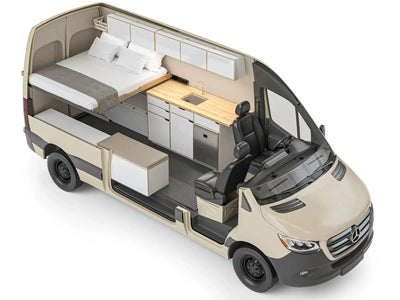
For van travel, these three parks are the best fit for a self-supported trip. They also line up well with how many Vansmith owners use a van: staying flexible, carrying your own food, and not being locked into one hotel every night. If you are sketching routes, our van build blog and our process page show the kind of self-contained setup that helps on long Alaska driving days.
The fly-in and boat-access parks: incredible, but not casual add-ons
Glacier Bay National Park and Preserve cannot be reached by road. Visitors arrive by plane or boat, which is why it fits Southeast Alaska travel far better than a short Anchorage road trip. The Glacier Bay directions page lays that out plainly.
Katmai is also not a casual stop. Most travelers reach the area by going from Anchorage to King Salmon, then continuing by small plane or water taxi into the park, as explained on the Katmai access page. That means more moving parts from the start.
Lake Clark is not on the road system and is mainly reached by small aircraft. Gates of the Arctic has no roads or trails into the park. Kobuk Valley has no roads either, and visitors usually reach Kotzebue or Bettles before arranging an air taxi.
Those parks are amazing, but they are shaped by bush flights, boats, weather, and long distances. The statewide NPS brochure keeps coming back to this because it is the planning issue people miss most. In our shop, the travelers who enjoy these parks most usually treat them as dedicated trips or as one carefully chosen fly-out add-on. Not as side trips.
Alaska national parks list: what each park is known for

Each Alaska park has a clear identity, and that helps you pick the right one. Denali is known for vast wilderness, wildlife viewing, and the famous park road through huge interior scenery. Kenai Fjords is known for the Harding Icefield, fjords, and glacier country along the coast.
Glacier Bay is the classic Southeast mix of glaciers, fjords, and marine wildlife. Katmai stands out for its volcanic history tied to the Novarupta eruption and the Valley of Ten Thousand Smokes, plus brown bear viewing. If bears are your main reason for going, that matters more than road access.
Kobuk Valley is known for the Great Kobuk Sand Dunes, caribou migration, and the Kobuk River landscape. Lake Clark is known for remote wilderness, lakes, fishing, bears, and volcano views. Wrangell-St. Elias is known for scale more than almost anything else. It is just huge.
If you want to connect those park styles to van travel, the main divide is still access. Road parks pair naturally with a self-contained rig, while fly-in parks do not. Travelers planning future builds often browse Sprinter conversions or Transit conversions because Alaska rewards comfort and flexibility more than speed.
Best-known parks for first-time visitors
Denali is one of the best-known parks for a reason. It combines iconic scenery with easier access than most Alaska parks, whether you arrive by road or rail. For a first trip, that lowers the stress.
Kenai Fjords also lands high on first-trip lists because it gives you two ways to experience it. You can keep it simple with Exit Glacier, or you can add a boat day from Seward for the full fjord feel. That range is helpful.
Glacier Bay is one of Alaska's signature glacier-and-wildlife experiences, but it usually happens through a cruise, tour boat, or Gustavus-based plan rather than a road trip. Katmai rises to the top for people who care most about bears and volcanic history, not driving convenience. Travel Alaska often groups Denali, Kenai Fjords, Glacier Bay, and Katmai among the best-known park experiences in the state.
So what are the best national parks in Alaska for a first visit. In most cases, the answer depends on trip style more than fame. From a van-travel view, Denali and Kenai Fjords tend to give the highest payoff per planning hour on a first Alaska run.
The remote parks with the most specialized appeal
Gates of the Arctic is pure wilderness travel. There are no roads or trails into the park, which makes it one of the clearest examples of Alaska being different from the Lower 48. You go there because you want that level of remoteness.
Kobuk Valley is one of the state's most unusual landscapes, with giant sand dunes in remote Arctic country. Lake Clark appeals to travelers who want a fly-in wilderness trip with lakes, volcano views, and bear country, without expecting any road access at all. These are not casual add-ons.
Wrangell-St. Elias sits in a middle zone. It is more reachable than the fly-in parks, but it still feels bigger and wilder than most road-trip parks farther south. Katmai also has that specialized pull, thanks to its mix of bears and the Valley of Ten Thousand Smokes.
These parks reward travelers who can handle uncertainty, weather delays, and changing logistics. The regret we hear most often is simple: people try to force a remote park into a schedule with no slack. That rarely ends well. If you are still shaping the travel style side of your rig, our Foundation builds page is a good place to start.
How to reach each of the national parks in Alaska

Denali is one of the simplest arrivals in the state. You can drive the George Parks Highway to the entrance, or use Alaska Railroad service. That gives you more choice than most Alaska parks.
Kenai Fjords is accessed through Seward, with road access to Exit Glacier but boat access needed for the classic fjord experience. Glacier Bay is reached by plane or boat, not by road travel. Katmai usually needs an onward air or boat transfer after you get to the Bristol Bay region.
Lake Clark is mainly reached by small aircraft because it is not on the road system. Gates of the Arctic and Kobuk Valley usually call for bush-plane logistics. Wrangell-St. Elias is the outlier, more road reachable than people expect, but still remote enough that drive times and road conditions shape the whole plan.
The practical takeaway is simple. Alaska park access is not one thing. It is a mix of roads, rail, boats, ferries, and small planes, and each one changes how much time you need.
Road, rail, and front-country access
Denali's entrance is at Mile 237 of the George Parks Highway. That one detail makes it much easier to slot into a road or rail trip than most parks in the state. It is one of the rare Alaska park arrivals that feels straightforward.
Kenai Fjords visitors usually base in Seward, then drive Exit Glacier Road to the only road-accessible part of the park. Wrangell-St. Elias starts from the road network too, including the Richardson Highway and roads toward Nabesna and McCarthy. From there, though, the pace slows down.
Road access in Wrangell-St. Elias does not mean quick access. Gravel roads and long distances can turn a short-looking map segment into a full day. That is where road-trip plans often get overbuilt.
For van travelers, even the road parks call for extra fuel, food, and schedule room because services thin out fast beyond the main hubs. The real gain of a camper van is not speed. It is flexibility. If you are planning a rig around that style, customize your van is a useful next step.
Air, boat, and ferry logistics
Glacier Bay visitors often arrive by cruise ship, tour boat, charter boat, air service, or Gustavus-linked ferry travel. To understand Southeast Alaska, it helps to look at the Alaska Marine Highway System, because ferries often take the place of roads there. That changes your whole trip structure.
Katmai access often starts with travel to King Salmon, then continues by smaller plane or water taxi into the park. Lake Clark also depends on small aircraft as the normal way in, not as a backup plan. In both cases, the flight is part of the trip, not just the transfer.
Gates of the Arctic has no roads or trails into the park, so arrival is usually by bush plane or by serious backcountry travel from outside corridors. Kobuk Valley usually means reaching Kotzebue or Bettles first, then arranging an air taxi. Those are expedition logistics, not road-trip logistics.
Once a park depends on planes or boats, weather delays stop being rare exceptions. They are normal planning assumptions. That is why we tell travelers to protect their buffer days the way they protect their flight reservations.
What a realistic multi-park Alaska trip looks like

The most realistic first-time combo is Denali plus Kenai Fjords. Both fit naturally into a Southcentral and Interior trip on the road and rail network, and they show off two very different Alaskas. One is interior wilderness. One is coastal glacier country.
Wrangell-St. Elias is the most plausible third park for a road-based trip, but only if you have enough days for long drives and slower roads. Katmai and Lake Clark make more sense as a Southwest fly-in pair. Gates of the Arctic and Kobuk Valley fit best as an Arctic expedition pair.
Glacier Bay usually works best as part of a Southeast trip built around cruise travel, ferries, or Gustavus-based planning. Travel Alaska's regional framing is helpful because it pushes you to plan by geography and transport mode, not by raw park count. That is the right way to think about it.
In our experience, the best Alaska itinerary is the one that leaves room for weather, fatigue, and transfers that take longer than expected. A trip with fewer transitions often feels bigger, not smaller. That is easy to miss when you are still in spreadsheet mode.
Best trip combinations by travel style
For a first Alaska visit, Denali plus Kenai Fjords is the strongest pair. They are comparatively easy to reach, and they give you classic interior and coastal scenery in one trip. That makes them a smart first answer to the alaska national parks question.
You can add Wrangell-St. Elias to a road-based plan, but that turns the trip from easy first-timer to something more ambitious. A bear-focused trip is usually better built around Katmai, Lake Clark, or both, rather than trying to bolt bear viewing onto a long driving loop. The same idea applies to Arctic travel.
If your goal is bush flights, wilderness logistics, and true backcountry conditions, then Gates of the Arctic or Kobuk Valley make sense. If your goal is Southeast glacier scenery, Glacier Bay should be the centerpiece, with boats, ferries, or regional flights doing the work. Different trip. Different plan.
Trying to combine Denali, Glacier Bay, and Katmai in one short vacation usually creates too many transport modes and too little weather buffer. For people sleeping in a van, fewer base changes often matter more than one more park name. If you are mapping a two-person route, the vans for couples collection and DUO XL layout show the kind of setup that suits long, flexible driving days.
How much time to give yourself
Denali fits neatly into a road or rail trip because the entrance is easy to reach, but the interior experience still needs more than a same-day stop. Kenai Fjords can work as a shorter add-on from Anchorage through Seward, especially if your goal is Exit Glacier plus a boat day. Those two are efficient by Alaska standards.
Wrangell-St. Elias needs more time than many travelers expect because the access roads are long and slow. Glacier Bay, Katmai, Lake Clark, Gates of the Arctic, and Kobuk Valley all need extra schedule margin because arrival depends on boats, small planes, or both. The statewide parks brochure keeps stressing scale, weather, and transport limits for a reason.
Our practical rule is simple: leave at least one unscheduled buffer day any time flights, ferries, or water taxis are part of the plan. If your trip is under about 10 days, most travelers will have a better time focusing on two parks, not four or five. More is not better.
One oddly specific detail from shop life sticks with us here. In late August, a couple planning an Alaska run looked at our Duo pricing and said they finally understood why a simple route mattered more than a bigger route. They wanted a van that could sit tight for a weather day without the trip feeling lost.
Choosing the best Alaska national parks for your trip style

If your top priority is easy logistics, Denali and Kenai Fjords are the best national parks in Alaska to start with. Both connect well to common Southcentral itineraries, and both fit a road-based plan without forcing you into bush-flight logistics. For most first-timers, that is the sweet spot.
If your priority is marine glacier scenery, Kenai Fjords and Glacier Bay are the strongest choices, but they work in very different ways. Kenai Fjords starts with a drive to Seward and often adds a boat day. Glacier Bay is built around cruise, ferry, boat, or air access from the start.
If your priority is brown bears, Katmai and Lake Clark are the key parks, and both are fly-in experiences. If your priority is true wilderness, Gates of the Arctic and Kobuk Valley are the most demanding options. If you want giant scale with some road access, Wrangell-St. Elias is the best compromise.
For most first-time van travelers, the best alaska national parks plan is not all eight. It is one road-system loop plus one optional guided or fly-out experience. A well-planned trip rewards restraint, and that usually leads to a better trip than chasing the full alaska national parks list.
Best parks for van-based travelers
Denali works well for van travelers because reaching the entrance is simple from Alaska's road network. Kenai Fjords is also a strong stop because Seward and Exit Glacier fit naturally into a Southcentral route, even though the full fjord experience happens by boat. Those two parks make the most sense for many first runs.
Wrangell-St. Elias suits travelers who are fine with longer drives, rougher approach roads, and a less polished front-country feel. Glacier Bay, Katmai, Lake Clark, Gates of the Arctic, and Kobuk Valley are not camper-van parks in the usual sense because the van cannot solve the core access issue. You still need planes or boats.
The value of a van in Alaska is strongest where road access lets you stay flexible around weather, daylight, and long driving days. For travelers thinking ahead, layouts built for two are often the easiest match for this style. In our Boulder shop, the Duo starts at $114,450 in Sprinter form and $112,450 in Transit form as of 2026.
Families often care less about park count and more about staying power over a long route. The Family starts at $119,450 in Sprinter form and $117,450 in Transit form as of 2026, with semi-custom builds usually taking 8-10 weeks. You can see those options on our family vans page and reach out through contact us if Alaska travel is part of your build plan.
| Layout | Sprinter price | Transit price |
|---|---|---|
| Duo | $114,450 | $112,450 |
| Family | $119,450 | $117,450 |
How to keep the itinerary from becoming too ambitious
A road map can hide the real shape of Alaska travel. Highways, ferries, small planes, boats, and weather delays all stack up fast, especially when you cross regions. That is why simple plans tend to hold up better.
Glacier Bay is not a casual side trip from Anchorage or Denali because it is a Southeast plane-or-boat destination. Katmai and Lake Clark may look close to Anchorage on a map, but both still need fly-in planning. Gates of the Arctic and Kobuk Valley should be treated as expedition parks from the start.
Travel Alaska's regional approach is the best mental model here. Build around one region first, then decide if a second region is worth the transfer time. Most durable Alaska plans have fewer transitions, fewer one-night stops, and more slack than feels necessary on paper.
If you finish planning and every day is already spoken for, the trip is probably overbuilt for Alaska. That is the sign to cut, not add. If you are still gathering ideas for how a van supports that slower style, our DIY blog has more trip-useful reading.
FAQ
How many national parks are in Alaska?
There are eight national parks in Alaska: Denali, Gates of the Arctic, Glacier Bay, Katmai, Kenai Fjords, Kobuk Valley, Lake Clark, and Wrangell-St. Elias. The easiest official source for the full list is the National Park Service statewide Alaska page. It is a simple answer, but the planning side gets more complex fast because the parks do not share one access style.
Which national parks in Alaska are road accessible?
Denali is road accessible from the George Parks Highway. Kenai Fjords has road access to the Exit Glacier area through Seward. Wrangell-St. Elias has road-reachable visitor areas and access roads like McCarthy Road and Nabesna Road, while Glacier Bay, Katmai, Lake Clark, Gates of the Arctic, and Kobuk Valley are not road-trip parks in the usual sense.
What are the best Alaska national parks for a first trip?
For most first-time visitors, Denali and Kenai Fjords are the best starting pair. They fit naturally into a Southcentral and Interior trip, and they show off two very different sides of Alaska: interior wildlife country and coastal glacier scenery. If you have more time and do not mind longer, slower access roads, Wrangell-St. Elias can be a strong third park.
Can you visit all eight Alaska national parks in one trip?
Technically yes, but for most travelers it is not realistic on a standard vacation. Most parks require different transport modes, including bush planes, boats, ferries, or regional flights, and the statewide NPS brochure makes that clear. In practice, trying to collect all eight usually creates too many transfers and too little weather buffer.
Which Alaska parks are best for bear viewing?
Katmai and Lake Clark are the two parks most tied to fly-in bear-focused travel. Katmai is especially well known for brown bears and Brooks Camp-area experiences, while Lake Clark also draws travelers looking for bears in a remote setting. Neither park is on the road system, so bear viewing there usually starts with small-aircraft planning.
Is Glacier Bay part of a road trip from Anchorage or Denali?
Not in any simple sense. Glacier Bay cannot be reached by road, and visitors usually get there by plane or boat, often through cruise travel, tour boats, charter boats, or Gustavus-based planning. If Glacier Bay is high on your list, it usually works better as the centerpiece of a Southeast Alaska trip than as a side stop on a short road loop.
About the author

Eugene Smit
CEO
Eugene is the CEO of The Vansmith, based in Boulder, Colorado. He writes across topics related to van builds, ownership, and the camper van industry.
Read more about Eugene