Anza-Borrego camping works best when you match your trip to the park's three legal primitive camping options or one of its three open developed campgrounds. The right pick mostly comes down to one thing: how self-sufficient your setup is for water, waste, heat, and rougher access. Anza-Borrego gives you more freedom than most California parks, but that freedom only feels good if you've planned for road conditions, weak cell service, and big swings between hot days and cold nights.
The photo above shows the Carrizo Badlands at golden hour from the Carrizo Badlands Overlook in the southern part of Anza-Borrego Desert State Park. (Photo: Alan Schmierer, CC0)
What makes Anza-Borrego camping different

The photo above looks out over the Carrizo Badlands from the overlook, with ocotillo and low desert scrub in the foreground. Open country like this is what the park's backcountry camping rules cover. (Photo: Alan Schmierer, CC0)
Anza-Borrego Desert State Park handles camping in a way that catches a lot of first-time visitors off guard. Instead of keeping overnight stays inside a few developed campgrounds, the park treats its whole backcountry as a camping facility. That gives you a lot more room to roam than many California parks do.
There is still structure to that freedom. The park lists a 30-day annual occupancy limit for backcountry camping, so this is not an open-ended long-term setup. For most travelers, that limit will never matter on a weekend trip, but it does show the open-desert system is formal, not some loophole.
The other big difference is how much planning lands on you. The park warns people to check current road conditions and not to rely on cell service, and that changes the feel of the trip right away. A developed campground can forgive a little sloppiness. Open desert usually will not.
For van travelers, the real choice is pretty simple: do you want easier access and some structure, or more solitude and flexibility out in the desert? If your van is still pretty basic, a night or two in a developed site can be the smart way in. If your systems are dialed, the backcountry opens up fast.
How primitive and dispersed camping works here
The park's primitive camping superintendent's order lays out three legal ways to camp in the backcountry. One is using one of the eight designated primitive camps. Another is roadside primitive camping along designated dirt roads. The third is camping in roadless areas that you reach on foot.
That roadside option is where a lot of van and SUV travelers end up. You can camp along designated dirt roads, but your vehicle has to stay no more than one car length off the road. That rule matters because it keeps people from slowly turning open desert into a web of fresh tracks.
Roadless camping is the closest thing here to true backpack-style dispersed camping. You park legally, then head in on foot with what you need. It is a very different trip from sleeping next to your van, and it helps to treat it that way.
The Anza-Borrego Foundation FAQ clears up another common mix-up. Primitive campgrounds and dispersed camping are not exactly the same thing, even though people often use those words like they are. The same FAQ notes that primitive camping areas are first-come, first-served. Roadside and roadless primitive camping is free, which is a big part of the park's appeal, but State Parks now charges $20 a night at some designated primitive campgrounds, including Fish Creek, Mountain Palm Springs, and Sheep Canyon (which also closes June 1 to September 30), and at Bow Willow Campground.
Comfort and self-sufficiency should drive the choice more than the romantic idea of desert solitude. Primitive camping gives you space, privacy, and that wide-open desert feel. But you need to arrive ready for water, shade, waste, and navigation, because there usually is not anything waiting for you.
The non-negotiable rules that protect the desert
The desert looks tough, but it scars easily. The superintendent's order says campers may not collect firewood in the park, which makes sense in a place where dead wood is limited habitat. If you want a fire where it is allowed, bring what you need. Park rules require campfires to stay inside a camp stove or a metal container you bring, with a bottom and sides. During extreme heat or fire danger warnings, the park bans open fires and barbecues at Blair Valley, Culp Valley, any backcountry campsite, and day-use parking areas, and allows only propane or gas stoves for cooking within designated campsites and day-use areas. Call 760-767-4037 for current fire restrictions.
The park's primitive camping order also says ashes must be carried out along with your trash. That is one of those rules people miss until they realize a small ash pile can stick around for a long time in a dry place.
You also cannot disturb or remove natural or cultural material. That covers the obvious stuff, but also the easy-to-miss stuff: weathered wood, rocks, and fragile sites that look empty until you know what you are seeing. Desert camping works best when you leave no trace.
The FAQ is just as clear on waste. Pack out all trash, toilet paper, and human waste, because many primitive areas have no services at all. In a self-contained van, that job gets easier because you have sealed trash space, built-in storage, and water on hand instead of juggling loose bins every morning.
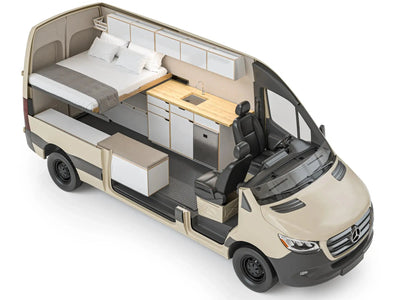
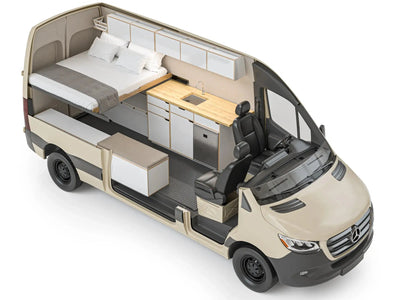
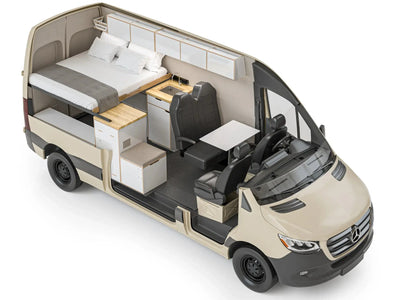
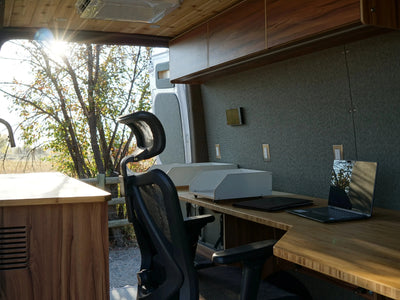
If you are still building that kind of setup, this is where a cleaner layout helps in real life. A van with smart storage and simple systems is easier to keep desert-ready.
Developed campgrounds vs free camping in Anza-Borrego

The photo above shows the California fan palm grove in Borrego Palm Canyon, with trunks still blackened from fire. The first palm grove is closed while it recovers from fire damage, and the Borrego Palm Canyon Trail now ends at a viewpoint overlooking it. (Photo: Z3lvs, CC0)
On the official park page, California State Parks currently lists three open developed campgrounds: Borrego Palm Canyon Campground, Tamarisk Grove Campground, and Vern Whitaker Horse Camp. Those are the main names to know if you want a more standard camping setup. Tamarisk Grove and Vern Whitaker are open October 1 to May 31 and close from June 1 to September 30, so check current campground status with the park before a summer trip. Developed campgrounds are the lower-risk way to spend a first night in the desert.
Reservations for developed campgrounds go through the official park page and ReserveCalifornia. That matters because campground status can change, and older roundup posts often keep stale info alive. If the park page and a blog disagree, trust the park page.
Roadside primitive camping, by contrast, is free and first-come, first-served, though a few designated primitive campgrounds charge $20 a night. That is why free camping in Anza-Borrego gets so much attention. Still, price is only part of it, because free camping in the desert asks more from your gear and your judgment.
For a lot of first-timers, the best move is to start with a developed campground, then branch into primitive roadside camping on a later trip. That first night teaches you a lot. You see how fast you use water, how your van handles the cold after sunset, and how much setup you really want after dark.
Borrego Palm Canyon, Tamarisk Grove, and Vern Whitaker
Borrego Palm Canyon Campground sits in the park's main developed-use area. That matters because primitive camping is not allowed in the Borrego Palm Canyon developed-area zone. A lot of people hear that the park allows broad backcountry camping and assume the whole map is open. It is not.
Tamarisk Grove Campground is also listed as currently open by California State Parks. Vern Whitaker Horse Camp is the third open developed option named on the official page. Those are the three names to check first if you want a reservable basecamp.
The California State Parks Foundation camping guide is useful for statewide context, and it reinforces that Anza-Borrego has both established campgrounds and broader camping choices. But for current open status, the official park page should win every time.
The real decision point is not a long amenity checklist. It is whether you want reservable, easier-access camping or the wider flexibility of the open desert.
Cost, reservations, and trip-style tradeoffs
Borrego Palm Canyon tent sites are $35 a night, according to the State Parks fee schedule. Developed campground reservations can tighten up in peak season, even when open-desert primitive camping is still available. That is one reason this park works well for self-contained travelers. If you are comfortable carrying what you need, your options stay wider.
Roadside primitive camping is free, but the real cost shows up in prep. You need your own water, your own waste plan, and your own comfort systems. Free camping only feels easy when your rig actually supports it.
For van owners, shade, airflow, and battery size matter more on primitive nights than they do in a developed campground. You cannot count on nearby infrastructure to smooth things out.
When to go for wildflowers, weather, and comfort

The photo above shows a bloom of purple sand verbena and yellow desert gold near the Arroyo Salado primitive campground. Blooms like this depend on the year's rain, so treat them as a bonus. (Photo: Joanna Gilkeson, U.S. Fish and Wildlife Service, public domain)
There is no fixed wildflower week that works every year. The Anza-Borrego Foundation wildflower page explains that bloom timing depends on rainfall, temperature, wind, and elevation. That is why generic advice like "just go in March" can miss badly.
The official state park wildflower resources are better for real trip timing because they provide current bloom status, a hotline, and interactive reporting tools. If you are trying to time a short trip, those updates matter more than old travel articles. Conditions can shift fast.
Weather matters just as much as flowers. The foundation weather page says May through October can exceed 100 degrees Fahrenheit. That alone should shape how families, pet owners, and vehicle sleepers think about a trip.
Nights can swing the other way. The same weather page notes cool nights, especially at higher elevations, and says winter freezes are possible. For a lot of van travelers, shoulder season is the sweet spot because it keeps the open-desert feel without stacking the deck against comfort.
How to plan around wildflower uncertainty
The foundation posts dated bloom updates, which is useful because it reminds you that one great year does not predict the next. Elevation changes the picture too, so different parts of the park can show very different flower activity in the same week.
Wind and temperature matter alongside rainfall. So even a wet winter does not promise a dramatic spring bloom. If you build your whole trip around one perfect bloom story, you can end up disappointed for no good reason.
A better move is to plan around the desert itself first, then treat flowers as a bonus guided by current reports. With a van, that flexibility gets even easier because you can shift your camp or day plan if one area underperforms.
Seasonal comfort in a van or tent
State Parks says summer days can reach 125 degrees, and the Anza-Borrego Foundation notes that shade is hard to find. That makes midday setup, lunch, and basic camp chores much harder than many people expect. In a tent, you feel it right away. In a van, trapped heat can linger long after sunset if airflow is poor.
Roof ventilation, bug screens, and managed airflow matter a lot in warm weather. Sleeping in a sealed vehicle in the desert is usually miserable, even if the day felt pleasant by late afternoon.
Cold-season trips have their own edge. Cool nights and occasional winter freezes can make a sunny day feel misleading, so a properly serviced heater often matters more than one more blanket tossed on the bed.
Heat, water, and safety planning in Anza-Borrego

The photo above shows a sandy wash under a hazy sun in Borrego Palm Canyon. There is little shade on most of the park's open desert, which is why water and timing matter so much. (Photo: Z3lvs, CC0)
The water baseline is simple: California State Parks says to bring 1 gallon of water per person per day. That is a minimum, not a comfort target.
Most first-time desert campers underestimate how much water disappears into cooking, coffee, quick rinses, and just feeling human in dry air.
California State Parks also warns about very high summer temperatures and tells visitors not to rely on cell service. Add road-condition checks to that list, and you can see why old-school planning still matters here. Download maps. Share your route. Know where you are sleeping before dark if possible.
For self-contained vans, larger water storage and a simple refill habit tend to matter more than another luxury feature. Desert comfort comes from basics that keep working, not from extra complexity.
Water planning and daily rhythms
That 1 gallon per person per day figure should shape both your drinking water and your reserve water. Active days push consumption up quickly. If your plan includes remote nights, carry a buffer beyond the minimum.
The foundation also recommends starting early, and that is one of the best habits you can borrow for the whole trip. Hikes, camp setup, and any hard work feel easier in the morning. Leave those jobs for noon, and even simple tasks can turn into heat management problems.
Limited shade changes your daily rhythm more than people expect. Lunch breaks, dishwashing, and even packing gear back into the van can feel much harder under direct sun. Water is a comfort system as much as a survival item, because enough of it lets you cook, wash up, and stay put without stress.
Roads, communication, and desert realities
California State Parks explicitly tells visitors to check road conditions before heading into the backcountry. In this park, route choice is tied to both safety and legal camping access, because primitive camping with a vehicle is limited to the designated primitive camps and designated dirt roads.
The park also says not to rely on cell service. So route plans, offline maps, and meeting points need to be handled before you leave town. Group trips should agree on timing before vehicles split up or hikers peel off for a side trail.
State Parks says most dirt roads in the park require AWD or 4x4 and some need high clearance. It encourages traveling with a second vehicle and carrying enough food, water, fuel, blankets, and phone power to self-rescue. A desert road that feels easy in dry daylight can become a much bigger problem after weather or after dark, especially in a heavier van. Suspension, tires, and recovery planning usually matter more for confidence than cosmetic add-ons do. If rougher access roads are part of your travel style, it is smart to plan the van around that reality early.
Choosing the right setup for your trip
For most readers, the main question is not whether Anza-Borrego is worth it. The real question is which style fits your season, your vehicle, and your comfort with desert self-sufficiency: developed campground, roadside primitive camping, or roadless camping on foot.
If you want the simplest logistics, start with one of the three developed campgrounds that are open October to May: Borrego Palm Canyon, Tamarisk Grove, or Vern Whitaker Horse Camp. If you want more flexibility and lower campsite cost, roadside primitive camping is free and first-come, first-served. Just remember that the freedom comes with more responsibility.
Wildflower chasing adds another layer of uncertainty, so use current bloom updates rather than betting on a generic promise of a spring peak. For many campers, cooler months are the easier fit.
For van owners, Anza-Borrego tends to reward simple, reliable systems: ventilation, water storage, battery capacity, some shade strategy, and a layout that works when you spend more time outside than inside.
Best fit for first-timers, families, and remote campers
First-time visitors usually do best in a developed campground. The rules, road choices, and weather exposure all make more sense after one trip on the ground. You do not need to prove anything on your first desert night.
Families often benefit from predictable camp logistics and short setup time. That can make a developed campground, or an easy roadside primitive site, a better choice than a deeper backcountry plan.
Solo travelers and experienced van campers often get the most from primitive roadside camping. It gives you legal flexibility and quick access to changing views and trailheads, without asking you to carry your whole camp on foot. Backpack-style roadless camping makes more sense for people who specifically want that foot-access desert experience.
The simplest camping style that still matches your season and setup is usually the right one.
Getting a van desert-ready
Anza-Borrego is exactly the kind of place where a well-resolved van matters more than luxury extras. Water, airflow, storage, and easy camp setup directly affect how long you can stay out comfortably. That is true for a weekend, and even more true on a longer desert loop.
If you already own a van, a softer next step often makes more sense than a full build. Heater service, suspension work, windows, flares, or other targeted installs can make an existing rig more desert-capable. If you want help with that kind of work, contact us.
FAQ
Can you camp anywhere in Anza-Borrego Desert State Park?
No. Primitive camping is allowed in designated primitive camps, along designated dirt roads with vehicles parked no more than one car length off the road, and in roadless areas reached on foot. It is not allowed in the Borrego Palm Canyon developed-area zone, so you cannot assume the whole park is open to dispersed camping.
Is free camping in Anza-Borrego actually legal?
Yes. Primitive camping is a legal and established part of the park's backcountry system, and roadside and roadless primitive camping is free and first-come, first-served, though State Parks charges $20 a night at some designated primitive campgrounds. You still have to follow the road-access rules, fire rules, and pack-out rules, so free does not mean unstructured.
What campgrounds are open in Anza-Borrego Desert State Park?
California State Parks currently lists Borrego Palm Canyon Campground, Tamarisk Grove Campground, and Vern Whitaker Horse Camp as open developed campgrounds, though Tamarisk Grove and Vern Whitaker close from June 1 to September 30. Reservations for those developed sites go through ReserveCalifornia by way of the official park page. That is the best place to confirm current status before you drive out.
How much water do you need for camping in Anza-Borrego?
Use 1 gallon of water per person per day as your minimum planning number. California State Parks gives that baseline, and the Anza-Borrego Foundation repeats at least 1 gallon per person per day for hiking. Many campers carry more than that for cooking, cleanup, and delays, especially on hotter trips.
When is the best time to camp in Anza-Borrego for wildflowers?
There is no guaranteed peak week every year. Bloom timing depends on rainfall, temperature, wind, and elevation, which is why current reports matter so much more than old month-by-month advice. If flowers are your main goal, check the official bloom updates and build some flexibility into your route.
Is summer camping in Anza-Borrego realistic?
It can be, but it carries much more heat risk. The foundation says May through October can exceed 100 degrees Fahrenheit, and California State Parks also warns visitors to prepare for very high summer temperatures. Most campers are better off aiming for cooler months unless they already know how their setup handles desert heat.
About the author

Carin Smit
President
Carin is President of The Vansmith. She writes on a range of topics tied to the business, from vans and builds to the broader vanlife world.
Read more about Carin