
DUO

Mercedes Sprinter 144
OR
Ford Transit 148

Perfect for solo travelers or couples who want a compact adventure-ready van.
Seat & Sleeps
2Length
19'Shower
Exterior * * Optional Add-OnsClass B RVs, Conversion Vans & Campervans for Sale in Boston, MA
Mercedes Sprinter 144
OR
Ford Transit 148
Perfect for solo travelers or couples who want a compact adventure-ready van.
Seat & Sleeps
2Length
19'Shower
Exterior * * Optional Add-Ons
Mercedes Sprinter 144
OR
Ford Transit 148

Includes a shower setup for longer trips without compromising comfort or space.
Seat & Sleeps
2Length
19'Shower
Bench * * Optional Add-Ons
Mercedes Sprinter 170
OR
Ford Transit 148 E

Ideal for those who want extra living space and more storage for extended adventures.
Seat & Sleeps
2Length
22'Shower
Full
Mercedes Sprinter 170
OR
Ford Transit 148 E

Luxury model with full amenities, extended power systems, and interior bathroom.
Seat & Sleeps
2Length
22'Shower
Full
Mercedes Sprinter 144
OR
Ford Transit 148

Perfect for families who want space, comfort, and functionality in a compact build.
Seat & Sleeps
4Length
19'Shower
Exterior * * Optional Add-Ons
Mercedes Sprinter 170
OR
Ford Transit 148 E

A larger build for families who love extended adventures and more storage.
Seat & Sleeps
4Length
22'Shower
Bench * * Optional Add-Ons
Mercedes Sprinter 170
OR
Ford Transit 148 E

The luxury upgrade with interior shower and full power systems for long trips.
Seat & Sleeps
4Length
22'Shower
Full
New England is one of the best regions in the country for a camper van, but Boston presents some unique ownership challenges. The White Mountains are two and a half hours north, Acadia National Park is about five hours away, Cape Cod is roughly an hour and a half away, and the Green Mountains and Berkshires offer more opportunities for scenic road trips. Fall is an especially rewarding season for exploring northern New England, where narrow roads and smaller state park campgrounds can make vehicle dimensions important.
Before buying, consider where you will park and store your camper van. Boston has residential permit zones, street-cleaning restrictions and snow emergency parking rules. Many garages also have height restrictions that may not accommodate a high-roof camper van. For buyers inside Route 128, a suburban driveway or dedicated storage facility may be more practical than relying on street parking.
The Vansmith offers Mercedes-Benz Sprinter and Ford Transit camper vans, with vehicles crafted in Boulder, Colorado, and delivery options across Massachusetts. Conversion packages start at $46,950, complete vans with the chassis included start at $115,950, and pre-built Bivy models range from $119,700 to $192,570, depending on trim. For the statewide picture, explore
camper vans for sale in Massachusetts.
The Mercedes-Benz Sprinter offers 144-inch and 170-inch wheelbase options, with available all-wheel drive on applicable configurations. Compare vehicle dimensions and drivetrains to find the right fit for Boston streets and New England road trips. Explore our Sprinter van conversions.
The Ford Transit offers another platform to consider, with broad dealer coverage throughout New England and available all-wheel drive on applicable model years. Compare ownership needs and vehicle features using our Ford Transit van conversions and Sprinter vs. Transit comparison.
A shorter wheelbase can make navigating narrow Boston streets, residential parking areas and smaller New England roads easier. Consider overall vehicle length, turning space and garage clearance before choosing a layout. Explore our small camper vans and learn why short-wheelbase vans suit city drivers.
The DUO Series is designed around travel for two, while the FAMILY Series provides layouts intended for family travel and additional sleeping capacity. Compare sleeping arrangements, storage and available vehicle configurations before deciding. Explore camper vans for couples and family van conversions.
If your van will be parked in Boston regularly, vehicle length, height and parking restrictions deserve early consideration. Buyers storing a van at a suburban property or dedicated storage facility may have more flexibility when choosing a larger layout.
Interstates I-93, I-95 and I-90 connect Boston with destinations throughout New England. A trip to the White Mountains can be manageable for a weekend, making sleeping space, onboard storage and driving comfort useful considerations for frequent travelers.
For year-round trips in New England, evaluate the installed heating system, insulation, battery performance in cold weather, drainable plumbing and appropriate tires. Equipment varies by vehicle, so review the specifications before purchasing. Read our four-season van guide and explore winter camper vans.
Before purchasing, measure your garage opening and available parking depth. Check height restrictions at garages and storage facilities, residential permit requirements, street-cleaning schedules and Boston snow emergency parking rules. Confirm that your intended parking location can accommodate the selected van.
| Specification | Why It Matters in Boston | What Buyers Should Consider |
|---|---|---|
| Heating System | January temperatures can fall into the teens, with even colder nights in the White Mountains. | Match heating output to the van's interior volume and consider how the system affects interior moisture. |
| Insulation | Insulation matters during both New England winters and humid summer weather. | Check coverage across all six sides and choose materials appropriate for moisture management. |
| Air Conditioning | Boston and Cape Cod can experience warm, humid nights in August. | Compare cooling capacity with usable battery capacity and expected overnight runtime. |
| Ventilation | Summer humidity and winter condensation both require effective airflow. | Review fan placement, variable-speed settings and reversible intake or exhaust operation. |
| House Battery | Battery power supports overnight cooling in summer and heater operation on winter nights. | Check low-temperature charging protection and usable capacity rather than nominal capacity alone. |
| Solar System | Solar can be useful from spring through fall, but winter clouds and snow can reduce production. | Compare panel wattage with available roof space and avoid relying on solar as the primary winter power source. |
| Alternator Charging | Driving between New England destinations provides an opportunity to recharge the house battery. | Check DC-DC charger output and estimate charging time during typical trips. |
| Shore Power | Useful for driveway charging and at campgrounds with electrical hookups. | Verify the onboard charger's rating and the fitted shore-power connection. |
| Fresh Water | Trip duration and freezing conditions from late fall through winter affect water-system planning. | Match capacity to travel needs and check line routing, insulation and drainability. |
| Wastewater | Some dispersed camping areas lack dump facilities, while exposed greywater lines can freeze. | Check tank capacity, outlet accessibility and whether the system drains completely. |
| Refrigeration | Long summer trips to Cape Cod and other New England destinations require reliable food storage. | Compare refrigerator capacity and power draw. A 12V compressor fridge runs from the house battery when not connected to shore power. |
| Tires | Snow, ice, wet pavement and road salt affect driving conditions. | Select tires suited to expected conditions, including appropriate winter or severe-snow-rated options where needed. |
| Brakes | Road salt and moisture can accelerate corrosion in brake components and lines. | Review service history and have brake lines and components inspected during routine maintenance. |
| Suspension | Urban road damage, frost heaves and unpaved roads in northern New England can affect ride quality. | Choose a suspension setup suited to the vehicle's loaded weight and intended routes. |
| Ground Clearance | Uneven roads, some mountain routes and snowy access areas may require additional clearance. | Check actual clearance and approach angles for the selected chassis, trim and drivetrain. |
| Vehicle Height | Garage and parking structure restrictions can limit access for high-roof vans. | Some high-roof vans are roughly 9 to 10 feet tall. Measure every garage opening and structure used regularly. |
| Vehicle Length | Narrow streets and residential parking can make longer vans harder to accommodate. | A short-wheelbase van may be around 19.5 feet long, depending on configuration. Verify exact dimensions and parking requirements. |
| Payload Capacity | Water, batteries, skis and winter equipment add weight quickly. | Compare the chassis payload rating with the finished vehicle's weight, passengers and expected cargo. |
| Storage Capacity | Four-season travel may require space for skis, hiking equipment, bikes and beach gear. | Check gear garage volume, rear-door access and roof rack capacity. |
| Electrical Monitoring | Monitoring power use is particularly important when heating runs overnight in cold weather. | Look for a battery monitor that reports state of charge and energy use, rather than relying on voltage alone. |
| Water-System Protection | Hard freezes can damage exposed plumbing during winter travel. | Check insulation, any heated tank provisions and accessible drain points for winterization. |
| Corrosion Protection | Road salt combined with coastal moisture can increase corrosion risk. | Review hardware materials, sealed electrical connections and a regular cleaning routine. |
| Moisture Management | Coastal humidity in summer and condensation in winter can affect interior comfort. | Consider airflow behind cabinetry, sealed surfaces and appropriate ventilation while sleeping. |
Exact payload, ground clearance, tire sizing, vehicle height and length depend on the chassis, trim and drivetrain. Confirm specifications for the selected vehicle before purchase. Heating, electrical and water-system equipment also varies by model and package.
Nine tailored layouts across the two-person DUO Series and the four-person FAMILY Series, on Sprinter 144 and 170 wheelbases and Transit 148 and 148 extended, plus three pre-built Bivy trims. Browse all tailored models.
A Class B RV is a camper built inside a van body rather than on a truck chassis. It parks in a standard space and drives like a tall van, which is the only realistic category for a Boston owner. A Class C or a towable is not a serious option inside Route 128. Browse our Class B RVs for sale.
Our full current stock, including inspected used vans, is on the camper vans for sale page.
Every layout is available to Boston-area buyers, subject to current vehicle and production availability. Pre-built Bivy models are ready in 8 to 10 weeks; tailored layouts are generally quoted at 12 to 16 weeks, depending on chassis availability and specifications. Use our van designer or call (303) 414-6834 for a fixed, itemized quote.
January highs in the mid 30s, lows in the high teens, and nor'easters that can drop a foot or more of snow at a time. Boston averages roughly 45 to 50 inches of snow a year. A fuel-fired heater and cold-protected plumbing are essential considerations for four-season travel.
Massachusetts uses road salt extensively, making winter corrosion a major maintenance concern. Salt can attack the underbody, brake lines, fuel lines and areas where wiring harnesses run. An underbody rinse after winter thaws, followed by a thorough spring cleaning, is a valuable maintenance habit for a Boston van owner.
July and August bring highs in the mid 80s, substantial humidity and warm nights. Air conditioning and continuous ventilation both have a role, and a powered roof fan can be useful for managing heat and moisture even when the air conditioner is not running.
Boston's coastal location exposes vehicles to moisture and salt in the air, while road salt adds another source of corrosion. Exposed hardware can include fasteners, hinges, roof rack feet, trailer connectors and electrical terminals. Regular cleaning and inspection are particularly important in this environment.
Narrow streets, heavy traffic and neighborhoods such as the North End, Beacon Hill, Somerville and Cambridge can make a full-size van awkward to maneuver. A short-wheelbase van around 19.5 feet long is generally easier to manage than an extended model around 22.5 feet. For a city owner, the longer footprint deserves careful consideration.
Parking is often the deciding factor in whether van ownership works in Boston. Many neighborhoods have resident permit requirements, street-sweeping schedules and winter snow-emergency rules that can restrict parking or require vehicles to move. Some older garages have clearances under 8 feet, while many high-roof vans stand roughly 9 to 10 feet tall. Confirm where the van will be parked before selecting a layout.
Boston puts a wide range of weekend destinations within reach. Cape Cod is roughly 90 minutes away, the White Mountains and Berkshires about two and a half hours, the Green Mountains around three hours, the Maine coast two to four hours depending on the destination, Acadia about five hours, and the Adirondacks roughly four hours. Actual travel times depend on traffic, route and season.
A fuel-fired air heater can run from the vehicle's fuel supply, draw relatively little electricity and help manage moisture as it warms the interior. In a New England winter, heating is one of the most important systems to evaluate. See Heater Service and our Sprinter heater guide.
Insulation on all six sides helps manage both cold New England winters and humid summer conditions. It is also difficult to add later without removing interior components, so it is worth considering at the planning stage. Pre-built Bivy models use Havelock wool insulation.
Air conditioning is worth considering for Boston summers, especially when warm, humid nights make sleeping uncomfortable. It is also useful for trips to Cape Cod in July and August. Match the cooling system to your battery capacity and expected runtime. See our A/C installation page.
A powered roof fan with variable speed and reversible direction helps remove heat and moisture. Use it in summer to improve airflow and on a low setting overnight in winter to help manage condensation, while maintaining safe indoor temperatures. See our roof vent installation page.
Overnight air conditioning in August and running the heater fan on a January night are two different electrical demands. Battery capacity should reflect your actual equipment and travel habits, with low-temperature charging protection for lithium batteries. See our Electrical System work.
New England solar production is generally more favorable from April through October and can be limited during cloudy winter weather, when the sun is low and snow may cover panels. DC-DC alternator charging provides another way to replenish the house battery while driving. See Solar Installation and our solar sizing guide.
Plan to winterize the water system before freezing conditions arrive. Accessible drain points, a reachable pump and tanks that drain thoroughly make seasonal maintenance easier. Insulated lines and appropriately protected tanks can extend the camping season into colder shoulder-season trips. See our de-winterizing guide.
Winter tires or severe-snow-rated all-terrain tires are worth considering for New England travel. Road salt can contribute to brake and fuel line corrosion, so regular inspections matter. Suspension selection should also reflect the loaded vehicle weight, road conditions and the type of travel you expect to do.
Road salt combined with coastal moisture creates a demanding environment for vehicle hardware and electrical connections. Consider corrosion-resistant hardware and sealed electrical connections when specifying the van. During and after winter, rinse the vehicle thoroughly, including the underbody, wheel wells and exterior areas where salt collects.
Measure before ordering. Check your garage opening height, driveway length and the clearance of any structure you regularly use. In Boston, vehicle dimensions can determine whether a van is practical to own, regardless of how well the interior layout suits your needs.
Boston-area trips may involve skis for the White and Green Mountains, hiking gear, bicycles and beach equipment for Cape Cod. A gear garage beneath a raised bed with rear-door access helps keep wet or salty equipment out of the living area.
Our entry two-person layout, from $46,950 as a conversion package. It includes a bed, galley and standard electrical, water and heating systems, with specifications depending on the selected platform and configuration.
From $53,950. Adds capacity and finish over the DUO while retaining a two-person footprint.
Designed for the longer wheelbase, with more interior room and a larger gear garage. Call for current pricing. For Boston owners, the extended footprint is worth considering only after confirming suitable off-street parking.
From $63,950. The fully specified two-person layout on the extended wheelbase.
From $51,950. A four-person layout with a convertible seating and sleeping arrangement.
From $61,950. The four-person layout on the extended wheelbase, with additional interior room.
From $68,950. Our most fully specified family layout.
Three pre-built trims on the Sprinter 144 AWD with a pop-top and Havelock wool insulation. The stated lead time is 8 to 10 weeks, subject to current availability. Bivy Classic is $119,700 with a 5 kWh system. Bivy Plus is $145,845 with 10 kWh, a diesel cabin heater and an exterior shower. Bivy Deluxe is $192,570 with 15 kWh, air conditioning, a Rixen hydronic heater and a secondary alternator. Bivy XL starts at $153,700. See the Bivy comparison. The 144 wheelbase offers a shorter footprint for New England travel, while the pop-top adds standing room without increasing the roof height in the same way as a fixed high roof.
Consider a heater sized to the van, insulation on all six sides, cold-protected lithium batteries, insulated window covers and a water system that can be drained efficiently. With the right equipment and appropriate winter preparation, camping in the White Mountains can be practical in colder conditions.
A gear garage beneath the bed with rear-door access, roof racks and interior tie-downs helps keep outdoor equipment organized. Check storage dimensions against the actual gear you plan to carry.
Under-bed storage can accommodate packs, bags, stoves and chairs. Store heavier items low and secure them properly for travel.
The White Mountains, Green Mountains and Berkshires are all within a few hours of Boston. Skis may fit inside the gear garage on suitable layouts, which can be more convenient than loading a roof box in a dark parking lot during winter.
Depending on the bicycle and layout, storage options include the gear garage, a rear rack or a roof rack. A rear-mounted rack adds to the vehicle's overall length, which can make urban parking more difficult.
Trips to Cape Cod, the islands and northern New England rivers call for storage that can handle wet equipment. Sealed, drainable storage and rinsing gear after saltwater use help keep the interior clean.
New England brings rain throughout the year and snow during winter. A drainable gear area with hanging points and adequate ventilation helps wet clothing and equipment dry between outings.
A 12V compressor fridge runs from the house electrical system, alongside a sink with pressurized water and a cooktop. The refrigerator does not require propane, and a compressor fridge does not need the vehicle to be perfectly level in the way some absorption refrigerators do.
Interior comfort matters in a region with real winter weather. A fixed bed and a usable seating area can be more valuable than an extra foot of gear storage when it is raining on Cape Cod or snowing near Franconia Notch.
A short-wheelbase Class B drives much like a tall van. Whether it is practical for daily use in Boston depends heavily on street access, parking availability, vehicle height and the length of your regular routes.
Roughly 90 minutes away in favorable traffic, Cape Cod offers beaches, the National Seashore and numerous campgrounds. Summer traffic over the bridges can be substantial, and overnight beach parking is generally restricted. Reserve campgrounds well ahead of peak season and check local parking rules.
About two and a half hours north, the White Mountains include Franconia Notch, Crawford Notch and the Kancamagus Highway. The region offers excellent hiking and winter recreation. White Mountain National Forest has developed campgrounds and designated areas for dispersed camping, subject to applicable rules and seasonal restrictions.
Approximately five hours northeast, Acadia offers coastal scenery, park campgrounds and the carriage roads. Campgrounds can have vehicle length restrictions and book out early, so check site dimensions and reservation availability before traveling.
Around three hours northwest into Vermont, the Green Mountains offer Green Mountain National Forest, the Long Trail and colorful autumn drives. Rural dirt roads are common, so check road conditions and seasonal access before choosing a route.
About two and a half hours west, the Berkshires offer October Mountain, Mount Greylock and a quieter alternative to the White Mountains during peak foliage season.
The southern Maine coast is roughly two hours away, while Camden and the midcoast can take around four hours depending on traffic. Expect harbor towns, state park camping and seafood stops along the route.
Beyond the White Mountains, New Hampshire's Lakes Region and Monadnock area are both within roughly two hours of Boston, depending on the destination and traffic.
Around three hours can put much of Vermont within reach. Dirt roads are common in rural areas and can soften or become difficult during mud season, often in March and April. Check current road conditions before traveling.
Newport and Rhode Island's southern shore are about an hour away in favorable traffic, making them convenient options for a short overnight trip.
The Connecticut shoreline and Litchfield Hills are roughly two hours away, depending on the destination. Connecticut also provides a route south toward New York.
About four hours northwest into New York, the Adirondacks cover approximately six million acres and offer extensive hiking, paddling and camping opportunities. Check campground availability and local rules before planning a remote stay.
A classic foliage-season route runs through the White Mountains, northern Vermont and the Berkshires. Late September and early October can be especially popular, so plan your route and reserve campgrounds in advance.
Supply your own Sprinter or Transit, or purchase a complete van with the chassis included from $115,950. If sourcing your own vehicle, read new vs. used vans first.
Interior equipment can include cabinetry, a bed platform, galley, seating and finished surfaces, installed in The Vansmith's Boulder shop. Cabinetry carries a lifetime warranty to the original owner, subject to the applicable warranty terms.
Depending on the selected layout and specifications, the electrical system can include a lithium house battery, roof solar, DC-DC alternator charging, shore power input, an inverter and a battery monitor that reports state of charge.
Kitchen equipment can include a 12V compressor fridge, a sink with a pressurized water system and a cooktop. Confirm the included appliances and specifications for your selected layout.
Sleeping arrangements include a fixed or convertible bed depending on the layout, with insulated window covers where specified. Bivy models add a pop-top.
Upper cabinets, galley storage and a gear garage beneath the bed platform provide space for daily essentials and outdoor equipment on applicable layouts. Roof racks are available on selected configurations.
Fresh and gray water tanks are selected according to the layout and intended use. A pressurized pump and accessible drain points make the system easier to use and maintain, especially before freezing weather.
Depending on the specification, the van can include a fuel-fired air heater supplied from the vehicle's fuel tank and a powered roof fan with variable speed and reversible direction. Air conditioning is available as an option, subject to layout and system compatibility.
Available options may include air conditioning, additional solar, larger battery banks, suspension upgrades, winter tire packages, exterior showers, awnings, roof racks and bicycle mounts. See repairs, installations and services.
The Vansmith offers a lifetime cabinetry warranty to the original owner, subject to the applicable terms. Appliance warranties are provided by their respective manufacturers. The Vansmith is NOAH certified.
The Vansmith operates from Boulder, Colorado, with experience preparing vans for mountain travel and cold-weather conditions. New England winters create similar planning considerations for heating, insulation, electrical systems and water protection.
The Vansmith reports more than 300 vans built since 2016 across the Sprinter and Ford Transit platforms. The right choice depends on your preferred wheelbase, drivetrain, budget and intended use.
Nine tailored layouts plus three pre-built Bivy trims provide options for different travel styles, from two-person trips to family travel. Compare the available layouts against your storage needs and parking constraints.
Lithium storage, solar, alternator charging, shore power, an inverter and battery monitoring are planned as a connected system. The right configuration depends on your expected electrical loads and time spent off-grid.
Gear garages with rear-door access, roof rack options and interior tie-downs help organize skis, hiking gear and beach equipment. Storage choices can be matched to the equipment you regularly carry.
Systems are installed by The Vansmith team in its Boulder shop, with specifications determined by the selected layout and options.
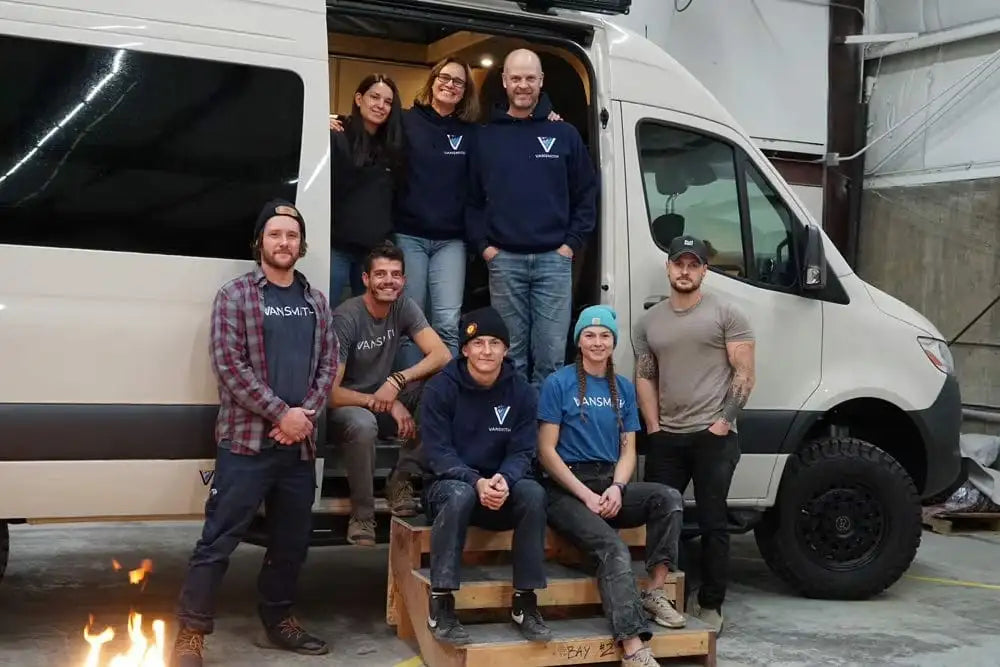
The Vansmith is a family-owned Boulder business. Buyers can discuss their requirements with the team responsible for planning and preparing their van.
Insulation, fuel-fired heating, cold-protected lithium batteries and drainable plumbing are important considerations for year-round use. Confirm which features are included in the selected model and which are optional.
Out-of-state buyers can discuss their requirements through video design calls and receive build updates throughout the process. Payment milestones and delivery arrangements should be confirmed in the purchase agreement.
Boulder to Boston is approximately 1,950 miles by road, depending on the route. Transport can be arranged as part of the purchase, with final delivery details and costs confirmed in the quote.
The Vansmith offers a lifetime cabinetry warranty to the original owner, subject to the applicable terms. The company is NOAH certified. Confirm warranty coverage, service arrangements and any insurance or financing requirements before purchasing.
Start by comparing the Mercedes-Benz Sprinter and Ford Transit. The platform, wheelbase and drivetrain influence interior layout, exterior dimensions and suitability for your parking situation.
Decide whether you need two berths or four and how much gear storage you require. Start with the van designer.
Compare heating, insulation, battery temperature protection, drainable plumbing, tire suitability and corrosion-resistant hardware against New England conditions. Confirm vehicle dimensions and loaded weight before finalizing your selection.
Review camper vans for sale and used vans for current availability.
Conversion packages start at $46,950, while complete vans with the chassis included start at $115,950. Call (303) 414-6834 for a fixed, itemized quote covering your selected specifications and any delivery costs.
Chassis availability varies by platform, drivetrain and model year. Confirm current availability and the expected timeline for your selected vehicle and layout before placing an order.
The process can include video design calls, build photos and staged payments. The stated payment schedule is a $2,500 design deposit, 50% at design approval, 25% at build launch and 25% at handover. Confirm the schedule and terms in your agreement. See our process.
Boulder to Boston is approximately 1,950 miles by road. Transport can be arranged as part of the purchase, or some buyers may choose to fly into Denver and drive the van home. Confirm transport availability, cost, insurance and handover arrangements before finalizing the purchase.
Handover includes final payment, a walkthrough of the vehicle's systems and the relevant documentation. Pay particular attention to the water system walkthrough so you understand how to drain and winterize the plumbing before freezing weather arrives.
Ready to start? Use the van designer, browse camper vans for sale, or call (303) 414-6834. For the statewide view, see camper vans in Massachusetts.









Email: info@thevansmith.com
Text: 303-414-6834
Form: Tell us what you need
Call: 303-414-6834
Book a call:
(We are currently not booking any new service work while we revamp our service department.)
Visit us (by appointment):


