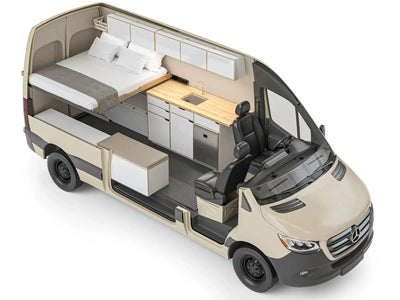
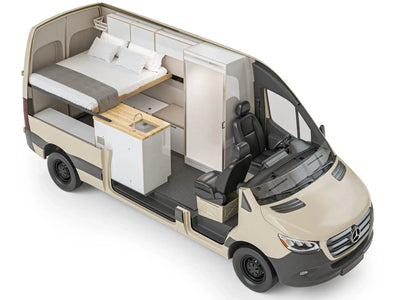
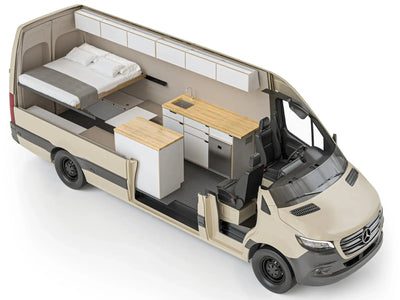
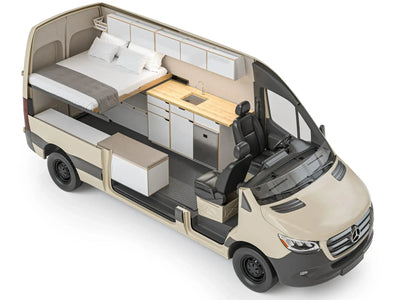
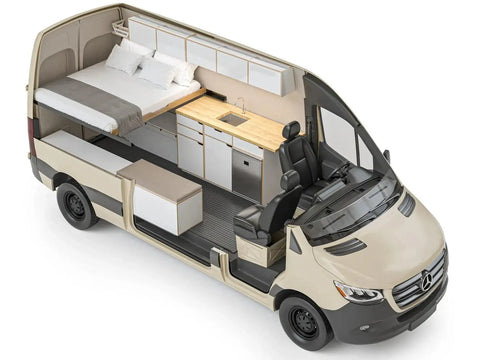
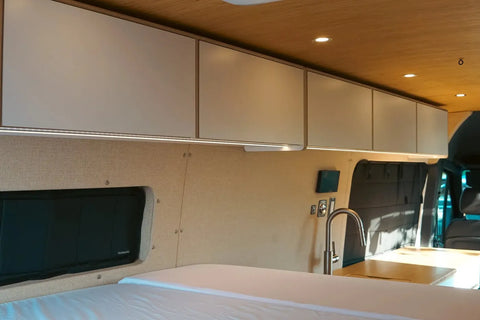
Choosing between a Mercedes Sprinter and Ford Transit is one of the most important decisions you'll make when entering the van life world or selecting a commercial cargo van. Both platforms dominate the full-size van market, but they serve different needs and priorities. After years of working with both platforms in real-world conditions, we've learned that success comes from matching the right van to your specific requirements, budget, and adventure goals.
Whether you're thinking about a Mercedes Sprinter vs Ford Transit for van life, business use, or trip travel, this full comparison will help you make a smart choice. Our goal is to match your choice with your needs and dreams, and you can also explore our camper van conversion packages to see how each platform can be built out.
What Size Van Do You Need?

Before diving into detailed comparisons, think about your space needs. Both Sprinter and Transit offer many wheelbase and height options. According to official manufacturer specifications from Mercedes-Benz and Ford, you can choose from multiple lengths and roof heights to dial in the right footprint for your build, then work with a professional van conversion team to design the ideal layout.
Wheelbase Options:
- Short Wheelbase: Better maneuverability, easier parking, improved fuel economy, but limited interior space
- Long Wheelbase: Maximum interior room, better highway stability, more storage capacity, but reduced maneuverability
Height Considerations:
- Standard Roof: Better fuel economy, access to parking garages, lower profile
- High Roof: Standing room for most adults, overhead storage options, more open interior feel
Your choice between these setups will greatly affect your van's abilities and how you'll use it every day, so it can help to browse our completed builds in the camper van gallery for real-world examples.
Sprinter vs Transit: Comprehensive Overview

| Feature | Mercedes Sprinter | Ford Transit |
|---|---|---|
| Price Range | $50,830 – $84,328 | $47,400 – $67,700 |
| Space & Payload | Superior interior dimensions, high payload capacity | Excellent space efficiency, strong payload ratings |
| Engine Options | 2.0L turbo diesel, 3.0L V6 turbo diesel | 3.5L EcoBoost V6, 3.5L naturally aspirated V6, 2.0L EcoBlue diesel |
| Drive Systems | RWD, AWD, 4x4 available | RWD, intelligent AWD available |
| Reliability & Maintenance | Excellent long-term durability, higher service costs | Proven reliability, widespread affordable service |
| Technology & Features | MBUX infotainment, advanced driver assistance, premium interior | SYNC 4 system, smartphone integration, comprehensive safety features |
| Fuel Economy | 18-25 MPG (diesel engines) | 14-20 MPG (varies by engine) |
| Interior Height | Up to 79.1" (High Roof) | Up to 81.5" (High Roof) |
| Towing Capacity | Up to 7,500 lbs | Up to 7,500 lbs |
| Resale Value | Excellent (60-70% retention) | Good (moderate retention) |
Mercedes Sprinter: The Premium Adventure Platform
The Mercedes Sprinter has long been the dream choice for van builds and business use. Its strong name for build and power is well-earned through years of proven performance.
Sprinter Advantages
Exceptional Build Quality and German Engineering Sprinters are built to work standards made for hundreds of thousands of miles of daily use. The high build quality is easy to see from the solid feel of doors and panels to precise manufacturing tolerances throughout the vehicle. This translates to long-term reliability and durability that justifies the premium investment.
Superior Interior Dimensions When it comes to inside space, Sprinters set the standard. High roof models provide real standing room for most adults, while inside width allows more cozy layouts than most rivals. For extended time spent inside your van, this space edge becomes invaluable for comfort and function.
Outstanding Fuel Economy Modern Sprinter diesel motors give strong mileage, often getting 18-25 MPG based on conversion weight and driving conditions. EPA fuel economy estimates for diesel cargo vans show that well-equipped Sprinters are among the more efficient full-size options in their class.
Factory 4x4 Availability Mercedes offers true 4x4 Sprinters with real off-road ability without add-on changes. While costly and fairly rare, these are the top platform for serious backcountry trips and remote area access.
Strong Resale Value Sprinters maintain their value better than most work vans. Well-kept Sprinter conversions often keep 60-70% of their value after many years, making them a safer long-term money choice.
Sprinter Disadvantages
Premium Pricing Throughout Ownership Sprinters command premium prices both new and used expect to pay $10,000-$20,000 more than similar Transits. This premium extends beyond purchase price to parts, service, and insurance costs throughout your time owning the van.
Complex Modern Systems Today's Sprinters feature advanced exhaust systems, electric controls, and computer-run parts. While these systems work well when well cared for, repairs can be costly and need special knowledge and tools.
Limited Service Network Despite Mercedes growing their work van service network, trained techs remain less common than Ford dealers, especially in remote areas where van lifers often travel.
Ford Transit: The Versatile Workhorse
Ford's Transit has quickly gained fans by striking a strong balance between power, cost, and ease of use that appeals to a broad range of users.
Transit Advantages
Excellent Value Proposition Transits usually cost $5,000-$15,000 less than similar Sprinters while giving the same use and power. This value edge extends to parts, service, and insurance costs throughout the ownership experience, which aligns with pricing and cost-of-ownership insights from outlets like Edmunds’ Ford Transit cargo van overview.
Extensive Service Network Ford's broad dealer and service network means Transit service is easy to find almost anywhere in North America. This easy access gives real peace of mind when traveling remote areas or needing surprise repairs.
Multiple Drivetrain Options Ford offers rear-wheel drive and smart all-wheel drive options. The AWD system gives strong grip for winter weather and light off-road use without the hassle and cost of full 4x4 systems.
Proven Commercial Reliability Ford's long experience in work van markets turns into trusted platforms. While not quite matching Sprinter life span in some cases, well-maintained Transits provide years of reliable service with lower maintenance costs.
Engine Variety The EcoBoost turbo gas engine gives good power while cutting diesel hassle, though with some fuel economy trade-off. Diesel options are also offered for better mileage.
Transit Disadvantages
Fuel Economy Limitations Transit fuel use usually trails diesel Sprinters, especially with gas motors. Expect 14-20 MPG based on engine choice and conversion weight, which can affect long-distance travel costs. This range is in line with real-world and test results reported by automotive publications such as Car and Driver’s Ford Transit reviews.
Narrower Interior Width While fine for most uses, Transit inside width is less than Sprinters, which can limit layout options for wider beds or complex floor plans in conversion builds.
Width is not the whole story for a conversion, though. The Transit has straighter interior walls, which simplifies cabinet and furniture installation and helps a build make efficient use of a slightly narrower footprint. The Sprinter counters with a wider cargo area and higher payload capacity in certain configurations.
Road Noise Levels Transits can be noisier than Sprinters, especially during highway driving. Extra sound deadening is often needed for cozy long trips and sleeping.
Limited 4x4 Options Ford's 4x4 Transit supply has been uneven over the years. All-wheel drive is offered but doesn't give the same off-road ability as true 4x4 systems for serious backcountry access.
Budget Considerations: How Sprinter vs Transit Stack Up Price-Wise
Initial Purchase Price
- Mercedes Sprinter: $50,830 – $84,328 (new)
- Ford Transit: $47,400 – $67,700 (new)
The Transit offers quick savings of $3,000-$15,000 based on setup, but think about total cost of ownership:
Ongoing Costs:
- Maintenance: Sprinter service costs are typically 20-30% higher
- Parts: Mercedes parts command premium pricing
- Insurance: Sprinter insurance rates are generally higher
- Fuel: Sprinter diesel efficiency can offset higher fuel costs
- Resale: Sprinter's superior resale value recovers some premium over time
Used Market Considerations: Sprinters hold value better, meaning higher used prices but better long-term money choice. Transits lose value faster at first but become easier to buy in the used market after 3-5 years.
One more budget angle is worth weighing before you commit. The money you save on a Transit can fund real conversion upgrades, while a Sprinter's premium may limit your conversion budget even as it gives you a stronger base platform to build on.
Best Van for Different Use Cases
Choose Mercedes Sprinter If:
- Maximum interior space is essential for full-time living or extensive equipment
- Long-term reliability and durability are top priorities
- Budget allows for premium pricing both initially and ongoing
- Factory 4x4 capability is needed for serious off-road exploration
- Strong resale value is important for future flexibility
- Fuel economy is crucial for high-mileage travel
Choose Ford Transit If:
- Value-to-capability balance is your primary concern
- Widespread service availability is important for travel or remote work
- AWD capability meets your traction needs without full 4x4 complexity
- Lower initial investment allows more budget for conversion or equipment
- Gasoline engines are preferred over diesel complexity
- Moderate interior space is sufficient for your intended use
Professional Use Considerations
For Commercial Applications:
- Sprinter: Better for premium service businesses, long-haul delivery, applications requiring maximum payload
- Transit: Excellent for local delivery, service calls, applications prioritizing low operating costs
For Van Life Conversions:
- Sprinter: Ideal for full-time living, couples wanting maximum space, those planning extensive travel
- Transit: Perfect for weekend warriors, budget-conscious converters, those wanting reliable service access
Conclusion
The choice between Mercedes Sprinter and Ford Transit mainly depends on your clear needs, budget, and planned use. The Sprinter is the premium option with better space, build strength, and long-term value retention. The Transit offers strong ability at a more reachable price point with wide service support.
Both vans have proven they are strong platforms for work use, van life builds, and trip travel. Rather than searching for the "perfect" van, focus on finding the right match for your needs, and consider starting with our van build questionnaire to clarify your priorities.
The bottom line: If budget allows and the most space, build, and resale value are key, the Mercedes Sprinter earns its higher price. If you want strong ability at a better price point with broad service support, the Ford Transit gives great value.
Your perfect van is the one that fits your clear needs, trip goals, and money picture. Both Sprinter and Transit can serve as strong bases for years of steady use and unforgettable trips.
Think about visiting local dealers to try both platforms firsthand. There’s no swap for sitting in the driver's seat and feeling the inside space of each option before making your final choice, and you can also learn more about Ford Transit reliability to make a confident decision, then contact The Vansmith team when you’re ready to plan your build.
Frequently Asked Questions
Is a Sprinter or Transit better for van life?
Both can work well for van life, but they serve slightly different priorities. The Sprinter leans premium with strong build quality, diesel efficiency, and long-term durability, while the Transit offers excellent space efficiency, strong gas engine options, and more affordable service and purchase prices.
What is the main difference in price between Sprinter and Transit vans?
According to the comparison, Mercedes Sprinter prices typically range from about $50,830 to $84,328, while Ford Transits usually run from about $47,400 to $67,700. In general, Transits start lower and top out lower, making them the more budget-friendly option.
Which has more interior space, Sprinter or Transit?
Both vans offer multiple wheelbase and roof height options, but the Sprinter is noted for superior interior dimensions and high payload capacity. The Transit, however, is very space-efficient and offers a slightly taller maximum interior height (up to 81.5" vs. the Sprinter’s 79.1" high roof), as reflected in the detailed spec sheets on the Mercedes-Benz Sprinter technical data and Ford Transit cargo van capability page.
Sprinter vs Transit: which is more reliable and easier to maintain?
The Sprinter is known for excellent long-term durability and is built for high-mileage use, but it comes with higher service costs and more specialized maintenance. The Transit has proven reliability as well, with the advantage of widespread, more affordable service options across the country.
Do Sprinter vans last longer than Transit vans?
Generally, yes. Sprinter diesel engines are known for exceeding 300,000 miles with proper maintenance, while most gas-engine Transits reach 150,000 to 200,000 miles. If you plan to put on serious mileage over many years, the Sprinter's diesel drivetrain has a real longevity advantage.
How do Sprinter and Transit compare for fuel economy and engine options?
Sprinters use diesel engines and typically return around 18–25 MPG, which is strong for a full-size van. Transits offer a range of gas and diesel engines with fuel economy around 14–20 MPG, trading a bit of efficiency for broader engine choices and easier fueling in some areas.
About the author

Eugene Smit
CEO
Eugene is the CEO of The Vansmith, based in Boulder, Colorado. He writes across topics related to van builds, ownership, and the camper van industry.
Read more about Eugene