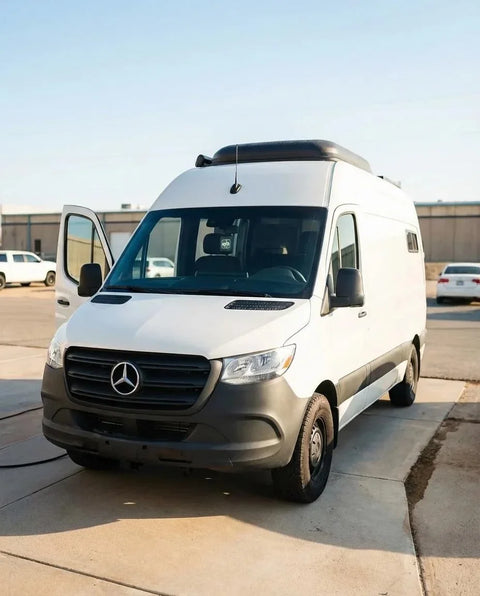
A Class B motorhome is a compact RV built inside a full-size van chassis, Sprinter, Transit, or ProMaster, typically 15 to 24 feet long. It trades some living space for real maneuverability and fuel economy: 18 to 25 MPG versus 8 to 14 MPG for a Class C. New models run $130,000 to $260,000 in 2026. They're the strongest fit for solo travelers and couples; families or groups of three or more will feel the space limits fast. A custom conversion lets you pay for only the features you'll actually use instead of a factory template.
A Class B motorhome is a compact RV built on a van chassis, typically 15 to 24 feet long and 8 to 10 feet tall, small enough to fit in a regular parking spot but built out with real living space inside. That combination makes Class B vans a strong fit for solo travelers and couples who want to move between cities and remote trails without giving up comfort.
What defines a Class B motorhome
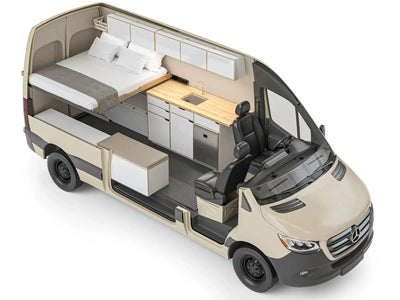
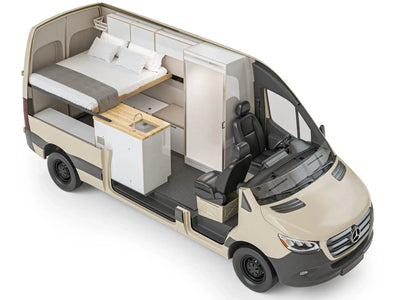
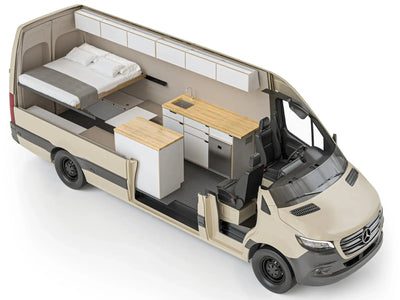
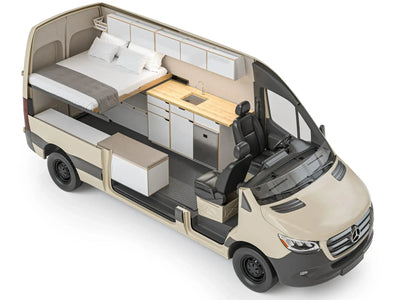
Class B motorhomes, often called camper vans, keep the van's original body intact. The interior is designed for life on the road, while the exterior retains the familiar shape of a full-size van. This provides serviceable access to the underlying vehicle while making room for a compact kitchen, wet bath or cassette toilet, convertible or fixed beds, and storage throughout the interior.
Most Class B vans are designed to sleep two adults comfortably, with some layouts adding a small third berth. Despite their compact footprint, thoughtful layouts can provide comfortable living space and support extended off-grid travel. Class B+ variants offer additional interior room through a wider body or slide-outs, although they may sacrifice some of the maneuverability associated with a standard van.
Chassis: Sprinter, Transit, and ProMaster
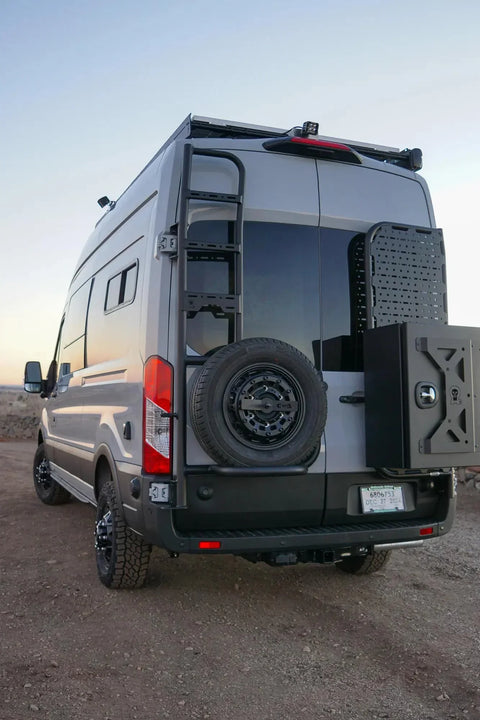
The chassis is the real foundation of any Class B build. The Mercedes-Benz Sprinter is known for its diesel engine, advanced safety tech, and available 4x4, and it's the go-to platform for premium conversions and long-haul travel. Ford Transit brings all-wheel drive and a lower starting price with a gas engine, a solid entry point without giving up much comfort. Ram ProMaster is front-wheel drive and maximizes interior width, but it's less common for high-end custom builds. Fuel economy varies by chassis and engine: Sprinter diesels often reach 22 to 25 MPG, gas models land around 18 to 20 MPG, a real difference at the pump compared to larger RVs.
At The Vansmith, we focus on Sprinter and Transit platforms for their reliability, service access, and versatility. ProMaster conversions exist too, but most of our customers prefer the track record and options available on Sprinter and Transit bases.
Interior layout and what actually fits
Wet baths combine a shower and toilet into one small room; cassette toilets use a removable tank instead, which is simpler to empty. Kitchens typically pack in a two-burner stove, a 2 to 5 cubic foot fridge, a sink, and sometimes a microwave or induction cooktop. Convertible lounges and dinettes that fold into a bed are common, trading some daytime lounge space for a place to sleep.
Storage tends to live under benches, over the cab, and in built-in cabinetry. Newer models add induction cooktops and modular furniture that make it easier to fit a layout to your own travel style rather than a fixed factory template. You can see some of that range in our own layouts.
Key features and everyday practicality
The main draw of a Class B is agility. You can use one as a daily driver, weaving through city streets, tight campsites, or parking garages, in a way that's much harder in a larger Class C or A rig. Many Class B vans inherit real safety tech from the base van, lane assist, blind spot monitoring, adaptive cruise control, along with HVAC, entertainment, and storage that make the interior feel less like a shell and more like a small home. Solar panels, lithium battery banks, and inverters make multi-day off-grid stays realistic rather than a stretch.
For a closer look at how these features come together in practice, our Ford Transit conversions and Sprinter builds each show a different take on the same platform.
Class B versus Class C
Class B vans cost more per square foot, but their maneuverability and lower maintenance are hard to match. Class C motorhomes give you more living space, bigger kitchens, and separate sleeping zones, but they're harder to park and drive, and typically get only 8 to 14 MPG versus the 18 to 25 MPG range common in a Class B. If you're deciding between the two, the real question is whether you'd rather park almost anywhere and travel light, or trade some of that agility for more interior room.
Where a Class B falls short
Water and waste tanks are smaller than what a Class C or A carries: fresh tanks usually run 18 to 35 gallons, and gray or black tanks range from 10 to 25 gallons, which means more frequent stops to refill and dump on longer trips. Storage is tighter too, so a Class B works best for one or two people; a family or a group of three or more will feel the space constraints quickly. A family van conversion or a larger platform is worth a look if that's your situation.

What a new Class B actually costs in 2026
A new Class B motorhome starts around $130,000 and can top $250,000 for a luxury or 4x4 build. A few real examples from this year's lineup show the range: the Airstream Interstate 24GL, built on a Sprinter chassis with a full wet bath and nine seatbelts, runs $220,000 to $260,000. The Winnebago Travato, a smaller ProMaster-based rig with lithium power and flexible sleeping, runs $150,000 to $170,000. The Pleasure-Way Plateau TS, known for its rear lounge and premium cabinetry, sits at $180,000 to $210,000, and the Roadtrek Zion, also ProMaster-based with solar-ready options, starts around $130,000 to $150,000. Coachmen's Galleria, also Sprinter-based, is worth a look too for its upscale interior and off-grid packages. Class B+ options like the Jayco Terrain and Winnebago EKKO suit buyers who want a bit more room without stepping up to a full Class C.
According to RV Troop, Class B motorhomes tend to hold their value better than many Class C or A RVs, driven by strong demand against limited supply; the segment now makes up roughly 20 percent of the $25 billion U.S. RV market. Insurance runs roughly $1,000 to $1,800 per year depending on use and location.
Building a Class B instead of buying one off the lot
Custom conversions on a Sprinter or Transit chassis, like our own DUO and Family XL layouts, let you skip paying for features you'll never use and put that budget into the ones you will: solar, Starlink, upgraded heating, or a rear shower, built with cabinet-grade materials and commercial-grade electrical for real four-season use. You can browse our Class B camper vans, see the build philosophy behind it on our process page, or start from The Foundation build and add only what matters for your own trips. Specific layouts like the DUO XL and Family XL show what that looks like finished, and our van build blog goes deeper into material choices and build quality if you want the details. If you're looking at 4x4 capability specifically, our 4x4 Class B options are worth comparing against a standard build.

What to look for when you're shopping
- A power system that actually matches how you camp: solar and lithium if you're off-grid often, shore power if you're not
- Heating and cooling sized for the seasons you'll actually travel in, not just the mild ones
- Cabinetry and hardware built to handle real road vibration, not just look good in a showroom
- Tank capacity and insulation quality, especially if winter trips or long stretches between stops are part of the plan
- Warranty support you can actually reach, since peace of mind matters more the farther you are from home
Is a Class B right for you?
If mobility and everyday practicality matter more to you than square footage, a Class B is probably your answer, especially if you're a solo traveler or a couple with an active, outdoor-focused routine. The trade-off is smaller tanks and storage in exchange for a home on wheels that fits in places a Class C never will. A Class B+ splits the difference if you want a bit more room without stepping up to a full Class C.
Start by defining your core needs: how many people are traveling, which chassis you prefer, and your must-have amenities. Test-driving both a Sprinter and a Transit is worth the time, since comfort behind the wheel matters more than it seems on paper. If your ideal van needs custom features or a more serious off-grid setup than a factory model offers, working with a builder directly, like The Vansmith, lets you design around your own travel style instead of a factory spec sheet.
Frequently asked questions
What is a Class B motorhome, and how is it different from Class C?
A Class B motorhome is a compact RV built inside a full-size van chassis, keeping most of the van's original exterior. It's more agile and fuel-efficient, typically 18 to 25 MPG, than a Class C, but has less interior space and storage. Class C's are bigger inside but noticeably harder to drive and park.
What are the best Class B motorhome models for 2026?
The Airstream Interstate 24GL, Winnebago Travato, Coachmen Galleria, Pleasure-Way Plateau TS, and Roadtrek Zion are among the most-discussed 2026 models, each with a different balance of price, layout, and off-grid capability.
Are Class B motorhomes good for full-time living?
They're built with shorter trips in mind, but plenty of solo travelers and couples use them full-time. The trade-off is the same one that applies to any trip: limited storage and smaller tanks mean more frequent stops.
How much does a new Class B motorhome cost in 2026?
Generally $130,000 to $260,000, with luxury and 4x4 models sitting at the higher end of that range.
Can I customize a Class B motorhome to suit my needs?
Yes. Custom builders like The Vansmith offer tailored layouts, off-grid systems, and upgraded insulation, so the van matches your actual travel style instead of a standard factory build.
About the author

Eugene Smit
CEO
Eugene is the CEO of The Vansmith, based in Boulder, Colorado. He writes across topics related to van builds, ownership, and the camper van industry.
Read more about Eugene