RV furniture works best when you choose for fit, function, weight, and secure mounting first, then looks. Which option makes sense for you depends on how your space gets used: a fixed lounge, a nightly bed conversion, or seating that must stay clear of the aisle. The trouble usually starts after the purchase, when a sofa won't fit through the door, a recliner can't open, or a loose piece eats up storage you needed for batteries, water, or gear. That's why the best buy is often the one that solves the layout, not the one that looks most like home.
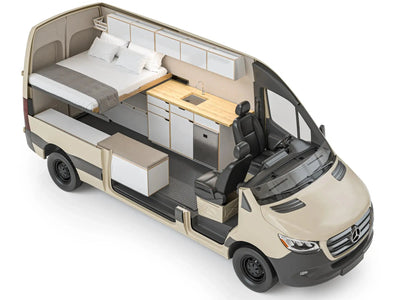
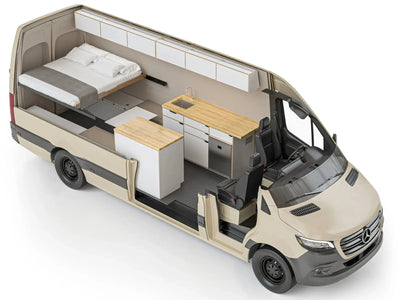
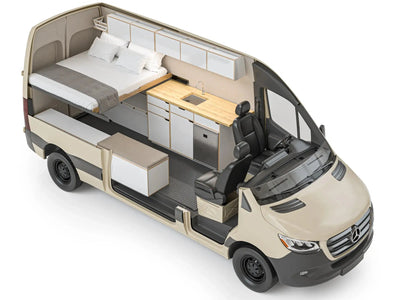
The featured photo shows the inside of a Vansmith Sprinter Duo XL, with a fixed rear bed, a built-in bench, a fold-out table, and galley cabinets all fitted to the van. (Photo: The Vansmith)
RV furniture starts with one decision: RV-specific or residential?

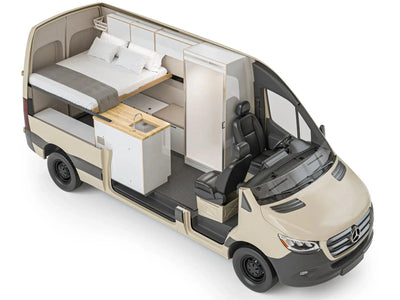
The photo above shows the inside of a Vansmith Bivy build. The galley cabinets, fridge housing, and bench are all built into the van rather than added as loose pieces, which is the alternative to buying RV furniture off the shelf. (Photo: The Vansmith)
The first fork in the road is simple. Are you buying furniture made for mobile interiors, or are you trying to adapt house furniture to an RV or van? According to Lippert's RV furniture lineup, RV-specific pieces are built for tight floorplans, lighter weight, and narrow install paths.
That matters right away in a small rig. Shop4Seats warns that residential sofas may be heavier, may not fit through the door, may not hold up well to road vibration, and may not have proper mounting points. A couch that works in a condo can become a headache in a moving vehicle.
RV-specific furniture also tends to be easier to get inside. Lippert points out that many pieces use removable backs or modular construction, so they can pass through the door and be assembled once they're in place. That's a real advantage if your install path has a tight turn or a narrow side opening.
Weight is the other half of the story. If your replacement piece is much heavier than what came out, you need to think past style and fit. RVIA's cargo guidance makes it clear that added mass affects how much occupant and cargo weight the rig can safely carry.
In camper vans, loose furniture usually creates more tradeoffs than it solves. Built-in benches, beds, and cabinets use space better, and they tend to stay quieter on rough roads. That's why many people who start by shopping couches end up looking at customize your van options instead.
One thing a lot of builders overlook is what happens after the sofa opens. It is easy to focus on overall width, then miss bed-open footprint, wall clearance, and whether the piece can be anchored safely to the van structure. That part matters more than the fabric color.
Why RV-specific furniture usually wins in small interiors
RV-specific furniture usually wins because it starts from the right problem. Lippert builds around categories common in compact layouts, like theater seating, sleeper sofas, and modular seating meant for mobile interiors. Those categories exist for a reason. Space is tight.
A good example is the Thomas Payne Seismic theater seating. It is modular and designed to fit through a 26-inch or wider entry door. A lot of residential recliners can't clear that benchmark, even before you deal with turns inside the rig.
Shop4Seats also says buyers should verify mounting points first, not just match the old couch size. That's a smart check because secure attachment matters as much as dimensions. A sofa that fits the floorplan but has no clear way to mount can still be the wrong sofa.
In van conversions, built-ins can do more than one job. A bench can double as gear storage, battery housing, or part of the water system enclosure. Off-the-shelf camper furniture rarely does that well, which is why layout-first planning, like our Foundation builds, often works better.
Built-in furniture usually gives a cleaner layout, less rattling, and better use of every inch in Sprinter and Transit floorplans. If you want a removable or modular seat, check anchor points and cabinet clearances before you commit to the layout. It has to work in real life, not just on paper.
When replacement furniture affects safety and compliance

The photo above shows a belted travel seat in a Vansmith Family build, mounted to the floor beside a built-in cabinet. Anything near a seat used while driving has to be anchored to the van structure, not just set in place. (Photo: The Vansmith)
RVIA explains that RV makers certify compliance with applicable vehicle safety standards. That is useful context before you start changing OEM seating or nearby interior parts. These are moving vehicles, not spare bedrooms.
That context matters even more near occupant seating areas, seat belts, or travel positions used while the vehicle is moving. Once furniture sits close to those zones, the decision stops being decor. It becomes a whole layout question.
RVIA also states that the combined weight of occupants and cargo should never exceed the labeled OCCC amount. The same document talks about load-carrying-capacity reduction labeling after modifications, which is a reminder that a heavy furniture swap is not just a comfort choice. Weight adds up fast.
In vans, any seat or furniture base tied into travel use needs more than wood screws into finish panels. Treat changes near seating positions as a systems decision that touches structure, layout, and weight. If you're already reworking that much, it often makes sense to look at our process for a more integrated plan.
Which RV furniture type saves the most space?

The photo above shows one common van answer to the sofa-bed question: a fixed rear bed with a small built-in bench in front of it, so nothing has to be converted at night. (Photo: The Vansmith)
For most buyers, the best furniture type comes down to one thing: how often the piece changes modes. A sofa that stays a sofa has one set of needs. A sofa that becomes your bed every night has another. That changes everything.
Shop4Seats breaks the main sleeper types into jackknife, tri-fold, and pull-out designs. Each one asks for different depth and clearance. The right pick is less about brand names and more about how the open piece affects your aisle, galley, and daily routine.
On paper, the most compact option can look like the clear winner. In practice, a bed that opens fast but blocks your fridge or forces you to step over shoes every night can get old fast. In smaller camper vans, every moving function needs to earn its keep.
That is why it helps to frame this choice as daytime lounge space versus nighttime sleeping ease. Wall clearance, reclined depth, and open-bed footprint are the three numbers that matter most. If you are still shaping the whole interior, our van build blog is a good place to see how those tradeoffs play out in real layouts.
Jackknife, clickback, tri-fold, and pull-out sleepers compared
Jackknife sofas stay popular in smaller RVs because they usually need less floor space to convert. Shop4Seats says they work by folding the back down, which is simpler than a full pull-out mechanism. That usually helps in shallow spaces.
A strong example is the Qualitex Venture no-arm jackknife. Its dimension sheet lists a minimum wall clearance of 1 inch, which is very tight for a sleeper. If your rig has cabinets across the aisle, that small clearance can be the difference between a usable bed and a blocked walkway.
Lippert's Thomas Payne Heritage clickback sleeper sofa gives buyers another compact reference point. It comes in a 62-inch width, which is helpful when you are comparing smaller sofa-bed footprints. Still, width alone won't tell you enough.
Shop4Seats recommends comparing extended bed depth, not just closed width, before choosing between jackknife, tri-fold, and pull-out styles. Pull-out sleepers can give you a more familiar mattress-like surface, but they usually demand more open floor area than jackknife designs. That's the tradeoff.
In van builds, a fixed bed plus a smaller integrated bench often works better for couples who travel often. It removes the nightly setup and keeps the aisle more predictable. Readers looking at two-person layouts can compare that idea with our vans for couples and the DUO XL layout.
Recliners and theater seating in tight floorplans

The photo above shows two belted captain seats in a Vansmith Family van. Seats like these give comfortable lounge seating without the floor space a theater recliner needs when it reclines. (Photo: The Vansmith)
Theater seating can make sense in a larger motorhome, but tight floorplans need hard numbers. The Thomas Payne Seismic line lists just 3 inches of required wall clearance, which is a useful wall-hugger benchmark. That sounds small, but you still need room for the recline path and the aisle in front.
That same Seismic recliner is rated for a 300-pound user capacity. Published capacity numbers like that help you compare products on more than looks alone. They also remind you to separate product weight from user load rating, because those are not the same thing.
The product page also gives reclined depth and overall dimensions. That is far more useful than a simple width listing when your aisle is narrow. If you only compare width, you can miss the point where the footrest blocks the path to the bed or galley.
Because the Seismic line is modular and fits through a 26-inch or wider door, it is more realistic for retrofits than many one-piece recliners. Still, in camper vans, theater seating is usually hard to justify because the recline path competes with storage, bed access, or kitchen use.
In vans, seating that works in both travel and camp mode without big recline clearances usually ages better, especially with built-ins in a high roof layout. If you need more standing and living room in a mid-roof van, one of our pop-tops is another way to get it.
The numbers to check before you buy RV furniture

The floor plan above is the Vansmith Duo layout. It shows how the bed, bench, galley, and swivel passenger seat share a narrow aisle, which is why open-bed depth and clearances matter more than closed width. (Plan: The Vansmith)
The most common buying mistake is measuring only the old furniture footprint. Shop4Seats says you also need to measure install width, entry door fit, extended bed depth, and slide-out depth before ordering. A sleeper that matches the old couch width can still fail on the way in or once it opens.
Lippert and Shop4Seats both publish product-level specs that are more useful than broad category pages. Those details matter because dimension sheets often show the opened-bed footprint and clearance needs, not just the closed sofa size. That's the data you need.
In a van conversion, the check gets even tighter. Furniture dimensions have to work around wheel wells, wall taper, window trim, and cabinet swing paths, not just open floor area. A tape measure can say yes while the layout still feels cramped once bedding, shoes, dogs, or swiveling front seats enter the picture.
It helps to mock up seating footprints on the floor with tape before approving a change. Feeling the aisle pinch at real scale changes the decision fast. If you're still planning the shell and major systems, start with Sprinter conversions or Transit conversions so the furniture choice fits the platform.
Fit measurements that matter more than overall width
The Thomas Payne Seismic recliner's 3-inch wall-clearance requirement is a good reminder that side and rear clearances matter as much as width. The Qualitex Venture jackknife's 1-inch minimum wall clearance shows how some sleeper mechanisms work better in shallow spaces. Those numbers are small, but they change layout options in a big way.
Shop4Seats also recommends checking extended bed depth. That tells you if the sleeper will block walkways or hit opposing cabinets once open. For many buyers, this is the number that decides whether the sofa is practical or annoying.
Entry-door fit matters before anything else. Lippert's Seismic line calls out fit through a 26-inch or wider door, which is a useful install threshold. In Sprinter and Transit vans, the tightest point may be the side door opening or a turn past cabinetry, not the final parking spot for the furniture.
That sounds like overthinking a couch, but plenty of pieces technically fit the room and never really fit the van once people start living in it.
Weight, capacity, and why OCCC matters
RVIA's required labeling language says the combined weight of occupants and cargo should never exceed the labeled OCCC amount. That means furniture weight is part of a larger payload math problem, not a side note. If you add pounds here, you lose pounds somewhere else.
RVIA also references load-carrying-capacity reduction labeling after modifications. That is directly relevant when a lightweight OEM sofa gets replaced with a heavier aftermarket piece. Even a modest change can trim your margin for water, batteries, bikes, or recovery gear.
Lippert product pages publish both product weight and user-capacity data on select items. Those are two separate numbers to compare. The Seismic recliner's 300-pound rating is a good example of the kind of published seating capacity worth checking instead of assuming all RV seating is equal.
In vans, weight mistakes often show up later. Owners add residential-style seating after the build, then find they have less room in the payload for gear or suspension tuning. If your layout already has overlapping systems, it's smart to contact us before ordering a heavy replacement on your own.
How to keep camper furniture secure in transit

The photo above shows a Vansmith bed platform before the mattress goes on. It is built into the van interior as part of the layout rather than set in as a separate piece of furniture, which is what keeps it quiet and in place on the road. (Photo: The Vansmith)
One of the clearest warnings from Shop4Seats is that residential furniture may lack proper mounting points, even if it physically fits. The same retailer advises buyers to check mounting points before ordering a replacement sofa, especially on retrofit projects. Fit is only step one.
RVIA's explanation that RVs are regulated vehicles adds helpful context here, but the plain-English takeaway is simple. Interior changes should be approached like vehicle changes, not room decor changes. Furniture near travel seating positions needs extra caution because it affects how people ride in the vehicle.
In vans, secure mounting is not just about stopping movement. It also helps cut squeaks, slow fastener loosening, and protect nearby cabinetry over thousands of road miles. Furniture should tie cleanly into the van structure or the integrated build, rather than relying on improvised anchors into finish panels.
If you are adding seats, changing a bench, or reworking a travel-use area, it helps to start with a system-level view. That is where our DIY blog can help you frame the project, even if you decide to hand the work off later.
What to verify before replacing OEM seating or sofas
Start by confirming the replacement piece is actually intended for RV use. Sellers that discuss mounting, mobile use, modular construction, or retrofit install details are usually giving you better signals than sellers who only show lifestyle photos. You want proof that the product was designed for motion and tight installs.
Door-fit notes and removable-back details are especially useful. They show the maker thought about how the piece gets inside, not just how it looks once it lands. Shop4Seats also stresses that matching old dimensions is not enough, because the mounting locations on the floor or platform matter first.
OCCC still belongs in this check. A replacement sofa changes more than seating. In a camper van, it can also affect under-seat storage, battery access, heater duct routing, and even usable galley toe-kick space.
Evaluate furniture changes alongside the rest of the systems, because a seat base often shares space with electrical, heat, or storage. If the project is getting that deep, a full layout review usually saves time.
When built-in seating makes more sense than aftermarket furniture

The photo above looks through the sliding door of a Vansmith Bivy build, where the galley and storage are shaped around the van instead of fitted in afterward. (Photo: The Vansmith)
Aftermarket RV furniture is strongest when you need a simple replacement in an existing motorhome layout. It is less ideal when every inch has to do two or three jobs. That is the line many van owners run into.
Shop4Seats' focus on sleeper categories and replacement fit makes sense for RV retrofits. Van conversions are different because seating often needs to integrate with storage and systems from day one. Built-in seating can be shaped around wheel wells, wall curves, and table systems in a way off-the-shelf camper furniture cannot.
A custom bench can also be designed around exact cushion feel, bed length, storage access, and finish materials that match the rest of the interior. Layout-driven furniture usually performs better on real trips than generic bolt-in pieces.
A complete build is the clear alternative to piecing together camper furniture one item at a time, especially if the goal is one clean plan instead of a stack of workarounds.
Where to buy RV furniture, and when custom is the better move
For direct-to-buyer shopping, Lippert and Shop4Seats are two of the most useful places to start. They publish categories, specs, and fit details instead of only polished room photos. That helps you compare real numbers before you buy.
Lippert is especially useful for Thomas Payne RV furniture, including theater seating and sleeper sofas with published dimensions and install notes. Shop4Seats is helpful both as a retailer and as a spec resource because its buying guide focuses on sleeper types, measurements, and mounting concerns. That makes online shopping less of a guess.
The better path depends on the project. Replacement furniture for an existing RV often makes sense online, while a van build with overlapping storage and systems usually benefits from integrated design. For buyers who want a finished interior rather than a parts hunt, we offer ready-built Bivy vans and tailored layouts built around built-in furniture.
As of 2026, The Vansmith's Duo starts at $115,950 in Sprinter and $113,950 in Transit. The Family starts at $120,950 in Sprinter and $118,950 in Transit. Here is a quick comparison:
| Model | Platform | Starting price |
|---|---|---|
| Duo | Sprinter | $115,950 |
| Duo | Transit | $113,950 |
| Family | Sprinter | $120,950 |
| Family | Transit | $118,950 |
That sounds like a lot of money for a bed. It is. But in a van, the furniture often shares space with storage, wiring, water, heat, and daily living paths, so the price gap usually buys you layout efficiency and fewer regrets later.
Best places to actually shop for RV furniture online
Lippert's RV furniture collection organizes products by RV-specific use cases like recliners, theater seating, sleeper sofas, dinette cushions, and modular options. Product pages can also include practical install data like door fit, wall clearance, overall dimensions, shipping dimensions, and product weight. Those details help narrow the field fast.
Shop4Seats offers RV sofa beds in categories like jackknife sofas, pull-out sleepers, and double recliners. Its buying guide is useful because it tells shoppers what to measure before buying instead of assuming they already know how to spec RV furniture. That is rare, and it is helpful.
Dimension PDFs are often worth downloading before purchase because they show open-bed footprint and minimum clearance in a way category pages may not. If the furniture is going into a camper van, pressure-test whether it solves a real layout problem or just adds a familiar household feature. Familiar is not always functional.
When to skip aftermarket furniture and choose an integrated build
Aftermarket RV furniture works best when you are replacing like for like in a motorhome or trailer that already has a dedicated furniture bay. In a van, the same square footage often has to serve as seating, sleeping, storage, and systems access. That makes integrated benches and cabinetry more efficient.
An integrated build is a better fit for buyers who want furniture tied into the whole layout instead of adapted afterward. As of 2026, a ready-built Bivy takes about 8 to 10 weeks and a tailored build about 12 to 16 weeks, which is useful to know if you are weighing piecemeal upgrades against a cohesive build. For family-focused layouts, you can see how that works in our family vans and the Family XL layout.
The Vansmith is based in Boulder, Colorado, and backs its cabinetry with a lifetime warranty. If off-the-shelf camper furniture cannot solve your seating, storage, or layout problem cleanly, an integrated build usually gives you a better answer.
FAQ
What kind of RV furniture works best in a small camper or van?
In small interiors, the best piece is usually the one with the smallest real-use footprint, not the smallest closed width. Jackknife sofas can work well because some designs need as little as 1 inch of wall clearance, while certain recliners need 3 inches behind them and more depth when open. In vans, that often pushes buyers toward simpler sleepers or built-in benches that do more than one job.
Can I use residential furniture in an RV or camper van?
Sometimes it will fit physically, but that does not make it a good choice. Shop4Seats warns that residential furniture may be heavier, may not fit through the door, may not hold up to road vibration, and may lack proper mounting points for mobile use. Those four issues show up fast once the vehicle starts moving.
How do I know if RV furniture is too heavy for my rig?
Check both the furniture's published product weight and your rig's OCCC label. RVIA states that the combined weight of occupants and cargo should never exceed the labeled amount, and modification-related weight changes can trigger load-carrying-capacity reduction labeling. In vans, extra furniture weight also competes with water, batteries, bikes, and passengers.
What should I measure before buying RV furniture?
Measure install width, entry door clearance, extended bed depth, and any slide depth if the piece sits in a slide. Shop4Seats specifically recommends checking those numbers before ordering a sleeper sofa because the open-bed footprint often matters more than the closed width. In vans, also check turns past cabinets, wheel wells, and front-seat swivel space.
Where can I actually buy RV furniture online?
Lippert and Shop4Seats are two practical places to start because they sell RV-specific seating and sleeper sofas with current specs, dimensions, and fit notes. Lippert carries Thomas Payne furniture, while Shop4Seats offers category pages and dimension sheets for jackknife, pull-out, and other camper furniture options. If you are shopping for a van, use those sources for reference, then compare them against the space demands of your full layout.
Is custom built-in seating better than aftermarket camper furniture?
In many vans, yes, especially when the same bench needs to provide seating, storage, and system access. Aftermarket RV furniture is often best for like-for-like RV replacements, while integrated builds are usually better when the furniture must work around wheel wells, cabinets, batteries, or water systems. That is why built-ins tend to make more sense in Sprinter and Transit conversions.
About the author

Eugene Smit
CEO
Eugene is the CEO of The Vansmith, based in Boulder, Colorado. He writes across topics related to van builds, ownership, and the camper van industry.
Read more about Eugene