Converting a van into a camper starts with planning: define how you'll use it, pick a van (Sprinter for space, Transit for value, ProMaster for width), and sketch a layout before you buy anything. Strip the interior, treat any rust, and seal holes before insulating with a breathable material like sheep's wool. Frame walls with furring strips or aluminum, then build out electrical (size your battery bank to your actual power draw), plumbing (a 10 to 40 gallon fresh water tank is typical), and furniture. A simple DIY build runs $10,000 to $20,000, while professional or high-end builds can exceed $70,000. Budget extra time and money for surprises, and test every system on a short trip before you rely on it somewhere remote.

Dreaming about life on the open road? Whether you're chasing mountain trails, beach sunsets, or cross-country adventures, learning how to convert a van into a camper puts the freedom of travel right in your hands. In this guide, we'll walk you through every step, from planning and design to insulation, plumbing, and the final touches, so you can build a camper van that's comfortable, functional, and uniquely yours.
What should you consider when planning and designing your camper van?
Define your needs
Before buying materials or tools, take time to think about how you'll use your van:
- Will you live in it full-time or take weekend trips?
- Do you need space for bikes, climbing gear, or a family of four?
- How much off-grid capability do you want?
At The Vansmith, we believe every van should be tailored to your vision. Our proven layouts are road-tested by countless adventurers, but they're flexible enough for custom features.
Cost and time considerations
Converting a van into a camper can take anywhere from a few weeks to several months. The cost depends on your van choice, build complexity, and whether you DIY everything or hire help. A simple build might cost $10,000 to $20,000, while high-end conversions can exceed $70,000. Budget for unexpected costs: DIY often comes with surprises.
Choose your van
Picking the right van to convert to a camper is the most important decision you'll make. Popular choices include the Mercedes Sprinter (spacious, reliable, and available in multiple lengths), the Ford Transit (great value, high roof options, easier maintenance), and the Ram ProMaster (wide interior, good for maximizing living space).
Create a layout
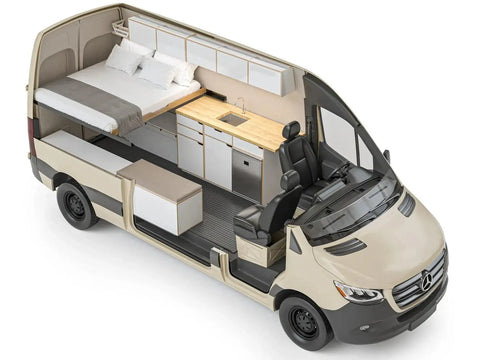
Once you know your needs, sketch your floor plan. Decide where your bed, kitchen, bathroom, and storage will go, and include space for electrical systems, water tanks, and insulation. You can also check our Layouts page for inspiration.
Arrange insurance
Many insurers require specific coverage for camper vans. Make sure your policy includes both the van and the conversion.
How should you prepare your van for conversion?
Before you start building a camping van, you need a clean slate:
- Remove seats and panels: strip the interior to the bare metal
- Clean and treat for rust: prevent problems before you cover walls and floors
- Seal holes: keep out moisture and dust
Rust is worth taking seriously at this stage. Surface rust that looks minor can keep spreading once it is sealed behind insulation and paneling, where you will not see it again for years. Treating it with a rust converter or primer before you close up the walls is far cheaper than cutting everything back open later.
What equipment should you buy for your camper van conversion?
Essential gear includes:
- Tools: jigsaw, drill, rivet gun, level, clamps
- Electrical: solar panels, charge controller, batteries, inverter
- Plumbing: water pump, tanks, PEX tubing, sink, faucet
- Furniture materials: plywood, bamboo, hinges, slides
Our guide to the best camper van toilet and bathroom options will help you choose the right bathroom setup.
As you plan how to convert a van, think carefully about your power needs. Make a list of everything you'll run: fridge, lights, fans, laptops, induction cooktop, heater, and chargers. Check the wattage of each item and estimate how many hours per day you'll use it. This helps you size your battery bank and solar array realistically, instead of guessing. A full-time digital nomad with a 12V fridge and induction cooktop will need far more power than a weekend camper using a cooler and a camp stove. Oversizing your electrical system a bit on paper is usually cheaper than tearing things apart later to upgrade.
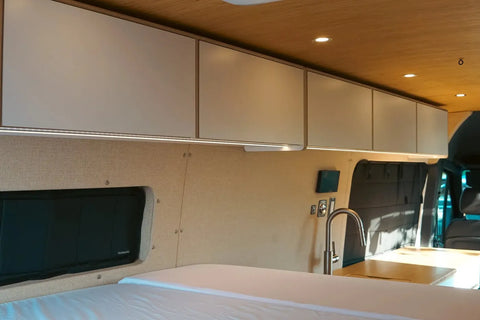
Storage is another area where planning pays off. When you map out how to convert a van, think vertically as well as horizontally. Overhead cabinets, under-bed garage space, and shallow wall niches can all add storage without crowding your living area. Design dedicated spots for bulky items like skis, bikes, or climbing gear so they don't end up blocking your bed or kitchen. Use cardboard boxes or tape on the floor to mock up cabinet sizes before you build. This quick step can reveal tight walkways, doors that won't open fully, or gear that doesn't quite fit.
Finally, consider how your build will handle different seasons. If you're learning how to convert a van for year-round use, plan for both heat and airflow. A diesel or gas heater paired with good insulation will keep you warm in winter, while roof fans, opening windows, and light-colored finishes help in summer. Think about where you'll dry wet gear, how you'll manage condensation on cold nights, and whether you need features like insulated window covers. These small details are what turn a basic build into a true tiny home on wheels.
How do you insulate and ventilate your camper van?
Insulation is the key to comfort. We recommend natural, sustainable materials like sheep's wool, which regulates temperature and moisture. Ventilation prevents condensation and keeps air fresh. Install a roof vent fan and, if possible, side windows that open. At The Vansmith, we use eco-friendly materials to help you explore responsibly.

What's the best way to frame and finish van walls?
- Framing: use furring strips or lightweight aluminum framing
- Wall panels: birch plywood is durable and light
- Finishes: bamboo and laminate are both solid choices for the interior
Framing quality matters more than it might seem at first. Poor framing can cause rattles and wear over time, so it is worth getting right before anything gets bolted to it.
Ready to turn your ideas into a road-ready build? If you'd like expert help planning or executing your conversion, contact us to get started.
What's the process for setting up a van electrical system?
Steps
- Design your system: calculate power needs for lights, fridge, outlets, and appliances
- Choose components: solar panels, alternator charger, batteries, inverter
- Install safely: use the correct wire gauges, fuses, and breakers
Our team can install electrical systems designed for off-grid reliability, keeping you powered wherever the road takes you.
How do you install a plumbing and water system in a van?
Basic systems include:
- Fresh water tank: 10 to 40 gallons
- Grey water tank: for sink or shower drainage
- Water pump: 12V pump for consistent pressure
- Hot water heater: propane or electric
Safety tip: always use food-grade hoses and fittings.

How can you create furniture and add the final details to your van?
Build furniture
Beds, benches, and storage units can be built from lightweight plywood. Hinged lids and slide-out drawers maximize space.
Add final touches
- Safety gear: fire extinguisher, CO detector
- Comfort: blackout curtains, LED lights, soft bedding
- Personal style: colors, textures, and decor that make it feel like home
This is where turning a van into a camper really becomes your own.
Tips for a successful conversion
- Don't be afraid to ask for help: join forums or hire professionals for tricky installs
- Focus on functionality and comfort: a beautiful van isn't useful if it's not practical
- Research and learn from others: blogs, YouTube, and van tours are goldmines of ideas
- Take your time and do it right: rushing often leads to costly mistakes
- Test everything before you rely on it: run your electrical, water, and heating systems through a full cycle on a short trip close to home before you take them somewhere remote
- Keep records as you build: photos, receipts, and a parts list make future repairs easier and can matter for insurance or resale down the line
Final word
Learning how to convert a van into a camper van is a journey in itself. From the first stripped panel to the final pillow on your bed, the process is about creating a space that supports your adventures, and you can also explore what to expect when ordering a Vansmith build to better understand the full process.
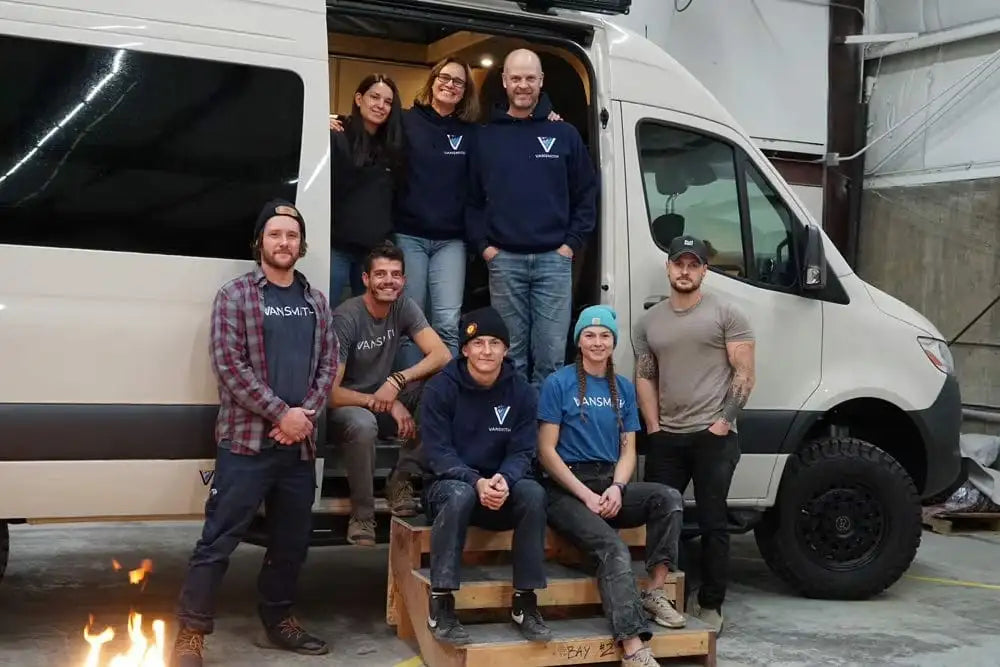
At The Vansmith, our team has spent years converting vans in Boulder, Colorado, and that hands-on experience is what shapes the layouts and systems we recommend in this guide. Whether you need a custom layout, an in-stock build, or just expert advice, we're here to make your vision a reality. We look forward to talking to you.
Frequently asked questions
What is the best small van to convert to a camper?
The Ford Transit Connect is a great small van option: easy to drive and park, yet adaptable for a compact build.
Is it cheaper to convert a van into a camper van?
Yes, DIY can save money, but time, tools, and skills are required. A professional build may be costlier but offers speed, a warranty, and expert craftsmanship.
What is the best type of van to convert into a camper?
It depends on your needs. Sprinters are excellent for full-time travel, Transits for versatility, and ProMasters for width and interior space.
How hard is it to build a camper van?
It's a challenging but rewarding project. With planning, patience, and the right resources, most motivated DIYers can complete a van-to-camper conversion successfully. Using purpose-built conversion components can also simplify the process and reduce the amount of fabrication required.
How much does it cost to convert a van into a camper?
A simple DIY build typically runs $10,000 to $20,000, while a full professional conversion can exceed $70,000 depending on the layout, materials, and systems you choose.
About the author

Eugene Smit
CEO
Eugene is the CEO of The Vansmith, based in Boulder, Colorado. He writes across topics related to van builds, ownership, and the camper van industry.
Read more about Eugene