Indian Springs State Park is one of Georgia's oldest state parks, with a historic Spring House, a 105-acre lake, and 76 campsites all in one place. Which part of that matters most to you comes down to trip style: a quick history stop, a family campground weekend, or an easy basecamp with a few nearby add-ons. That range is why Indian Springs State Park works so well for van travelers and campers who want a low-friction trip. You get history, lake time, and overnight options without needing a remote, all-day logistics plan.
The featured photo shows water spilling over the rock shoals of Sandy Creek at Indian Springs State Park, with an old stone bridge behind. The park says visitors can wade in the creek. (Photo: Dsdugan, CC0)
Why Indian Springs State Park is worth the stop

The photo above shows the stone pavilion (left) and the stone Spring House (right) at Indian Springs State Park, part of the stone structures the Civilian Conservation Corps built around the spring in the 1930s. (Photo: Dsdugan, CC0)
Indian Springs State Park has more weight than a lot of campground stops because it is widely recognized as one of Georgia's oldest state parks. Georgia began preserving the site in 1927, and it was formally included in the state park system in 1931. That gives the park a real sense of place, not just a pretty patch of woods by the water.
The official park page keeps the pitch simple: the historic spring, the seasonal museum, the lake, and overnight stays. That's a useful way to think about the park as a traveler too. You can show up for a few hours, or stay the weekend and use the same park for sightseeing, lake time, and sleeping.
Lake McIntosh is a big reason the park feels broader than a history stop. The state park history page notes that the lake covers 105 acres, which adds boating, fishing, and beach time to the mix.
Families also get some easy wins here. The park page notes trails, a playground, and biking access to Dauset Trails, so not everyone has to want the same thing for the trip to work. This is the kind of place that works best as a comfortable basecamp, not a remote off-grid hideout. If your van setup leans toward comfort and quick camp, pages like Foundation builds and Customize your van line up well with that style of travel.
A park with unusual historic importance
A lot of visitors don't realize just how early this park sits in Georgia's park story. The New Georgia Encyclopedia says Indian Springs was one of the first two state parks established in Georgia. That's a stronger history note than most state parks can claim.
The spring itself is the reason. People had been traveling here for mineral water long before modern recreation features were added, and that long tradition still shapes the visit today. The state's move to take control in 1927 shows the spring was seen as worth protecting early on.
The park later grew into more than a spring stop. This Indian Springs history PDF explains that campground and lake development came in the 1950s, which helps explain why the park now feels both historic and recreation-focused.
That matters because the history isn't hidden in a side exhibit. The Spring House is still one of the park's central visitor experiences, so the past stays right in the middle of the trip.
Who will enjoy the park most
Families tend to do well here because the activity mix is broad. You have the playground, lake recreation, trails, and several overnight options in one park. That can save a weekend when one kid wants the lake and another just wants room to ride a bike.
History-minded travelers get more than a quick plaque and a parking lot. The Spring House and museum give the park a fuller identity, so the stop feels grounded instead of generic.
Campers who like solid infrastructure will likely enjoy this more than a primitive-style park. Camping at Indian Springs is built around established lodging and a developed campground, so the trip feels easy to use. If you're planning a family rig, our family van conversions page shows the kind of setup that pairs well with parks like this.
Visitors who want a bigger itinerary can also build one without much fuss. Explore Georgia frames Indian Springs as part of a wider destination area, and cyclists get a bonus because the park specifically mentions biking access to Dauset Trails. If you want deep backcountry solitude, this probably isn't your park. If you want history plus easy recreation, it is.
The historic Spring House is the heart of Indian Springs State Park

The photo above shows the inside of the stone Spring House, where the mineral spring still flows and visitors can sample the water. The park notes that the Spring House closes at sunset. (Photo: Dsdugan, CC0)
The official park page identifies the CCC-built stone Spring House as one of the park's signature features. Visitors can sample the mineral water there, which makes the stop feel active and personal instead of just visual. For many people, this is the moment that turns the park from a generic lake park into a place with a story.
The Civilian Conservation Corps built the stone structures around the spring, and that gives the site both history and texture. You aren't just looking at a marker. You're standing inside the feature that shaped the park's identity.
The state park history page notes the continued popularity of the Spring House, which says a lot. It isn't just preserved because it used to matter. It still draws people now.
A seasonal museum adds more context when it's open. If you're the kind of traveler who likes to understand a place before heading back to camp, this stop is worth doing first. For more on setting up a van for easy weekend stops like this, see our van build blog.
What to know before you visit the spring

The plaque above, mounted at the Spring House, describes how people came to the spring for its reputed healing waters long before the park existed. (Photo: Dsdugan, CC0)
The stonework is part of the appeal, not just the water. Because the Spring House was built by the CCC, the structure itself helps tell the story. It feels like a destination the minute you walk up.
Sampling the mineral water is clearly encouraged on the official park page, so first-time visitors don't need to wonder if they should stop there. Even travelers who mainly came for the campground or lake usually remember the Spring House first.
One practical note: the museum is seasonal, so don't assume it will be open every time you visit. A smart day plan starts at the Spring House, then moves to the lake, trails, or camp setup. That order works well because the spring area explains why people came here long before the beach and campground existed.
This is also the feature most likely to win over non-campers. If someone in your group is just passing through or isn't excited about a full outdoor weekend, the Spring House gives them a clear reason to stop.
Why the spring matters historically
Indian Springs started with the spring itself. That early draw is why preservation efforts focused here in the first place, and why the park still feels different from a standard lake campground.
The CCC-era stonework also ties the park to a wider American park-building story. You can see that link in the built environment, not just read about it in a sign. That kind of visible history is easier to connect with.
The Spring House anchors the whole visitor identity of the park. It ties together the history, the museum, and the reason the site was protected in the first place. That blend of preserved history and modern recreation makes this park easier to recommend than a site that is only historic or only recreational.
Indian Springs camping, cottages, and overnight options
The overnight mix is one of the park's best strengths. According to the official park page, Indian Springs has 10 cottages, yurts, and 76 tent, trailer, and RV campsites. That range makes the park useful for more than one kind of traveler.
The camping side isn't new, either. The history PDF notes that the campground and lake were developed in the 1950s, so overnight use has been part of the park experience for a long time.
That matters for groups with mixed comfort levels. Some people want a tent or van site. Others want walls, a door, and a bed. Indian Springs can hold both in one park, which makes planning much easier.
For van travelers, this is the kind of stop where a self-contained setup really shines because you can spend more time at the spring and lake and less time building camp. If you're thinking about that kind of simple weekend use, our Sprinter conversions and Transit conversions are built around exactly that sort of easy overnight rhythm.
Campground basics and who it fits
The official count of 76 tent, trailer, and RV campsites makes this a substantial campground. You're not looking at a tiny overnight corner with a few pads. You should expect a real campground environment with other campers around you.
Because the site welcomes both tents and RVs, the feel is more social and developed than a primitive camping area. That can be a plus for first-time campers who want some structure around the trip.
Camping at Indian Springs is a strong fit for first-time campers and weekenders who want a low-planning trip. It is easy to pull in late on a Friday and still have the main attractions close by. That's why layouts like the DUO XL work so well for quick park weekends.
Cottages, yurts, and easier overnights
The 10 cottages give the park a real lodging option for travelers who don't want to bring a full camp setup. That's useful for grandparents, friends new to camping, or anyone who likes the park but not a sleeping pad.
Yurts sit in the middle. They offer a more structured overnight than a tent, while still keeping you closer to the outdoor feel than a cottage would. For mixed groups, that middle ground can solve a lot of trip-planning friction.
These options also help in shoulder season, when tent camping may feel less appealing. A family meetup works better when some people can book a cottage and others can stay in campsites or a van.
A practical way to frame the park is simple: it works whether you arrive in an RV, a camper van, or with no camping gear at all. If your group is balancing adults, kids, or different sleep styles, our vans for couples and Family XL layout show two very different ways people solve that same problem on the road.
Lake activities: what you can actually do at Indian Springs State Park
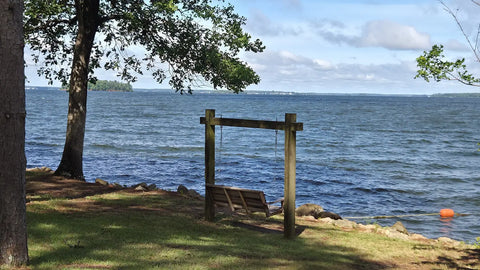
Lake recreation at the park centers on 105-acre Lake McIntosh. The official sources make clear that this is more than a scenic backdrop. It is one of the main reasons many people stay for a full weekend.
The park page lists a boat ramp, and the state park history page mentions a swimming beach and fishing. The current park page does not list swimming, so check with the park before you plan a beach day. That combination gives the lake broad appeal across ages and energy levels. Some people want to launch a boat. Others just want to sit by the water for a while.
For campers, the lake is the main counterweight to the park's historic identity. It keeps the trip from feeling like a museum stop with campsites attached.
For families, it also makes repeat visits easier to imagine because the trip can change with the weather and the mood of the group. If you want a van set up for this kind of close-to-camp trip, our build process and DIY blog cover how layouts and storage come together.
Boating, fishing, and beach time
The official listing of a boat ramp matters because it confirms real launch access. You don't have to guess whether the lake is just for shoreline viewing or casual paddling. You can plan around on-the-water use.
Fishing is also part of the intended use at Lake McIntosh, and the lakeshore gives families another easy activity without leaving the park. That can be the deciding factor when you're choosing between this and a trail-only destination.
Because the lake is 105 acres, it is large enough to feel like a central attraction while still staying manageable for a relaxed weekend.
A good trip rhythm is to visit the Spring House in the morning and save the lake for the warmer part of the day. Travelers who want both history and low-effort recreation usually find the lake to be one of the park's best selling points.
Trails, biking, and easy family activities

The photo above shows one of the picnic shelters at Indian Springs State Park, an easy base for a family afternoon between the playground, trails, and lake. (Photo: Dsdugan, CC0)
The official park page also lists trails and a playground, which rounds out the visit for families who won't spend all day on the water. Sometimes that simple extra matters more than a bigger headline feature.
The same page specifically mentions biking access to Dauset Trails. That gives cyclists and hikers a natural extension beyond the park itself, and it helps Indian Springs function as a small hub for a more varied outdoor weekend.
This breadth is a real strength. For van-based travelers, parks with several low-effort activities often make better stopovers than places that require constant driving between trailheads.
That's also the right way to set expectations. The appeal here is variety, not extreme adventure. If your group likes easy wins, this park makes them easy to find.
What else to see near Indian Springs, Georgia
Indian Springs works better when you treat it as part of a broader area, not an isolated stop. Explore Georgia's Indian Springs page supports that view, and it helps explain why the trip can feel bigger than one park visit. That's useful if you're trying to stretch a simple weekend into something fuller.
The strongest nearby add-on is Dauset Trails because the park itself specifically mentions biking access there. The Butts County attractions page also points visitors toward Dauset Trails Nature Center and the broader local mix.
Idlewilde is another name worth knowing, and both buildings that carry it are inside the park. The park history PDF says the historic Idlewilde home was acquired in the 1990s and restored as the park office and visitor center. The newer Idlewilde Event Center, which the local attractions page also lists, is a separate hall that seats 500.
For most visitors, the best pairing is a half-day in the park and another half-day exploring the Indian Springs and Jackson area. If you're planning a Georgia swing and want help dialing in your van for easy stopovers, contact us.
Best nearby add-ons for outdoor travelers

The photo above shows a bicycle and walking trail at Dauset Trails, the nature center the park points to for biking. (Photo: Dsdugan, CC0)
Dauset Trails is the first nearby stop to consider. It is the easiest add-on because the park itself points visitors there for biking.
It also gives outdoor travelers more trail mileage than the state park alone may offer. If one person in your group wants more movement while another is happy with history and lake time, this pairing works well.
The Butts County page reinforces Dauset Trails as a key regional stop, which is helpful. It shows that the area has a broader outdoor identity than you might assume from the park alone.
In practice, Indian Springs works as the comfortable basecamp and Dauset Trails works as the more activity-focused side trip. That balance is a big part of the park's appeal, especially for couples and families with mixed interests.
How to build a simple weekend itinerary

The photo above shows the inside of the Idlewilde Event Center, the park's event hall that seats about 500 people. It is a separate building from the historic Idlewilde home that serves as the park office. (Photo: Dsdugan, CC0)
Day one works best around the Spring House, the seasonal museum, and an easy walk through the historic core. Starting there gives the rest of the park more meaning because you understand why the place exists in the first place.
Day two is a natural fit for Lake McIntosh. You can spend that time fishing, walking the shoreline, or using the boat ramp, depending on your pace.
A nearby outing in the Indian Springs or Jackson area adds variety and keeps the trip from feeling too narrow. The historic Idlewilde home, now the park office and visitor center, is worth a stop for the same reason: it connects local history to the present-day visit.
A practical recommendation is to stay two nights if you want time for both the park and one nearby stop without rushing. For van travelers moving through Georgia, Indian Springs also works well as a decompression stop between longer driving days because the key attractions are concentrated and easy to access.
FAQ
What is Indian Springs State Park known for?
Indian Springs State Park is best known for its historic CCC-built stone Spring House, where visitors can sample mineral water. It is also known as one of Georgia's oldest state parks, which gives it unusual historic importance. Add in 105-acre Lake McIntosh, camping, cottages, and a seasonal museum, and you get a park with more range than its size might suggest.
Can you camp at Indian Springs State Park?
Yes. The official park page lists 76 tent, trailer, and RV campsites, along with yurts and 10 cottages for travelers who want an easier overnight. That mix makes camping at Indian Springs accessible whether you bring a tent, an RV, a camper van, or no camp setup at all.
Is there a lake at Indian Springs State Park?
Yes, the park has 105-acre Lake McIntosh. The park page lists a boat ramp, and the state park history page mentions fishing and a swimming beach, so call ahead about swimming. The lake is one of the park's main recreation areas. For many visitors, the lake is the reason a quick stop turns into a full weekend.
Why is Indian Springs important in Georgia history?
Indian Springs was placed under state control in 1927 and formally became part of Georgia's state park system in 1931. The New Georgia Encyclopedia says it was one of the first two state parks established in the state. That early status, plus the long tradition around the spring itself, is what gives the park its historic importance.
What else is worth seeing near Indian Springs, Georgia?
Dauset Trails is the clearest nearby add-on because the official park page specifically mentions biking access there from Indian Springs State Park. Explore Georgia and the Butts County attractions page also support treating Indian Springs as part of a broader Jackson-area itinerary. If you have the time, a two-night stay gives you room to enjoy both the park and one nearby stop.
About the author

Electra Chronis
Head of Marketing
Electra leads marketing at The Vansmith. She writes across van life, camping and travel, from planning a trip to choosing and building the van that gets you there.
Read more about Electra