
DUO

Mercedes Sprinter 144
OR
Ford Transit 148

Perfect for solo travelers or couples who want a compact adventure-ready van.
Seat & Sleeps
2Length
19'Shower
Exterior * * Optional Add-OnsClass B RVs, Conversion Vans & Campervans for Sale in Salem, OR
Mercedes Sprinter 144
OR
Ford Transit 148
Perfect for solo travelers or couples who want a compact adventure-ready van.
Seat & Sleeps
2Length
19'Shower
Exterior * * Optional Add-Ons
Mercedes Sprinter 144
OR
Ford Transit 148

Includes a shower setup for longer trips without compromising comfort or space.
Seat & Sleeps
2Length
19'Shower
Bench * * Optional Add-Ons
Mercedes Sprinter 170
OR
Ford Transit 148 E

Ideal for those who want extra living space and more storage for extended adventures.
Seat & Sleeps
2Length
22'Shower
Full
Mercedes Sprinter 170
OR
Ford Transit 148 E

Luxury model with full amenities, extended power systems, and interior bathroom.
Seat & Sleeps
2Length
22'Shower
Full
Mercedes Sprinter 144
OR
Ford Transit 148

Perfect for families who want space, comfort, and functionality in a compact build.
Seat & Sleeps
4Length
19'Shower
Exterior * * Optional Add-Ons
Mercedes Sprinter 170
OR
Ford Transit 148 E

A larger build for families who love extended adventures and more storage.
Seat & Sleeps
4Length
22'Shower
Bench * * Optional Add-Ons
Mercedes Sprinter 170
OR
Ford Transit 148 E

The luxury upgrade with interior shower and full power systems for long trips.
Seat & Sleeps
4Length
22'Shower
Full
Most van pages talk about cold. For Salem, the more useful conversation is about damp, because that is the condition a van has to live in here for seven or eight months of the year.
Willamette Valley winters are not severe, they are persistent. Temperatures sit in the 40s, rain falls for weeks, the sky stays gray, and the air stays near saturation. That combination can be harder on a van's interior than a much colder, drier winter because moisture gets into the interior and struggles to dry out.
If you take one thing from this page, it is this: in Oregon, ventilation and moisture management matter more than heating capacity alone. They play a major role in keeping your cabinetry and interior materials in good condition over the years.
The Vansmith crafts Mercedes-Benz Sprinter and Ford Transit camper vans in Boulder, Colorado, and delivers across Oregon. Conversion packages start at $46,950, complete vans with the chassis included start at $115,950, and pre-built Bivy models range from $119,700 to $192,570. For the statewide picture, see
camper vans in Oregon
.
Full insulation on all six sides, with Havelock wool in pre-built Bivy models. Oregon winters are mild but persistently damp, so insulation helps keep interior surfaces warmer and reduce condensation. Inadequate or uneven insulation can leave cold spots where moisture accumulates during a Willamette Valley winter.
A fuel-fired air heater draws from the vehicle's own fuel tank. In damp weather, heating helps the interior dry when paired with consistent ventilation. It is also useful for colder trips to Mount Hood and the Cascades. Explore our heater installation options.
Ventilation is especially important in Oregon's damp climate. A powered roof fan with variable speed and reversible airflow helps remove moisture from breathing, cooking and wet gear. Airflow around cabinetry and regular ventilation can help reduce condensation behind cabinets and around window frames. Run the fan on low overnight when appropriate, crack a window safely, and dry wet gear outside the living area whenever possible.
Air conditioning is available across the lineup and is standard on the Bivy Deluxe. Salem and the Willamette Valley typically have warm, drier summers, making cooling a more situational choice for local trips. It can be useful for travel into eastern Oregon, California and warmer southern valleys, as well as when keeping windows closed during smoky conditions.
Lithium battery systems are sized around your overnight energy needs, with capacity up to 15 kWh in the Bivy Deluxe. Roof solar and DC-DC alternator charging support off-grid travel. Oregon solar production is generally strongest from late spring through summer and can drop substantially during the cloudy winter months. Plan for seasonal differences rather than relying on an annual average. Explore our electrical system and solar installation options.
Fresh and gray water tanks are sized to the selected layout, with a pressurized pump and accessible drain points. The Willamette Valley can experience occasional hard freezes, while the Cascades and Columbia River Gorge can get much colder. Protect water lines and tanks from freezing, or drain the system completely when temperatures require it.
| Specification | What We Build | Why It Matters in Salem |
|---|---|---|
| Base vehicle | Mercedes-Benz Sprinter or Ford Transit, supplied by you or included in a complete vehicle. | The Transit is generally less expensive to purchase and may offer more accessible servicing in the valley. Sprinter AWD and 4x4 configurations may suit winter trips into the Cascades, depending on the model. |
| Wheelbase and dimensions | Approx. 19.5 ft on the short wheelbase or 22.5 ft extended, with high-roof configurations approximately 9 to 10 ft tall overall. | A shorter van can be easier to maneuver on coastal state park trips and narrower roads, including sections of the Historic Columbia River Highway. Verify vehicle restrictions and clearances before travel. |
| Sleeping capacity | Two on a fixed bed in the DUO Series, or four with convertible seating and sleeping arrangements in the FAMILY Series. | A convertible layout provides more daytime living space, which can be valuable when rainy Oregon weekends mean spending more time inside the van. |
| Ventilation | A powered roof fan with variable speed and reversible direction, with airflow planned behind cabinetry. | Moisture management is essential in Oregon's damp climate. Ventilation helps remove moisture from cooking, breathing and wet gear before it accumulates inside the van. |
| Insulation | Full insulation on all six sides, with Havelock wool in pre-built Bivy models. | Proper insulation helps keep interior surfaces warmer and reduce condensation, rather than simply retaining heat. Insulation details and ventilation work together to manage moisture. |
| Heating system | A fuel-fired air heater that runs from the vehicle's own fuel tank. | Heating can help dry the interior when paired with ventilation. It also provides warmth for colder overnight trips into the Cascades and Columbia River Gorge. |
| Air conditioning | Available across the lineup and standard on the Bivy Deluxe. | Cooling may be less essential for local summer trips, but it can be useful when traveling into hotter parts of eastern Oregon or California and when windows need to remain closed during smoky conditions. |
| House battery | A lithium battery bank sized around your actual overnight energy use, with capacity up to 15 kWh. | Solar output can be limited during the cloudy winter months, making battery capacity and alternator charging important for extended off-grid travel. |
| Solar charging | A roof solar array sized to your layout and expected daily electricity use. | Solar production is generally stronger from late spring through summer and can fall considerably from November through February. Plan the system around seasonal differences. |
| Alternator charging | DC-DC charging, with capacity selected to suit the electrical system and travel needs. | Alternator charging can replenish the battery while driving, providing an important additional charging source during cloudy Willamette Valley winters. |
| Fresh water | Fresh water tanks sized to your layout, with a pressurized pump and accessible drain points. | Dispersed forest camping may offer no potable water hookups. Occasional hard freezes in the valley also make accessible drains useful for protecting the water system. |
| Wastewater | A gray water tank matched to the selected layout, with accessible drain points. | Some Oregon state parks provide dump facilities, while dispersed forest campsites may not. Plan tank capacity and waste disposal around your route. |
| Refrigeration | A 12V compressor refrigerator powered by the house battery system. | A compressor fridge provides consistent refrigeration without ice and can operate while the van is parked, provided the battery system is sized for the load. |
| Electrical monitoring | A battery monitor that reports state of charge rather than relying on voltage alone. | Accurate battery monitoring helps manage power when winter cloud cover reduces solar charging and you need to understand the remaining usable capacity. |
| Payload | Chassis payload capacity evaluated against your expected loaded weight during the design call. | Water, batteries, passengers, camping equipment and wet outdoor gear all contribute to loaded vehicle weight. Confirm the final configuration stays within the chassis ratings. |
| Tires and brakes | Tire and equipment choices considered for wet traction, with winter-rated options for Cascade passes where appropriate. | Wet roads are a regular consideration in western Oregon. Choose tires for the expected conditions and check applicable winter traction requirements before mountain travel. |
| Ground clearance | Clearance depends on chassis, trim and drivetrain, with suspension and tire upgrades available where compatible. | Ground clearance can affect access to forest roads around the Willamette Valley and Mount Hood, particularly where wet conditions create ruts or uneven surfaces. |
| Moisture protection | Airflow planned behind cabinetry, a gear garage with drainage where specified, and properly sealed body penetrations. | With months of damp weather, managing condensation, drying wet equipment and checking seals are important steps in protecting the interior over the long term. |
| Warranty | A lifetime cabinetry warranty for the original owner, with no mileage or year limit, subject to warranty terms. | Appliance and component warranties are provided by their respective manufacturers. The Vansmith is NOAH certified. |
Exact figures for payload, ground clearance, tire sizing and vehicle dimensions depend on the chassis, trim and drivetrain you choose. We confirm each against your selected configuration during the design call.
Nine tailored layouts across the two-person DUO Series and the four-person FAMILY Series, plus three pre-built Bivy trims. Browse all tailored models and our Class B RVs for sale . A Class B RV is a camper built inside a van body rather than on a truck chassis, which suits Oregon coast state park loops, the Historic Columbia River Highway and Cascade forest roads.
The Ford Transit generally costs less to buy and service, with service options throughout the valley and all-wheel drive available on applicable model years. The Mercedes-Benz Sprinter offers all-wheel drive and 4x4 configurations, which may be worth considering for winter Cascade access and rougher forest roads. Compare our Sprinter van conversions , Ford Transit van conversions and Sprinter vs. Transit comparison .
DUO starts at $46,950, DUO S at $53,950, DUO XLS at $63,950 and DUO XL pricing is available on request. FAMILY starts at $51,950, FAMILY XL at $61,950 and FAMILY XLS at $68,950. Pre-built Bivy models include the Classic at $119,700 with 5 kWh of battery capacity, the Plus at $145,845 with 10 kWh, a diesel cabin heater and an exterior shower, and the Deluxe at $192,570 with 15 kWh, air conditioning and a Rixen hydronic heater. The Bivy XL starts at $153,700. Compare features in our Bivy comparison .
Browse current stock, including inspected used vans, on our camper vans for sale page. Complete vehicles with the chassis included start at $115,950. Availability and final pricing depend on the selected model, equipment and vehicle.
Salem is approximately 1,250 miles from Boulder, Colorado. Delivery is quoted as part of the purchase. Some buyers prefer to fly to Denver and drive their van home, turning collection into a road trip across the Great Basin.
Silver Falls State Park is around half an hour from Salem, and the Oregon coast is often reachable in roughly 75 to 90 minutes, depending on your destination and route. Many local trips are relatively short, making a van that loads easily and dries out efficiently a practical choice for Oregon travel.
The DUO Series is designed for two travelers, with a fixed bed and generous gear storage relative to vehicle length. The FAMILY Series accommodates four with convertible seating and sleeping arrangements. Compare camper vans for couples and family van conversions .
A gear garage beneath the bed, rear-door access, drainage where specified, and available roof or hitch racks help keep equipment organized. In western Oregon, wet hiking boots, rain jackets and camping equipment need a place to dry away from the main living area. Practical storage and moisture management are especially valuable during the rainy months.
Water and battery capacity help determine how long you can stay away from hookups. Dispersed camping in Willamette and Mount Hood National Forest areas may have stay limits and typically lacks facilities and potable water. Check current Forest Service rules before traveling. During winter trips, reduced solar production can become a key consideration, so plan your electrical system around seasonal conditions and available charging options.
Salem makes a useful starting point for a Pacific Northwest road trip, with the Oregon coast, Columbia River Gorge and Mount Hood within reach. The Olympic Peninsula is a longer drive north, with the North Cascades farther beyond. A camper van lets you link several destinations in one trip while keeping your sleeping arrangements and essential gear with you.
Around half an hour east of Salem, Silver Falls State Park is known for its Trail of Ten Falls, which follows a forested basalt canyon and passes behind South Falls. The park has a campground, and the waterfalls can be particularly impressive during the wet season. Reserve ahead for popular summer weekends and check current trail and campground conditions before leaving.
Head west toward Lincoln City and connect with Highway 101 for coastal travel in either direction. Destinations include Cape Lookout, Devil's Punchbowl, Yaquina Head and Pacific City, alongside numerous state park campgrounds. Coastal sites can book out well in advance for summer. Expect wind, rain and fog in any season, and check local rules because beach driving is restricted or prohibited in many locations.
The Willamette Valley offers nearby wine country in the Eola and Dundee Hills, river recreation and county parks within a relatively short drive of Salem. These nearby destinations can make convenient first trips in a new van, letting you test the sleeping setup, storage, water system and electrical equipment before taking a longer journey.
Around two hours northeast, depending on your destination, Mount Hood offers access to Timberline, Trillium Lake, Lost Lake and Forest Service campgrounds. Nights can be cold year-round at elevation, and snow can linger into summer in higher areas. A reliable heating system is useful for these trips. Check mountain forecasts, road closures and chain requirements before traveling in winter.
Around two hours north, the Columbia River Gorge offers Multnomah Falls, the Historic Columbia River Highway, Hood River and the waterfall corridor. The historic highway has narrow, winding sections and tight curves, so check vehicle restrictions and route conditions before taking a larger van. Access requirements for popular waterfall areas can change seasonally, so verify current permits and timed-entry rules before departure.
Oregon's state park system offers camping along the coast, throughout the valley and in the Cascades, along with yurts that can provide an alternative when the weather is poor. Reservations are often important during peak travel periods, particularly at popular coastal campgrounds. Check current availability, campsite dimensions and vehicle restrictions when planning your route.
Oregon travel conditions change considerably throughout the year. From roughly May through October, many routes are drier, while popular campgrounds can be heavily booked. From November through April, the valley and coast are often wet, Cascade passes may require chains or close because of snow, and some forest roads become muddy or inaccessible. Spring can bring high water and soft road surfaces, while late summer may bring wildfire restrictions and smoke. Check official road, weather and land-management updates before setting out.
Conversion packages range from $46,950 to $68,950 for the listed DUO and FAMILY layouts. Complete vehicles with the chassis included start at $115,950, while pre-built Bivy models range from $119,700 to $192,570, with the Bivy XL starting at $153,700. Confirm current pricing and availability for your preferred model before making a purchase decision.
The Vansmith's specified systems can include a lithium battery bank, roof solar, DC-DC charging, shore power, an inverter, battery monitoring, a fuel-fired heater, a powered roof fan, a 12V compressor refrigerator, and fresh and gray water tanks. Air conditioning, additional solar, larger battery banks, suspension upgrades, exterior showers, awnings and racks may be available at additional cost. Equipment varies by model and specification. Explore our repairs, installations and services .
Salem is approximately 1,250 miles from Boulder. Delivery costs are quoted as part of the purchase rather than estimated here, so the transport price can be confirmed for your chosen van and delivery arrangements.
Oregon has no general state sales tax, which can be a significant consideration when purchasing a vehicle at this price point. Registration and insurance requirements depend on the vehicle and its classification. NOAH certification may be relevant to insurers and lenders evaluating a converted vehicle, but requirements vary by provider. Confirm current registration requirements with the Oregon DMV and check coverage and financing requirements directly with your insurer and lender.
Chassis servicing follows the manufacturer's recommended schedule. Consider the availability of qualified service providers near Salem for your selected platform, along with fuel economy, routine maintenance costs and how often you expect to travel. Oregon's climate and road conditions also make regular exterior cleaning, seal inspection and moisture management important parts of long-term ownership.
In Oregon, moisture management is a recurring ownership task, but consistent habits can help. Avoid storing the van damp and sealed for extended periods. Provide safe ventilation when possible, dry the interior after wet trips and consider a suitable dehumidifier when the van is stored for weeks with shore power available. Inspect sealant around roof penetrations and other openings periodically, especially after sustained rain. Covered storage can also help protect the vehicle from prolonged exposure to wet weather.
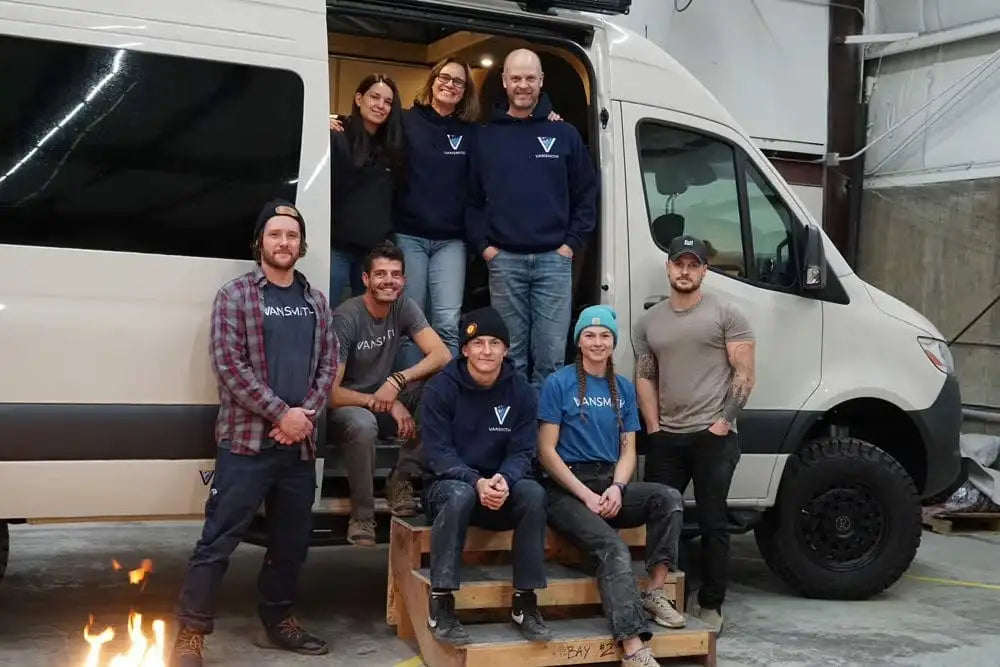
The Vansmith has produced more than 300 vans since 2016 across Mercedes-Benz Sprinter and Ford Transit platforms. That experience helps inform decisions about vehicle length, drivetrain, layout, storage and the electrical and water systems needed for different travel styles.
The lineup includes four listed DUO layouts for two travelers, three FAMILY layouts for four, and three pre-built Bivy trims. Pre-built Bivy availability and delivery timing depend on current stock and scheduling; the typical stated timeframe is 8 to 10 weeks. Tailored projects generally run 12 to 16 weeks.
Cabinetry, galley, bed and storage are planned around how you travel. For Oregon conditions, airflow behind cabinetry, practical storage for wet gear and a suitable drying routine can be especially important for helping protect the interior over time.
Battery storage, solar, DC-DC charging, shore power, inverter capacity and monitoring should work together as one electrical system. Because solar production can drop substantially during the cloudy winter months, the right battery capacity and charging strategy help support year-round use.
The Vansmith's work in Boulder includes insulation, cabinetry, electrical systems and interior finishing. For a van used in a wet climate, careful insulation coverage, properly sealed penetrations and sensible airflow paths are practical considerations alongside appearance and layout.
The Vansmith offers a lifetime cabinetry warranty for the original owner, with no mileage or year limit, subject to warranty terms. The company is NOAH certified, and service and upgrade work can be discussed with the Boulder shop. Review current warranty terms and any applicable manufacturer warranties before purchase. The stated Google rating and review count should be checked against the current listing before publication.
Delivery to Salem can be arranged and quoted as part of the purchase. Design consultations can take place over video, with progress photos shared during the project, so you can stay informed without making repeated trips to Colorado.
Explore current camper vans for sale , tailored models and inspected used vans . Use the van designer to explore available options and the Bivy comparison to review the differences between pre-built trims.
Equipment and optional features affect the final price, so request an itemized quote that identifies what is included, which upgrades cost extra and whether the chassis is part of the quoted price. This makes it easier to compare a conversion package with a complete vehicle.
Design consultations can take place over video, with progress photos shared throughout the project. The stated payment schedule is a $2,500 design deposit, 50% at design approval, 25% at project launch and 25% at handover. Confirm the schedule and contract terms for your specific order. Learn more about our process .
Transport to Salem is quoted with the purchase. Tailored projects generally take 12 to 16 weeks, while pre-built Bivy models typically have an 8 to 10 week timeframe, subject to current availability and scheduling. Confirm the estimated completion date and delivery arrangements before placing your order.
Review the lifetime cabinetry warranty for the original owner, its applicable terms and the separate manufacturer warranties for installed components. Ask about maintenance, service options and the process for obtaining support when you live outside Colorado.
Call (303) 414-6834 or visit our contact page to discuss your preferred model, equipment, budget and delivery to Salem.
Explore the current camper vans for sale inventory and compare the available tailored models to find a layout that fits your travel plans and storage needs.
Use the van designer and Bivy comparison to review the available options. Estimate potential payments with our RV loan calculator and read our guide on how to finance a camper van .
Current stock is listed on the camper vans for sale page. Pre-built Bivy models typically have an 8 to 10 week timeframe, subject to availability and scheduling. Confirm the status of a specific vehicle before making travel or purchasing plans.
Call (303) 414-6834, use our contact page or visit us at 7209 Valtec Court Unit B, Boulder, CO 80301. For a statewide overview, explore camper vans in Oregon .









Email: info@thevansmith.com
Text: 303-414-6834
Form: Tell us what you need
Call: 303-414-6834
Book a call:
(We are currently not booking any new service work while we revamp our service department.)
Visit us (by appointment):


