
DUO

Mercedes Sprinter 144
OR
Ford Transit 148

Perfect for solo travelers or couples who want a compact adventure-ready van.
Seat & Sleeps
2Length
19'Shower
Exterior * * Optional Add-OnsClass B RVs, Conversion Vans & Campervans for Sale in Missoula, MT
Mercedes Sprinter 144
OR
Ford Transit 148
Perfect for solo travelers or couples who want a compact adventure-ready van.
Seat & Sleeps
2Length
19'Shower
Exterior * * Optional Add-Ons
Mercedes Sprinter 144
OR
Ford Transit 148

Includes a shower setup for longer trips without compromising comfort or space.
Seat & Sleeps
2Length
19'Shower
Bench * * Optional Add-Ons
Mercedes Sprinter 170
OR
Ford Transit 148 E

Ideal for those who want extra living space and more storage for extended adventures.
Seat & Sleeps
2Length
22'Shower
Full
Mercedes Sprinter 170
OR
Ford Transit 148 E

Luxury model with full amenities, extended power systems, and interior bathroom.
Seat & Sleeps
2Length
22'Shower
Full
Mercedes Sprinter 144
OR
Ford Transit 148

Perfect for families who want space, comfort, and functionality in a compact build.
Seat & Sleeps
4Length
19'Shower
Exterior * * Optional Add-Ons
Mercedes Sprinter 170
OR
Ford Transit 148 E

A larger build for families who love extended adventures and more storage.
Seat & Sleeps
4Length
22'Shower
Bench * * Optional Add-Ons
Mercedes Sprinter 170
OR
Ford Transit 148 E

The luxury upgrade with interior shower and full power systems for long trips.
Seat & Sleeps
4Length
22'Shower
Full
Missoula sits where five valleys meet, with the Rattlesnake National Recreation Area starting inside the city, Lolo National Forest in every direction, the Bitterroot Valley running south, Flathead Lake about an hour and a half north, and Glacier National Park under three hours away.
One specification matters more than almost anything else when choosing a camper van for Missoula: wheelbase length. Going-to-the-Sun Road in Glacier National Park restricts vehicles longer than 21 feet, wider than 8 feet including mirrors, or taller than 10 feet on the central section between Avalanche Creek and Rising Sun. A short-wheelbase camper van at approximately 19.5 feet fits within the length limit, while a long-wheelbase van at around 22.5 feet exceeds it and must turn around. If driving Going-to-the-Sun Road is a priority, this restriction should guide your wheelbase decision. Confirm current limits with the park before ordering, and remember that a loaded roof rack reduces available height clearance.
Missoula also calls for a four-season van. Winters can remain below freezing for weeks, while valley inversions trap cold air and woodsmoke. Summers are hot and dry, late-summer wildfire smoke can affect travel, and mountain roads may close with snow. Travel in grizzly country also requires following food-storage rules and local guidance.
The Vansmith crafts Mercedes-Benz Sprinter and Ford Transit camper vans in Boulder, Colorado, and delivers across Montana. Conversion packages start at $46,950, complete vans with the chassis included start at $115,950, and pre-built Bivy models range from $119,700 to $192,570. For the statewide picture, explore
camper vans in Montana.
A fuel-fired air heater drawing from the vehicle's own fuel tank, or a Rixen hydronic system on the Bivy Deluxe, provides heat using diesel or gasoline rather than relying on the house battery. This allows the heater to run overnight without draining the battery to generate heat. Missoula winters can remain below freezing for weeks, and valley inversions can hold cold air in place for days at a time. Our heater service page covers the systems we install.
Full insulation on all six sides, including the floor and doors, helps maintain interior temperatures throughout the year. Pre-built Bivy models use Havelock wool. During Montana winters, insulation helps the heater maintain a comfortable temperature without running constantly. It also slows heat gain on a 95-degree August afternoon, helping the interior stay cooler during summer travel.
Air conditioning is available on every build and standard on the Bivy Deluxe. Western Montana summers can be hot and dry, while nights often cool off at Missoula's elevation of approximately 3,200 feet. Cooling may be less essential here than in hotter southern regions, but it is worth considering if you travel south. It can also be useful during wildfire smoke events when keeping the van sealed is preferable to drawing in outside air.
A powered roof fan with variable speed and reversible direction helps manage interior airflow. Airflow paths behind cabinetry, rather than sealed cavities, also help reduce hidden moisture buildup. In deep cold, breathing and wet gear introduce moisture that can condense behind cabinets, potentially creating long-term structural problems. Run the fan on a low setting even in cold weather. During wildfire smoke events, keep outside air intake limited, use recirculated air where available, and consider appropriate air filtration.
Lithium battery banks are sized around your actual overnight power needs, with capacity up to 15 kWh in the Bivy Deluxe. Roof solar and DC-DC alternator charging are installed on every build. Montana's summer sunshine can support useful solar production from spring through fall, while winter brings shorter days, lower sun angles, and snow-covered panels. Heavy wildfire smoke can also reduce output in late summer. Plan for reduced usable battery capacity in cold weather and note that quality systems prevent charging below freezing unless the battery is designed to handle those conditions. Explore our Electrical System and solar installation work.
Fresh and gray water tanks are sized to your layout and paired with a pressurized pump and accessible drain points. For winter travel, the important question is whether tanks and water lines sit inside the van's heated and insulated envelope rather than underneath it. Components outside that protected space can freeze even when the cabin is warm. Discuss tank placement and water-line protection during the design call to help determine whether the finished van is suited to four-season travel.
| Specification | What We Build | Why It Matters in Missoula |
|---|---|---|
| Base Vehicle | Mercedes-Benz Sprinter or Ford Transit, supplied by you or included in a complete vehicle. | The Sprinter's 4x4 is the most capable option for Lolo forest roads; the Transit costs less to run. Actual capability depends on the selected configuration. |
| Wheelbase and Dimensions | Approximately 19.5 ft on the short wheelbase or 22.5 ft extended, with a high-roof height of approximately 9 to 10 ft. | This is a critical specification for Glacier National Park. The approximately 19.5 ft short-wheelbase van falls within Going-to-the-Sun Road's 21 ft length limit, while the approximately 22.5 ft extended van exceeds it. Confirm current restrictions before traveling. |
| Sleeping Capacity | Two on a fixed bed in the DUO Series, or four with convertible seating in the FAMILY Series. | A fixed bed offers a ready-to-use sleeping space and can make overnight routines simpler during long Montana winters. |
| Heating System | A fuel-fired air heater using the vehicle's own fuel, or a Rixen hydronic system on the Bivy Deluxe. | Missoula can remain below freezing for weeks. Fuel-fired heating produces warmth without relying on the house battery as the heat source. |
| Insulation | Full insulation on all six sides, including the floor and doors; Havelock wool in pre-built Bivy models. | Insulation helps the heater maintain temperature during winter and slows heat gain on hot August afternoons. |
| Ventilation | A powered roof fan with variable speed and reversible direction, with airflow paths behind cabinetry. | Managing condensation in winter helps protect the interior. During wildfire smoke events, limiting outside air and using suitable filtration may be preferable. |
| Air Conditioning | Available on every build and standard on the Bivy Deluxe. | At approximately 3,200 ft, summer nights can cool off, but air conditioning can be useful when traveling to warmer regions or keeping the van sealed during smoke events. |
| House Battery | A lithium battery bank sized around your actual overnight power needs, with capacity up to 15 kWh and heated options available. | Cold weather can reduce usable capacity and restrict charging below freezing. Battery capacity, placement, and temperature management matter for winter operation. |
| Solar Charging | A roof solar array sized to your layout and daily energy use. | Solar can contribute strongly from April through October, while short winter days, low sun angles, snow, and heavy wildfire smoke can reduce production. |
| Alternator Charging | A DC-DC charger on every build, sized according to the electrical system and usage requirements. | Alternator charging provides a useful power source during winter and smoky conditions when solar output is reduced, particularly while driving between sites. |
| Fresh Water | Tanks sized to your layout, with a pressurized pump and accessible drain points. | Dispersed campsites may have no water supply. Keeping tanks and lines inside the heated envelope helps support winter use. |
| Wastewater | A gray water tank matched to fresh-water capacity, with accessible drains. | Forest and park dump stations may close seasonally, so wastewater capacity and disposal access should be planned around your travel calendar. |
| Refrigeration | A 12V compressor refrigerator that runs on battery power alone. | It avoids propane and does not require level parking. A secure, hard-sided interior also helps support food-storage practices in grizzly country. |
| Electrical Monitoring | A battery monitor that tracks state of charge rather than relying on voltage alone. | Monitoring helps you understand available power as cold temperatures affect battery performance and charging. |
| Payload | The chassis payload rating is evaluated against your realistic loaded weight during the design call. | Water, batteries, fishing and ski gear, and recovery equipment can add substantial weight and must be considered against the vehicle's rating. |
| Tires and Brakes | Tires and braking specifications selected around your planned routes, with three-peak mountain snowflake-rated tire options where compatible. | Winter-rated tires help with snowy and icy mountain routes. Carry chains where required and check current road restrictions before crossing mountain passes. |
| Ground Clearance | Ground clearance depends on chassis, trim and drivetrain, with suspension and tire upgrades available. | Clearance affects access to Lolo National Forest roads and Bitterroot canyon routes, depending on terrain and seasonal conditions. |
| Roof Load and Height | Roof racks are available, but any loaded roof equipment increases the vehicle's overall height. | Going-to-the-Sun Road's central section has a 10 ft vehicle height limit. Include roof racks and their loads when calculating total height, and verify current park restrictions. |
| Warranty | A lifetime cabinetry warranty for the original owner, with no mileage or year limit. | Appliance warranties are provided by their respective manufacturers, and The Vansmith is NOAH certified. |
Exact figures for payload, ground clearance, tire sizing and vehicle dimensions depend on the chassis, trim and drivetrain you choose. The Vansmith confirms each specification against your selected van during the design call. Check current park vehicle restrictions and road conditions before traveling.
Nine tailored layouts across the two-person DUO Series and the four-person FAMILY Series, plus three pre-built Bivy trims. Browse all tailored models and our Class B RVs for sale. A Class B RV is a camper built inside a van body rather than on a truck chassis, and in Glacier and the Bitterroot canyons, that compact footprint can get you where larger motorhomes cannot go.
The Sprinter offers all-wheel drive and 4x4 options and is the stronger platform for Lolo National Forest roads and winter access. The Transit costs less to buy and service, with all-wheel drive available on current model years. See Sprinter van conversions, Ford Transit van conversions and our Sprinter vs. Transit comparison.
DUO starts at $46,950, DUO S at $53,950, DUO XLS at $63,950 and DUO XL is available on request. FAMILY starts at $51,950, FAMILY XL at $61,950 and FAMILY XLS at $68,950. Bivy Classic costs $119,700 with 5 kWh, Plus costs $145,845 with 10 kWh, a diesel cabin heater and an exterior shower, and Deluxe costs $192,570 with 15 kWh, air conditioning and a Rixen hydronic heater. Bivy XL starts at $153,700. All Bivy models are based on the Sprinter 144 AWD, the wheelbase that falls within Going-to-the-Sun Road's posted 21-foot length limit. Review the Bivy comparison.
Our full current stock, including inspected used vans, is on the camper vans for sale page. Complete vehicles with the chassis included start at $115,950.
Missoula is approximately 900 miles from Boulder, with delivery quoted as part of the purchase. Many Montana buyers also drive down and collect in person, allowing for a handover at the shop.
The Rattlesnake is at the city limit, the Bitterroot canyons are 30 to 60 minutes south, and Seeley Lake is about an hour northeast. Many trips are one or two nights, so a van that loads quickly can be more practical than one selected for maximum capacity alone.
The DUO Series is designed for two, with a fixed bed and a gear garage that makes efficient use of the available length. The FAMILY Series accommodates four with convertible seating and sleeping arrangements. Explore camper vans for couples and family van conversions.
A gear garage beneath the bed with rear-door access and a drain, along with available roof and hitch racks, helps organize rods, waders, skis, bikes and wet boots. A loaded roof rack also increases overall vehicle height, which matters when checking Glacier National Park's posted 10-foot height restriction.
Fresh-water capacity, gray-water storage and battery capacity help determine how long you can stay away from facilities. Lolo National Forest offers dispersed camping in permitted areas, subject to stay limits, with no facilities or water at many sites. Some desirable sites are reached by forest roads without cell coverage, so plan around self-sufficiency rather than campground services alone.
Four layouts for two travelers, with a fixed bed and a gear garage that makes efficient use of the van's length. The 144-inch wheelbase is worth considering for Missoula buyers who want to drive the central section of Going-to-the-Sun Road, subject to current vehicle restrictions.
Three layouts for four people with convertible seating. FAMILY models are available across wheelbase options, but the longer configuration exceeds Going-to-the-Sun Road's posted 21-foot vehicle length limit for its restricted central section.
Three pre-built trims start at $119,700 and are typically ready in 8 to 10 weeks. All are based on the Sprinter 144 AWD, with a pop-top and Havelock wool insulation. The pop-top uses a fabric section, so consider sleeping arrangements carefully for deep-winter nights.
The Sprinter 144 and Transit 148 are approximately 19.5 feet long, while the Sprinter 170 and Transit 148 extended are approximately 22.5 feet long. High-roof vans are approximately 9 to 10 feet tall. These are planning estimates, so confirm your finished vehicle's actual dimensions against current park restrictions before traveling.
The DUO Series sleeps two on a fixed bed, the FAMILY Series sleeps four with convertible seating, and Bivy models accommodate two below plus two in the pop-top. In a long Montana winter, usable daytime living space can matter as much as sleeping capacity.
Heating options include a fuel-fired air heater, with a Rixen hydronic system on the Bivy Deluxe. Electrical systems include a lithium bank, roof solar, DC-DC alternator charging, shore power and battery monitoring. Fresh- and gray-water tanks have accessible drain points, with the option of placing tanks and lines inside the heated envelope for winter use.
Just minutes from downtown, the Rattlesnake offers trails, creek access and a wilderness area close to the city. It is primarily a day-use destination near the trailhead rather than a vehicle-camping location, making it an unusually accessible outdoor escape.
About an hour northeast of Missoula, Seeley Lake and the surrounding Clearwater Valley offer a chain of lakes, Forest Service campgrounds, paddling, loon watching and quiet forest roads. It is an accessible option for a weekend away.
About an hour and a half north, Flathead Lake is the largest natural freshwater lake west of the Mississippi River. State park units around the lake include access to Wild Horse Island. The east shore offers camping opportunities, cherry orchards along Highway 35 and clear water worth the drive.
Lolo National Forest surrounds Missoula and offers developed campgrounds as well as dispersed camping in permitted areas. Stay limits and restrictions apply, and many dispersed sites have no facilities or water. Lolo Hot Springs and Lolo Pass lie west along Highway 12, a long, winding route with limited services, so refuel before setting out. This is grizzly country in parts of the forest, and food-storage orders apply. Store food, garbage and scented items in a bear-resistant manner, using the hard-sided vehicle interior or an approved container as appropriate. Follow the current order for the district you visit.
Beginning about 30 minutes south of Missoula and extending roughly 60 miles toward Darby, the Bitterroot Valley offers mountain views, canyon access and trailheads. Blodgett, Mill Creek and Lost Horse are popular destinations. Some canyon roads are narrow gravel routes, making vehicle dimensions and ground clearance useful considerations.
Approximately two and a half to three hours north, Glacier National Park is a major destination for road trips from Missoula. Going-to-the-Sun Road has vehicle restrictions on the central section between Avalanche Creek and Rising Sun: vehicles longer than 21 feet, wider than 8 feet including mirrors, or taller than 10 feet are prohibited. A van around 19.5 feet long falls within the stated length limit, while a van around 22.5 feet does not. Campgrounds have their own site-size restrictions, and Many Glacier and Two Medicine are accessed by their own roads. Timed-entry requirements have changed between seasons, so check current park guidance before planning. Going-to-the-Sun Road is seasonal and typically opens fully between late June or July and September, depending on conditions.
Keep the vehicle's fuel tank adequately filled during deep cold so the fuel-fired heater can operate. For winter camping, keep the water system inside the insulated, heated envelope and operate the heating system as needed. If the van will be parked in freezing conditions, drain the fresh tank, gray tank, water heater if fitted, and all water lines according to the equipment manufacturer's instructions. Cold weather can reduce usable battery capacity, and lithium batteries generally should not be charged below freezing unless the system is designed to manage those conditions.
Mountain passes can close during snow and reopen with plowed but icy surfaces. Chain requirements depend on the road and current conditions, so carry compatible chains where appropriate and learn how to fit them. Forest roads may close seasonally or after storms, while spring mud and high water can make some routes impassable long after snowmelt. Check current road conditions before departure.
Wildfire restrictions are a normal consideration during western Montana summers. Restrictions may prohibit campfires or certain stoves, close forest roads, limit dispersed camping or temporarily close entire areas. Check current restrictions before leaving. Missoula's valley can trap smoke, so during poor air quality, limiting outside air intake, using recirculated air where available and running suitable filtration may help reduce smoke entering the cabin. A camper van is not a safe shelter from an advancing wildfire. If a fire threatens your location, leave early using routes identified by authorities.
During summer, solar generation combined with DC-DC alternator charging can support extended trips, depending on your electrical use and water capacity. In winter or heavy smoke, battery capacity and driving time become more important. A battery monitor showing actual state of charge helps you plan power use rather than estimate it.
Missoula, Hamilton, Seeley Lake and Polson are practical resupply points. Beyond these towns, do not assume water, fuel or cell coverage will be available, particularly along Highway 12 over Lolo Pass. Fill water and fuel supplies before leaving major roads, carry extra food and water in winter, and share your route and expected return time with someone.
Conversion packages range from $46,950 to $68,950, complete vehicles with the chassis included start at $115,950, and Bivy models range from $119,700 to $192,570, with Bivy XL starting at $153,700. Confirm the equipment included in your selected configuration and quote, particularly for electrical, water, heating and ventilation systems.
Montana has no general statewide sales tax, and vehicle registration costs and eligibility for permanent registration depend on the vehicle and current state requirements. Confirm applicable fees and requirements with your county treasurer. NOAH certification may be relevant to insurance or financing, but requirements vary by provider, so confirm what your insurer and lender need before purchase.
A shorter van may use less fuel than a longer configuration, though actual economy depends on the chassis, drivetrain, load, tires and driving conditions. Montana distances can be substantial. Chassis servicing follows the manufacturer's schedule, and service availability in Missoula can help with routine maintenance for either platform.
Budget for an appropriate winter tire set and seasonal changeovers. Gravel and forest roads can place additional demands on tires and suspension. Maintain the battery according to the manufacturer's guidance, inspect electrical terminals and connections as recommended, and clean solar panels after smoke events when ash or residue reduces output.
If the van sits unused through winter, drain the water system fully, maintain the battery at a suitable state of charge, and follow the manufacturer's guidance for fuel and tire care. A breathable cover or indoor storage may help protect the vehicle, roof solar panels and vents from weather exposure.
The DUO Series sleeps two on a fixed bed, while the FAMILY Series sleeps four with convertible seating. A fixed bed leaves a dedicated gear garage, while a convertible layout can provide more daytime flexibility. Consider how you will use the interior during extended periods of winter weather.
Review the equipment included in your chosen model rather than comparing headline prices alone. The electrical, water, heating and ventilation specifications vary by configuration. Air conditioning, additional solar, larger battery banks, suspension upgrades and tire options may affect the final quote.
Plan around your actual overnight power requirements and the length of your trips. In Montana, cold-weather battery performance and the lack of water at many dispersed campsites are important factors when choosing battery and water capacity.
Focus on heater capacity, insulation coverage, water tanks and lines inside the heated envelope, battery sizing and location, DC-DC charging, and suitable winter tires. These specifications help distinguish a van equipped for four-season travel from one intended mainly for warmer weather.
If Going-to-the-Sun Road is a priority, verify the wheelbase and the finished vehicle's dimensions against current restrictions. For rougher Lolo National Forest roads, consider drivetrain and ground clearance. For winter camping, focus on heating and water-system protection. A short-wheelbase, four-wheel-drive or all-wheel-drive van with a properly specified four-season system may suit buyers looking for all three, depending on the routes and conditions involved.
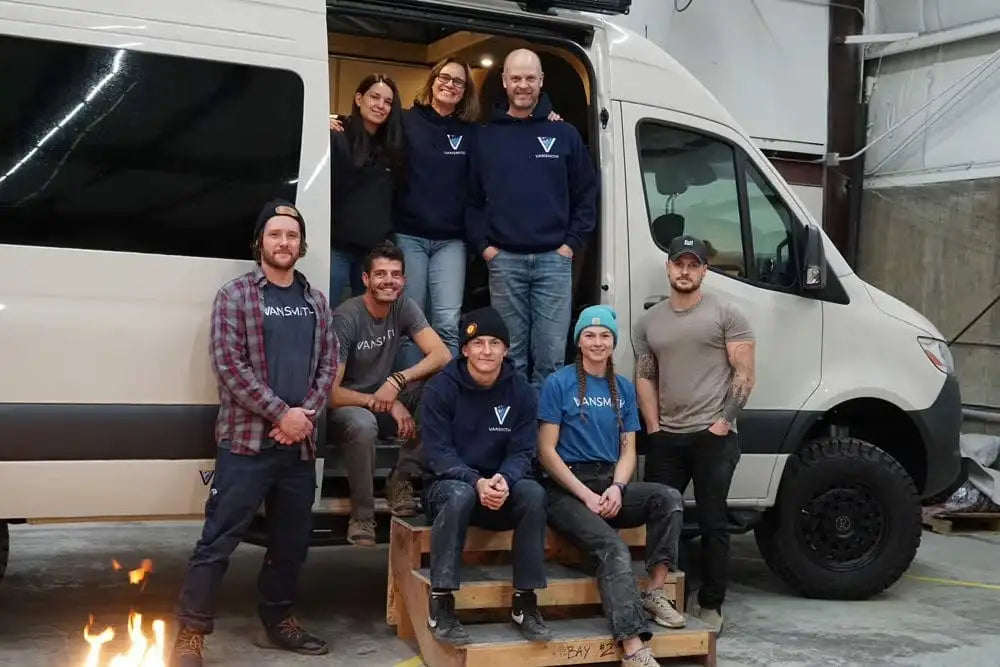
The Vansmith has been family-owned since 2016 and has crafted more than 300 vans across Mercedes-Benz Sprinter and Ford Transit platforms and multiple wheelbases.
Nine tailored layouts and three pre-built Bivy trims provide options for different sleeping arrangements, storage requirements and travel styles. For western Montana, buyers often prioritize a shorter wheelbase, effective heating, practical gear storage and suitable ground clearance.
Heating suited to cold weather, insulation that helps retain warmth, water systems designed to drain or remain inside the heated envelope, and ventilation that manages condensation all contribute to four-season usability.
Lithium battery storage, solar, DC-DC charging, shore power, inverter capacity and monitoring are planned as an integrated system. This helps owners understand available power when camping away from hookups in Lolo National Forest.
A gear garage with rear-door access and a drain, plus available racks, helps organize equipment for Montana's outdoor activities. Roof equipment should be included when checking overall vehicle height against road restrictions.
Four DUO layouts for two, three FAMILY layouts for four, and three pre-built Bivy trims provide a range of configurations. Bivy models are typically ready in 8 to 10 weeks, subject to availability.
The Vansmith crafts camper vans in Boulder, Colorado, where mountain travel and changing weather inform decisions about insulation, heating, electrical systems, ventilation and storage.
Equipment options are itemized in the quote so you can review the selected configuration, included systems and additional features before making a purchase decision.
Missoula is approximately 900 miles from Boulder, with delivery quoted as part of the purchase. Buyers can also discuss collecting the van in person at the shop.
The Vansmith provides a lifetime cabinetry warranty to the original owner, with no mileage or year limit. Appliance warranties are provided by their respective manufacturers. The Vansmith is NOAH certified, and service and upgrade work is available through the Boulder shop.
Review current customer feedback and contact The Vansmith to discuss model options, service availability and support for your planned travel.
See camper vans for sale, tailored models and inspected used vans. Use the van designer and the Bivy comparison to review configurations.
Equipment is priced according to the selected configuration. Request an itemized quote to confirm the vehicle, systems, upgrades and final purchase price.
Delivery from Boulder to Missoula is approximately 900 miles and is quoted as part of the purchase. Ask the team to confirm the delivery arrangements for your selected van.
Transport is quoted with the purchase. Tailored builds typically take 12 to 16 weeks, while pre-built Bivy models are generally ready in 8 to 10 weeks. Chassis availability, especially for all-wheel-drive and 4x4 models, can affect the timeline.
The original owner receives a lifetime cabinetry warranty, with service and upgrade work available through The Vansmith's Boulder shop. Appliance coverage is provided by the respective manufacturers.
Explore camper vans for sale, compare tailored models and review inspected used vans.
Use the van designer and Bivy comparison to compare configurations. Estimate financing with our RV loan calculator and read how to finance a camper van conversion.
Current stock is listed on the camper vans for sale page. Pre-built Bivy models are typically ready in 8 to 10 weeks, subject to availability.
Call (303) 414-6834, use our contact page, or visit us at 7209 Valtec Court Unit B, Boulder, CO 80301. For the statewide overview, explore camper vans in Montana.
Ready to plan your Montana adventures? Browse camper vans for sale, compare tailored models, or call (303) 414-6834 to discuss your Missoula travel plans.









Email: info@thevansmith.com
Text: 303-414-6834
Form: Tell us what you need
Call: 303-414-6834
Book a call:
(We are currently not booking any new service work while we revamp our service department.)
Visit us (by appointment):


