DUO

Mercedes Sprinter 144
OR
Ford Transit 148

Perfect for solo travelers or couples who want a compact adventure-ready van.
Seat & Sleeps
2Length
19'Shower
Exterior * * Optional Add-OnsClass B RVs, Conversion Vans & Campervans for Sale in Cheyenne, WY
Mercedes Sprinter 144
OR
Ford Transit 148
Perfect for solo travelers or couples who want a compact adventure-ready van.
Seat & Sleeps
2Length
19'Shower
Exterior * * Optional Add-Ons
Mercedes Sprinter 144
OR
Ford Transit 148

Includes a shower setup for longer trips without compromising comfort or space.
Seat & Sleeps
2Length
19'Shower
Bench * * Optional Add-Ons
Mercedes Sprinter 170
OR
Ford Transit 148 E

Ideal for those who want extra living space and more storage for extended adventures.
Seat & Sleeps
2Length
22'Shower
Full
Mercedes Sprinter 170
OR
Ford Transit 148 E

Luxury model with full amenities, extended power systems, and interior bathroom.
Seat & Sleeps
2Length
22'Shower
Full
Mercedes Sprinter 144
OR
Ford Transit 148

Perfect for families who want space, comfort, and functionality in a compact build.
Seat & Sleeps
4Length
19'Shower
Exterior * * Optional Add-Ons
Mercedes Sprinter 170
OR
Ford Transit 148 E

A larger build for families who love extended adventures and more storage.
Seat & Sleeps
4Length
22'Shower
Bench * * Optional Add-Ons
Mercedes Sprinter 170
OR
Ford Transit 148 E

The luxury upgrade with interior shower and full power systems for long trips.
Seat & Sleeps
4Length
22'Shower
Full
Anyone who drives I-80 west out of Cheyenne already knows the first thing that belongs on this page. The stretch between here and Laramie, over the Summit and past Elk Mountain, is one of the windiest highway corridors in the country, and the Wyoming Department of Transportation closes it regularly: to light and high-profile vehicles when the gusts build, and to everything when a ground blizzard shuts visibility down. There are gates on the on-ramps for exactly this reason.
A high-roof camper van is a light, high-profile vehicle. That is not a reason to avoid one, it is a reason to understand what you are buying. A shorter wheelbase presents less side area than a long one. A loaded roof rack makes it worse. And when WYDOT posts a restriction, it applies to you, so check road conditions before you leave rather than after you are committed.
Set against that, Cheyenne is one of the best van addresses in the Rockies. Curt Gowdy is 25 minutes west, Vedauwoo 40 minutes, the Snowy Range an hour and a half, Rocky Mountain National Park two and a half hours southwest, and our shop in Boulder is about an hour and three quarters south, which makes a visit entirely practical.
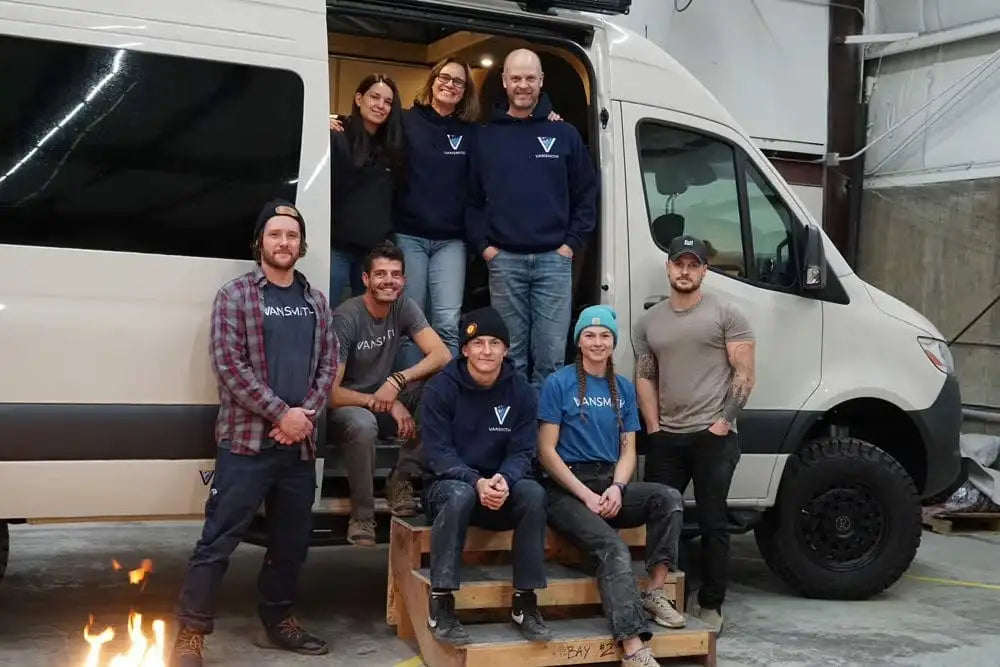
The Vansmith builds Mercedes-Benz Sprinter and Ford Transit camper vans in Boulder, Colorado, and delivers across Wyoming. Conversion packages start at $46,950, complete vans with the chassis included start at $115,950, and pre-built Bivy models run from $119,700 to $192,570. For the statewide picture, see
camper vans in Wyoming
.
The Vansmith offers nine tailored layouts across the two-person DUO Series and four-person FAMILY Series, on Sprinter 144 and 170 wheelbases and Transit 148 and 148 extended platforms, plus three pre-built Bivy trims. Compare the available floor plans, sleeping arrangements and equipment to find an option suited to your travel plans. Browse all tailored models .
A Class B RV is a camper built inside a van body rather than on a truck chassis. In Wyoming, that compact footprint can make it easier to navigate Medicine Bow forest roads, smaller Snowy Range campground loops and gravel routes to suitable dispersed camping areas, where a larger motorhome may have difficulty maneuvering. Always check vehicle restrictions, road conditions, site dimensions and seasonal access before setting out. Explore our Class B RVs for sale to compare available options.
Our current stock includes available camper vans and inspected used vehicles. Browse the camper vans for sale and used vans pages to review current options. You can also explore our Class B RV inventory to find a van suited to your travel plans.
DUO models start at $46,950, DUO S at $53,950, DUO XLS at $63,950, and DUO XL pricing is available on request. FAMILY models start at $51,950, FAMILY XL at $61,950, and FAMILY XLS at $68,950. Complete vehicles start at $115,950. Pre-built Bivy models include the Classic at $119,700, Plus at $145,845, Deluxe at $192,570, and Bivy XL from $153,700. Tailored projects typically take 12 to 16 weeks, while pre-built Bivy models have an estimated lead time of 8 to 10 weeks. Contact The Vansmith to confirm current pricing, availability and delivery arrangements for Cheyenne.
| Specification | What We Build | Why It Matters in Cheyenne |
|---|---|---|
| Base vehicle | Mercedes-Benz Sprinter or Ford Transit, supplied by you or included in a complete vehicle from $115,950. | The Sprinter's 4x4 suits Medicine Bow forest roads and winter access; the Transit costs less to buy and run. |
| Wheelbase and dimensions | Approximately 19.5 ft on the short wheelbase or 22.5 ft extended, with high-roof configurations around 9 to 10 ft tall. | A shorter van presents less side area in Wyoming crosswinds and fits smaller forest campground loops. |
| Sleeping capacity | Two people on a fixed bed in the DUO Series, or four with convertible seating and sleeping arrangements in the FAMILY Series. | A fixed bed is warmer and simpler to use through a long, cold Wyoming winter. |
| Heating system | A fuel-fired air heater using the vehicle's own fuel, or a Rixen hydronic system on the Bivy Deluxe. | At approximately 6,000 ft, with strong winds and freezing temperatures, reliable heating is essential for four-season travel. |
| Insulation | Full insulation across all six sides, including the floor and doors, with Havelock wool in pre-built Bivy models. | Insulation helps the heater maintain interior temperatures through daily temperature swings of around 40 degrees. |
| Ventilation | A powered roof fan with variable speed and reversible airflow, with airflow planned behind cabinetry. | Ventilation helps manage condensation in deep cold and protects enclosed spaces and cabinetry from moisture buildup. |
| Air conditioning | Air conditioning options across every build, with air conditioning standard on the Bivy Deluxe. | Air conditioning is optional for many local trips, where dry nights cool down naturally, but useful when traveling south. |
| House battery | A lithium battery bank sized around your expected electrical use, with capacity up to 15 kWh and heated options available. | Cold temperatures reduce usable battery capacity and can prevent charging below freezing, making winter battery sizing important. |
| Solar power | A rooftop solar array sized according to the available roof area, layout and daily electrical demand. | Wyoming's elevation, clear air and open skies support strong solar production, making rooftop capacity worth considering. |
| Charging system | DC-DC alternator charging on every build, along with shore power input. | Short winter days and snow-covered panels limit solar production, making alternator charging important during colder months. |
| Freshwater capacity | Freshwater tanks sized to the selected layout, with a pressurized pump and accessible drain points. | Medicine Bow dispersed camping areas may have no water access. Tanks inside the heated living space support winter use. |
| Wastewater capacity | A gray water tank matched to the selected layout, with accessible drain points. | Forest and park dump stations may close seasonally, so wastewater capacity helps determine how long you can stay off-grid. |
| Refrigeration | A 12V compressor refrigerator operating from the house battery system. | A compressor refrigerator does not require propane, reducing the need to source fuel when the next town is an hour away. |
| Electrical monitoring | A battery monitoring system that reports actual state of charge and electrical use. | Cold temperatures affect battery performance, making accurate state-of-charge monitoring more useful than relying on voltage alone. |
| Payload | Chassis payload capacity reviewed against your expected loaded vehicle weight during the design process. | Altitude reduces available engine power on climbs, so loaded vehicle weight matters when crossing Wyoming mountain passes. |
| Tires and brakes | Tires and braking specifications selected around your intended routes, with three-peak mountain snowflake-rated and all-terrain options. | Wyoming winter driving can involve chain and traction restrictions, while gravel roads require tires with suitable sidewall protection. |
| Ground clearance | Ground clearance based on the selected chassis, trim and drivetrain, with suspension and tire upgrades available. | Ground clearance determines which Medicine Bow and Vedauwoo roads and dispersed camping sites your van can reach. |
| Crosswind handling | A shorter, lower-profile build where practical, with a preference for hitch racks over heavily loaded roof racks. | I-80 west of Cheyenne regularly experiences closures for light and high-profile vehicles during strong crosswinds. |
| Warranty | A lifetime cabinetry warranty for the original owner, with The Vansmith being NOAH certified. | Appliances and other components carry separate manufacturer warranties, while cabinetry coverage applies to the original owner without a mileage or year limit. |
Exact figures for payload, ground clearance, tire sizing and vehicle dimensions depend on the chassis, trim and drivetrain you choose. We confirm each against your build during the design call. Check current road restrictions with WYDOT before traveling.
A camper van gives Cheyenne residents a practical way to travel across Wyoming and the surrounding Rocky Mountain region without relying on hotels or towing a separate trailer. You have a sleeping area, kitchen facilities and storage for outdoor equipment in one vehicle. That flexibility is useful for weekend trips to Medicine Bow National Forest, Vedauwoo and the Snowy Range. A fixed bed also means less time preparing the van when you arrive at a campsite. Before choosing a model, consider winter heating, vehicle payload, ground clearance and how the van handles Wyoming's strong crosswinds.
For Cheyenne buyers, cold-weather equipment and crosswind handling deserve attention from the beginning. A shorter-wheelbase van can present less side area in strong winds and fit smaller forest campground loops. For year-round travel, consider a fuel-fired heater, insulation across all six sides, a lithium battery system with appropriate cold-weather protection and water tanks inside the heated living space. Proper winter-rated tires and suitable drivetrain options also matter for mountain travel. Use our van designer to compare layouts and equipment options.
Wyoming camping requires attention to seasonal access and changing mountain weather. Forest campgrounds and high-elevation roads often close during winter, while dispersed camping locations may have no water or other facilities. Check campground opening dates, vehicle-length limits, road conditions and restrictions before departure. On I-80 and I-25, strong crosswinds can result in closures for light and high-profile vehicles. Review WYDOT conditions before traveling, especially when heading toward Medicine Bow or the Snowy Range.
Approximately 25 minutes west of Cheyenne, Curt Gowdy State Park sits between Cheyenne and Laramie and offers three reservoirs surrounded by granite formations. The park has camping options, hiking routes and an extensive mountain biking trail network. It is one of the closest overnight destinations for Cheyenne residents and a useful first trip for testing a new camper van. Check campground availability, site dimensions and seasonal access before arriving.
About 40 minutes west of Cheyenne, Vedauwoo is known for its wind-sculpted granite formations, bouldering and crack climbing. The area has a Forest Service campground and nearby dispersed camping opportunities. Its exposed landscape also makes wind an important consideration when parking a high-roof camper van. Check campground operating dates and road conditions before traveling.
Medicine Bow National Forest extends across a large area west and north of Cheyenne, with the Pole Mountain unit among the closest recreation areas. Visitors can access developed campgrounds, hiking routes and dispersed camping locations. Many dispersed sites have no water or facilities, so freshwater capacity and wastewater planning matter. Forest roads range from well-maintained gravel to rougher routes that may close seasonally because of snow and weather.
Laramie is approximately 50 minutes west of Cheyenne, providing access to the Snowy Range Scenic Byway and surrounding mountain recreation areas. The byway climbs above 10,000 feet and passes alpine lakes, granite peaks and Forest Service campgrounds. It is generally a seasonal route, with access often available from late May or June into October depending on snow conditions. Snow can remain at higher elevations well into summer, so check road conditions before setting out. It is one of the most rewarding mountain drives within a short distance of Cheyenne.
Approximately an hour and a half northeast of Cheyenne, Guernsey State Park offers reservoir camping, boating and access to historic Civilian Conservation Corps stonework. The park also has a museum and nearby Oregon Trail landmarks, including wagon ruts cut into sandstone. It is a good option for a different type of Wyoming road trip, particularly during warmer months.
Around two and a half hours northwest of Cheyenne, Seminoe State Park offers a large reservoir, remote camping areas and access to the surrounding high-desert landscape. The route toward the Seminoe and Alcova area passes through relatively isolated country. Bring sufficient water, food and fuel, as services are limited. A camper van with suitable battery and freshwater capacity makes longer stays in this area easier to plan.
Yellowstone and Grand Teton National Parks are approximately seven to eight hours northwest of Cheyenne, making them better suited to a week-long road trip than a short weekend. Both parks have campground restrictions, including vehicle-length limits that vary by location and campsite. A shorter-wheelbase van can make campsite selection easier, but always confirm the specific site's dimensions before booking. Reservations can fill quickly during the main travel season.
South of Cheyenne, the Colorado Front Range provides several convenient destinations. Fort Collins is approximately 45 minutes away, Boulder around an hour and 45 minutes, and Rocky Mountain National Park roughly two and a half hours, depending on traffic and your destination. The region offers mountain biking, hiking, camping and scenic drives. Rocky Mountain National Park has used timed-entry reservations during busy seasons in recent years, so check current requirements before visiting. See our camper vans in Fort Collins and Colorado van conversions pages for more information.
Wyoming's camping season is relatively short at higher elevations. Many forest campgrounds and mountain roads are accessible from late May or June into September, while the Snowy Range Scenic Byway closes during winter. Passes can experience heavy snowfall, ice and changing access conditions.
Wind closures on I-80 and I-25 apply to high-profile vehicles, so check WYDOT before traveling. Ground blizzards can reduce visibility rapidly when wind blows loose snow across the highway. Carry extra food, water and warm clothing, and get off exposed roads before conditions deteriorate. Afternoon thunderstorms above treeline in the Snowy Range also require planning, so schedule high-elevation activities with enough time to return to lower ground.
The DUO Series offers four two-person layouts with a fixed bed and a gear garage designed to make practical use of the available interior length. The fixed sleeping area is convenient for frequent weekend travel because the bed does not need to be converted each evening. The larger gear garage also provides dedicated storage for hiking equipment, skis and other outdoor gear. Explore our camper vans for couples.
The FAMILY Series offers three four-person layouts with convertible seating and sleeping arrangements. The different layouts provide options for interior space, sleeping arrangements and storage. For Wyoming families, additional daytime living space can be useful during cold evenings and changing mountain weather when more time is spent inside the van. See our family van options.
The pre-built Bivy range is available on the Sprinter 144 AWD platform with a pop-top and Havelock wool insulation. The Bivy Classic is $119,700 with a 5 kWh electrical system. The Bivy Plus is $145,845 with 10 kWh, a diesel cabin heater and an exterior shower. The Bivy Deluxe is $192,570 with 15 kWh, air conditioning and a Rixen hydronic heating system. The Bivy XL starts at $153,700. The stated lead time is 8 to 10 weeks, subject to availability and confirmation when ordering. Explore the Bivy comparison.
For Wyoming buyers, the Sprinter 144 AWD provides a practical footprint for forest roads and mountain travel. The pop-top includes a fabric section, so the lower sleeping area is generally the better choice for deep winter nights.
The DUO Series accommodates two people on a fixed bed, while the FAMILY Series offers sleeping arrangements for four through convertible seating. Bivy models provide a lower sleeping area and additional pop-top sleeping space, depending on the configuration. Consider how many people will travel regularly, whether you need a permanent bed and how much room you want for winter clothing and outdoor equipment. Use our van designer to compare available configurations.
For a weekend departure from Cheyenne, nearby destinations such as Curt Gowdy State Park, Vedauwoo and Medicine Bow National Forest offer convenient opportunities to get outdoors. A van with an accessible gear garage, ready-to-use sleeping area and practical kitchen can make short trips easier to organize. Consider how much equipment you carry, the road conditions you expect to encounter and whether you plan to travel during winter.
Cheyenne provides access to a wide range of road trip destinations across Wyoming and Colorado. Longer journeys can take you toward Yellowstone, Grand Teton, the Snowy Range, the Colorado Front Range and other Rocky Mountain destinations. For extended travel, comfort on the road, reliable heating, freshwater capacity and a bed that is always ready can matter more than maximum off-road capability. Battery storage and interior organization also influence how comfortably you can travel between campground stops.
The DUO Series is worth considering for couples and solo travelers who want a fixed bed and practical storage in a relatively compact footprint. The shorter-wheelbase options can be easier to maneuver on gravel roads and smaller campground loops. The gear garage also provides dedicated space for bicycles, skis and other outdoor equipment. Explore our camper vans for couples to compare layouts.
The FAMILY Series provides sleeping arrangements for four through convertible seating and sleeping configurations. For families traveling in Wyoming's cold-weather climate, the daytime living area matters as much as sleeping capacity. Cold evenings, changing mountain weather and longer winter nights can mean spending more time inside the van. Compare available layouts and confirm seat-belted passenger capacity for the exact vehicle before choosing a configuration. See our family van options.
A gear garage beneath the bed, rear-door access and suitable roof or hitch racks can help organize equipment for different seasons. In Wyoming, that might mean skis and snowboards in winter, bicycles and camping equipment in summer, and hiking or fishing gear throughout the year. A drainable gear area also helps manage snowmelt, mud and wet equipment. Remember that roof racks and loaded equipment increase the vehicle's overall height and side area, which is particularly important when driving in strong Wyoming crosswinds.
The Mercedes-Benz Sprinter is available in different wheelbases and configurations, with all-wheel drive and 4x4 options depending on the model and chassis. The 4x4 Sprinter is the most capable platform The Vansmith builds on, making it worth considering for buyers who regularly travel on suitable unpaved roads and winter routes. The right configuration depends on your intended destinations, payload requirements and budget. Explore our Sprinter van options and Sprinter campers for sale.
The Ford Transit generally offers a lower initial vehicle cost and lower service costs, with regional Ford dealer coverage. All-wheel drive is available on applicable model years and configurations. For paved byway driving and maintained forest roads, the Transit can provide the capability most buyers need without the additional cost of a dedicated 4x4 platform. Compare our Ford Transit camper van options and our Sprinter vs. Transit comparison.
We would steer most Cheyenne buyers toward the shorter wheelbase, approximately 19.5 feet, partly because of Wyoming's crosswinds. A shorter van presents less side area in strong winds, uses less fuel over long distances, fits smaller forest campground loops and is easier to turn around on a gravel spur. The extended 22.5-foot van provides more interior room, which can matter if you spend long winter evenings inside. See our small camper vans.
All-wheel drive is worth considering for year-round use in Wyoming, but it should be paired with appropriate three-peak mountain snowflake-rated tires rather than treated as a substitute for them. Wyoming imposes chain and traction restrictions on certain mountain routes, so carry the equipment required for your vehicle and know how to install it. Full 4x4 with low range is worth considering if you regularly drive unplowed forest roads in winter. See our 4x4 RV options.
The DUO Series accommodates two people on a fixed bed, while the FAMILY Series provides sleeping arrangements for four through convertible seating. In a climate with long, cold evenings, the daytime living space offered by a convertible layout can be more useful than it first appears on a floor plan. Consider how much time you expect to spend inside, how many people travel regularly and how much storage you need for seasonal equipment.
A fuel-fired air heater draws fuel from the vehicle's own tank to produce cabin heat, while insulation across the roof, walls and floor helps retain warmth. A Rixen hydronic system is also available on the Bivy Deluxe. The heater uses vehicle fuel for heat but still requires some electricity for its fan and controls. This combination is useful for cold-weather camping around Cheyenne and the surrounding mountain destinations. Insulation coverage is what helps the heater maintain comfortable temperatures during freezing nights and strong winds. Pre-built Bivy models use Havelock wool insulation. Learn more about our heater installation options.
Air conditioning options are available across The Vansmith's camper van range, with air conditioning standard on the Bivy Deluxe. In Cheyenne, cooling is less essential than in warmer and more humid regions because dry nights often cool down naturally. A powered roof fan supports everyday ventilation by moving air through the cabin and helping manage interior moisture. Air conditioning remains useful for trips farther south and for maintaining a comfortable interior during warmer weather. Confirm the exact equipment available for your selected model.
The Vansmith specifies lithium battery systems around expected electrical loads, with capacity reaching 15 kWh in the Bivy range. Wyoming's high elevation, clear air and open skies provide favorable solar conditions. However, shorter winter days and snow-covered panels can significantly reduce production. DC-DC alternator charging provides another way to replenish the house battery while driving. Cold temperatures can affect usable battery capacity, and lithium charging may be restricted below the manufacturer's permitted temperature range. Battery management and heating options should be considered when sizing a system for winter travel. Explore our Electrical System and solar installation work.
Freshwater and gray water tanks are sized according to the selected layout, with a pressurized pump, sink, cooktop and 12V compressor refrigerator available as part of the kitchen specification. A compressor refrigerator operates from the house battery system rather than requiring propane. This simplifies appliance planning for longer trips through Wyoming, where services can be far apart. Consider freshwater capacity carefully if you regularly camp at dispersed sites without water access.
Upper cabinets, galley storage and a gear garage with rear-door access on most layouts help organize equipment for everyday use and longer trips. A fixed bed creates a dedicated storage area underneath, which is useful for hiking, fishing, skiing and camping equipment. For Wyoming travel, consider where wet boots, skis, bicycles and other outdoor equipment will go without taking up the main living area. Storage needs should be considered alongside passenger capacity and the vehicle's payload rating.
An off-grid electrical system can include a lithium battery bank, rooftop solar, DC-DC charging, shore power input, an inverter and a battery monitor. These components need to be sized and configured around the appliances you expect to use. In winter, when solar production may be limited, battery capacity and alternator charging become particularly important. A battery monitor that reports actual state of charge helps you track available energy rather than estimating it from voltage alone. Learn more about our camper van electrical systems.
Backpacks, boots and trekking poles can be stored in the gear garage beneath the fixed bed. Rear-door access makes loading and unloading easier, while a drain helps manage snowmelt and mud rather than allowing it to reach the cabin floor. This setup is useful for trips around Vedauwoo, Medicine Bow National Forest and the Snowy Range.
Long fishing rods can be stored along the length of the van, while waders, boots and tackle can go in the gear garage. The Snowy Range lakes and North Platte River are both within a comfortable driving distance for fishing trips from Cheyenne. Dedicated storage keeps wet equipment separate from the main living area.
A gear garage with a drain can accommodate skis and snowboards without bringing melting snow into the living space. This is particularly useful for winter trips toward the Snowy Range and Colorado Front Range. Allow enough room for boots, helmets and other winter equipment when choosing a layout.
Two bikes can fit in the gear garage on most layouts, with hitch and roof racks providing additional carrying options. For Wyoming travel, we would generally favor a hitch rack over a roof rack because roof-mounted equipment increases the vehicle's height and side area in crosswinds. Confirm rack compatibility and loaded vehicle weight before adding equipment.
Chairs, awnings, recovery gear, extra water and warm layers are all worth planning storage for. In Wyoming, additional clothing and emergency supplies are particularly important during winter travel, when weather and road conditions can change quickly. Keep frequently used equipment accessible without compromising the vehicle's payload capacity.
Supply your own Mercedes-Benz Sprinter or Ford Transit, or purchase a complete vehicle with the chassis included from $115,950. The interior is built in our Boulder shop and can include cabinetry, a bed platform, galley, seating and finished surfaces according to the selected layout.
Electrical systems can include a lithium house battery, rooftop solar, DC-DC alternator charging, shore power input, an inverter and a battery monitor. Battery capacity and equipment are selected around your expected electrical use and travel requirements.
Kitchen facilities include a 12V compressor refrigerator, a sink with pressurized water, a cooktop and galley storage. The compressor refrigerator operates using the house battery system, eliminating the need to source propane for refrigeration.
Depending on the selected layout, sleeping arrangements include a fixed or convertible bed, upper cabinets, insulated window covers and a gear garage with rear-door access on most layouts. The storage configuration can be planned around outdoor equipment and the number of passengers.
Water systems include freshwater and gray tanks sized to your layout, a pressurized pump and accessible drain points. Heating options include a fuel-fired air heater, with a Rixen hydronic system available on the Bivy Deluxe. A powered roof fan provides ventilation.
Available options include air conditioning, hydronic heating, additional solar, larger and heated battery banks, suspension upgrades, winter and all-terrain tires, exterior showers, awnings and racks. Each option is priced individually according to the selected configuration. See our repairs, installations and services for more information.
The Vansmith provides a lifetime cabinetry warranty to the original owner, with no mileage or year limit, subject to the applicable warranty terms and conditions. Appliances and other installed components may carry separate manufacturer warranties. We are also NOAH certified.
Start by reviewing our current camper vans for sale, available tailored models and inspected used vans. Compare the DUO and FAMILY layouts with the pre-built Bivy range to understand which options suit your passenger, sleeping and storage requirements.
Use the van designer to explore available configurations and the Bivy comparison to review the pre-built models. Compare vehicle length, drivetrain, battery capacity, heating system and equipment. For Cheyenne buyers, crosswind handling, winter tires and water-system protection deserve particular attention.
Tell The Vansmith where you plan to travel, how many people will use the van and which destinations you expect to visit. Discuss winter heating, insulation, water-system winterization, battery capacity, tire requirements and ground clearance if you intend to travel throughout the year. Your expected loaded weight and the types of roads you use should also be considered when selecting a vehicle.
The stated lead time for pre-built Bivy models is 8 to 10 weeks, while tailored projects typically take 12 to 16 weeks. Chassis availability, selected equipment and production scheduling can affect the overall timeline. Confirm current inventory, specifications, payment terms and the estimated completion date before placing your order.
Cheyenne is approximately 100 miles from Boulder, Colorado, making an in-person visit and vehicle pickup practical for many buyers. Transport arrangements and costs can also be discussed as part of your purchase. Call (303) 414-6834, visit our contact page or visit The Vansmith at 7209 Valtec Court, Unit B, Boulder, CO 80301. For the statewide view, explore our camper vans in Wyoming page.