DUO

Mercedes Sprinter 144
OR
Ford Transit 148

Perfect for solo travelers or couples who want a compact adventure-ready van.
Seat & Sleeps
2Length
19'Shower
Exterior * * Optional Add-OnsClass B RVs, Conversion Vans & Campervans for Sale in Baltimore, MD
Mercedes Sprinter 144
OR
Ford Transit 148
Perfect for solo travelers or couples who want a compact adventure-ready van.
Seat & Sleeps
2Length
19'Shower
Exterior * * Optional Add-Ons
Mercedes Sprinter 144
OR
Ford Transit 148

Includes a shower setup for longer trips without compromising comfort or space.
Seat & Sleeps
2Length
19'Shower
Bench * * Optional Add-Ons
Mercedes Sprinter 170
OR
Ford Transit 148 E

Ideal for those who want extra living space and more storage for extended adventures.
Seat & Sleeps
2Length
22'Shower
Full
Mercedes Sprinter 170
OR
Ford Transit 148 E

Luxury model with full amenities, extended power systems, and interior bathroom.
Seat & Sleeps
2Length
22'Shower
Full
Mercedes Sprinter 144
OR
Ford Transit 148

Perfect for families who want space, comfort, and functionality in a compact build.
Seat & Sleeps
4Length
19'Shower
Exterior * * Optional Add-Ons
Mercedes Sprinter 170
OR
Ford Transit 148 E

A larger build for families who love extended adventures and more storage.
Seat & Sleeps
4Length
22'Shower
Bench * * Optional Add-Ons
Mercedes Sprinter 170
OR
Ford Transit 148 E

The luxury upgrade with interior shower and full power systems for long trips.
Seat & Sleeps
4Length
22'Shower
Full
Baltimore buyers have a specific practical consideration when choosing a camper van: the Fort McHenry and Baltimore Harbor tunnels restrict vehicles carrying propane and other hazardous materials. The Vansmith builds use electric cooking, a 12V compressor refrigerator and a fuel-fired cabin heater, so they do not require onboard propane. That can make harbor crossings simpler, although drivers should always confirm current tunnel restrictions and routing with the Maryland Transportation Authority before traveling.
Baltimore also puts a wide range of outdoor destinations within reach, from Patapsco Valley State Park and the C&O Canal towpath to Assateague Island, Shenandoah National Park and the mountains of western Maryland. The Vansmith builds Mercedes-Benz Sprinter and Ford Transit camper vans in Boulder, Colorado, and delivers across Maryland. Conversion packages start at $46,950, complete vans with the chassis included start at $115,950, and pre-built Bivy models range from $119,700 to $192,570, depending on trim.
Nine tailored layouts across the two-person DUO Series and the four-person FAMILY Series, on Sprinter 144 and 170 wheelbases and Transit 148 and 148 extended, plus three pre-built Bivy trims. Browse all tailored models.
A Class B RV is a camper built inside a van body rather than on a truck chassis. In a city of narrow row-house streets and limited parking, it is a more practical RV option to own, and it can also suit destinations such as Patapsco's campground loops and the Assateague oceanside sites. Browse our Class B RVs for sale.
Our current stock, including inspected used vans, is listed on the camper vans for sale and used vans pages.
DUO starts at $46,950, DUO S at $53,950, and DUO XLS at $63,950, with DUO XL pricing available on request. FAMILY starts at $51,950, FAMILY XL at $61,950, and FAMILY XLS at $68,950. Complete vehicles start at $115,950. Bivy models include the Classic at $119,700, Plus at $145,845, Deluxe at $192,570, and Bivy XL from $153,700. Tailored builds typically take 12 to 16 weeks, while pre-built Bivy models have an estimated lead time of 8 to 10 weeks.
| Specification | What We Build | Why It Matters in Baltimore |
|---|---|---|
| Base vehicle | Mercedes-Benz Sprinter or Ford Transit, supplied by you or included in a complete vehicle. | The Transit is cheaper to buy and service regionally; the Sprinter's 4x4 suits western Maryland. |
| Wheelbase and dimensions | Approx. 19.5 ft on the short wheelbase or 22.5 ft extended, 9 to 10 ft tall in high-roof form. | The shorter van fits city parking, storage facilities and campground loops alike. |
| Sleeping capacity | Two on a fixed bed in the DUO Series, four with convertible seating in the FAMILY Series. | A fixed bed is warmer in winter and leaves a lockable gear garage beneath it. |
| Heating system | A fuel-fired air heater on the vehicle's own fuel, or a Rixen hydronic system on the Bivy Deluxe. | Covers Maryland cold snaps and much colder western Maryland nights, with no propane aboard. |
| Fuel type and gas | No propane in the build: electric cooking, a 12V fridge and a fuel-fired heater. | The Fort McHenry and Harbor tunnels prohibit propane, and the Key Bridge detour is now much longer. |
| Insulation | Full insulation on all six sides; Havelock wool in pre-built Bivy models. | Works both ways across a four-season year, and quiets the van on a city street. |
| Ventilation | A powered roof fan with variable speed and reversible direction, with airflow behind cabinetry. | Mid-Atlantic humidity is year round, and hidden condensation is what damages a build. |
| Air conditioning | Available on every build and standard on the Bivy Deluxe. | City summers run hot and humid, and nights stay warm. |
| House battery | A lithium bank sized around your real overnight load, up to 15 kWh. | Overnight cooling sets the size; under canopy the bank does more of the work. |
| Solar power | A roof array sized to your layout and daily draw. | Solid in spring and autumn, reduced by summer storms and by hardwood canopy at good sites. |
| Charging system | A DC-DC charger on every build, plus shore power input. | Trips from here cover real interstate distance, so the alternator does genuine work. |
| Freshwater capacity | Tanks sized to your layout, with a pressurized pump and accessible drain points. | Maryland's freeze-thaw winters mean draining the system several times a season. |
| Wastewater capacity | A gray tank matched to fresh capacity, with accessible drains. | Regional state park dump stations close seasonally. |
| Refrigeration | A 12V compressor fridge running on battery power alone. | No propane to store, refill or route around. |
| Kitchen facilities | A sink with pressurized water, a cooktop and galley storage. | Electric cooking keeps the van tunnel-legal and simplifies city parking. |
| Interior storage | Upper cabinets, galley storage and a gear garage with rear door access and a drain. | Keeps wet gear out of the cabin and everything out of sight on a street. |
| Vehicle dimensions and payload | Payload worked out against your realistic loaded weight during the design call. | Water, batteries and gear reach the rating faster than buyers expect. |
| Drivetrain, tires and ground clearance | All-wheel drive and 4x4 available, with winter rated and all-terrain tire options. | The local hazard is ice; western Maryland and the Appalachians are a different matter. |
| Storage dimensions | Approx. 19.5 or 22.5 ft long and 9 to 10 ft tall, measured against where you will keep it. | Settle parking or storage before ordering. In Baltimore it shapes the whole decision. |
| Warranty and equipment | Lifetime warranty on cabinetry to the original owner, no mileage or year limit. | Appliance warranties come from their manufacturers, and we are NOAH certified. |
Exact figures for payload, ground clearance, tire sizing and vehicle dimensions depend on the chassis, trim and drivetrain you choose. We confirm each against your build during the design call, and tunnel and routing restrictions should be checked with the authority before you travel.
A fuel-fired air heater draws from the vehicle's own fuel tank, with a Rixen hydronic system available on the Bivy Deluxe. Baltimore winters are moderate but include hard freezes. Western Maryland, about three hours away, has a different climate with regular snowfall. Because the heater generates warmth from fuel rather than relying on the house battery for heat, it can run overnight without placing the same demand on your electrical system. Our heater service page covers the systems we install.
Air conditioning is available for tailored builds and comes standard on the Bivy Deluxe. Mid-Atlantic summers can reach the 90s, with humidity that keeps nights warm. Baltimore can also feel hotter than the surrounding countryside. Air conditioning is one of the largest electrical draws in a camper van, so overnight use at a campsite without hookups requires a battery bank sized for that demand.
Full insulation on all six sides helps regulate interior temperatures, with Havelock wool used in pre-built Bivy models. In a four-season climate, insulation works in both directions: slowing summer heat gain to reduce air conditioning runtime and helping retain heat during winter. It also reduces outside noise, which can make a noticeable difference when parked in a busy city.
A powered roof fan with variable speed and reversible direction helps move air through the cabin. Airflow paths behind cabinetry can also help reduce moisture buildup in enclosed spaces. The Mid-Atlantic stays humid for much of the year, and winter condensation can collect behind cabinets where it may go unnoticed. Regular ventilation is an important part of keeping the interior comfortable.
Lithium battery banks are sized around your actual overnight electrical loads, with capacity up to 15 kWh in the Bivy Deluxe. Without air conditioning, overnight power use is generally more modest. Running air conditioning through the night requires a substantially larger electrical reserve. That expected usage should guide battery sizing from the beginning. See our Electrical System work.
Maryland gets useful sunlight, and a roof-mounted solar array can contribute meaningful charging in spring and autumn. Summer afternoon thunderstorms can interrupt solar production, while popular camping areas in the Patapsco and Gunpowder valleys and the Appalachians often have hardwood canopy that limits roof exposure. Roof solar and DC-DC alternator charging can be configured as part of a build. See our solar installation work.
Fresh and gray water tanks are sized to the selected layout, with a pressurized pump and accessible drain points. Maryland can move between mild weather and freezing temperatures during winter. If a van is parked through a January cold snap, the water system may need to be drained and protected even when you plan to use it again the following weekend.
Sprinter conversions are available on both wheelbases, with drivetrain options that can include all-wheel drive and 4x4 depending on the model year and configuration. Compare our Sprinter van conversions and Sprinter campers for sale .
The Ford Transit generally has a lower purchase price and lower routine service costs, along with broad dealer coverage throughout the region. All-wheel drive is available on qualifying model years and configurations. For Mid-Atlantic interstate travel and developed campgrounds, it provides the capability most buyers need. See our Ford Transit van conversions and read our Sprinter vs. Transit comparison .
In Baltimore, the shorter wheelbase, at about 19.5 feet depending on the vehicle, is often the more practical choice. It can fit more street parking spaces, storage facilities and campground loops, and may be easier to accommodate in a garage. A van around 22.5 feet long provides more interior room for extended trips, but requires more planning for everyday parking and storage. See our small camper vans .
All-wheel drive can be useful if you travel through winter weather or regularly head into western Maryland, where road conditions can differ significantly from Baltimore. Pair it with appropriate three-peak mountain snowflake-rated tires rather than treating AWD as a substitute for winter tires. Full 4x4 may be more capability than most regional paved-road trips require, unless your plans include more demanding forest roads. See our 4x4 RVs for sale .
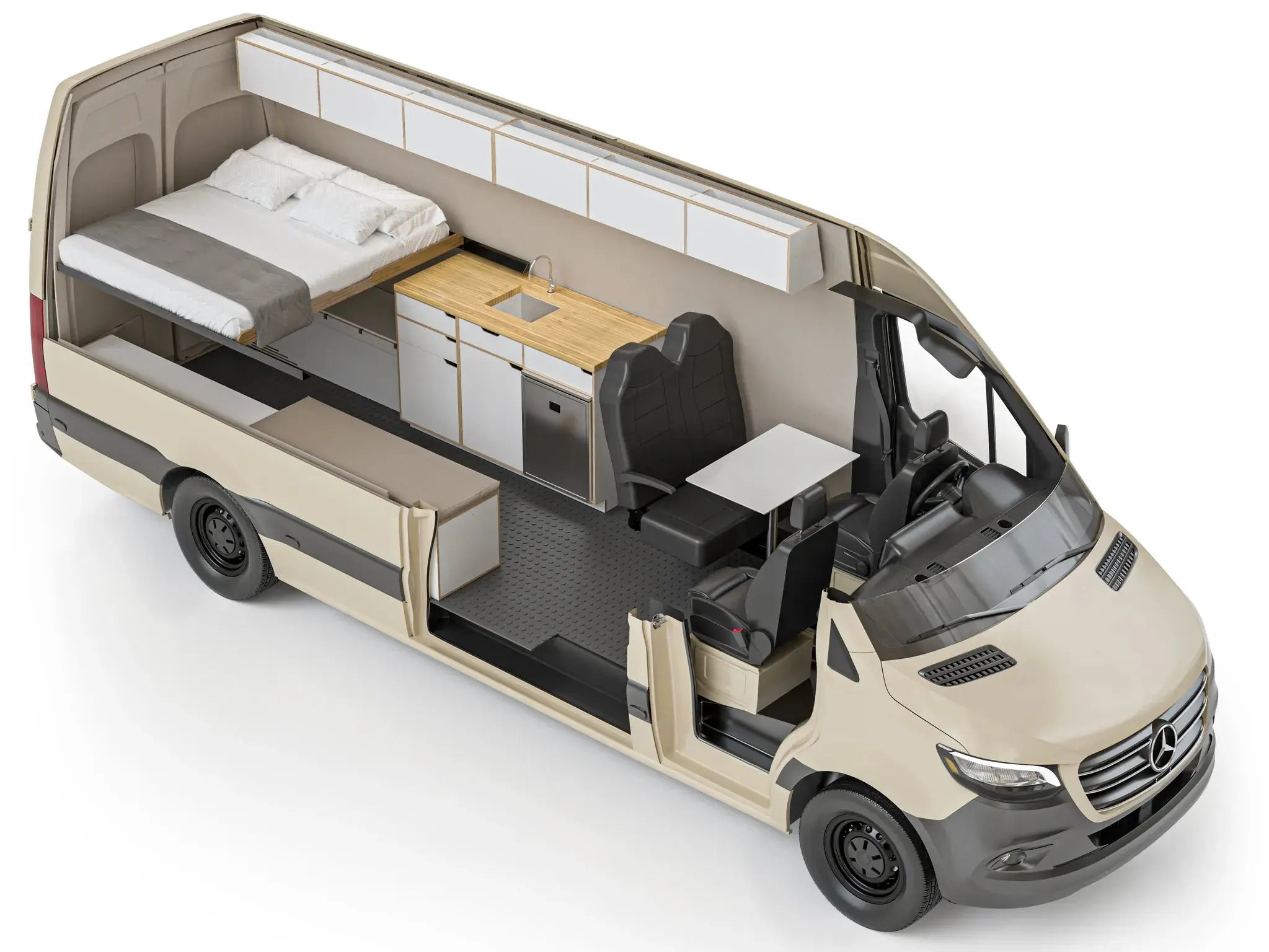
The DUO Series is designed for two people, while the FAMILY Series offers seating and sleeping arrangements for up to four, depending on the layout. A fixed bed stays made and leaves room for a gear garage underneath, which is useful when the van is parked on a city street and outdoor equipment needs to stay out of sight.
Four two-person layouts offer different combinations of sleeping, bathroom and storage space. The fixed-bed design leaves a gear garage underneath for bikes, camping equipment and other travel essentials. See our camper vans for couples .
Three four-person layouts combine seating and sleeping arrangements for family travel. Compare the available configurations in our family van conversions .
The Bivy range includes the Classic at $119,700 with a 5 kWh electrical system, the Plus at $145,845 with 10 kWh, a diesel cabin heater and an exterior shower, and the Deluxe at $192,570 with 15 kWh, air conditioning and a Rixen hydronic heater. The Bivy XL starts at $153,700. Bivy models are built on the Sprinter 144 AWD platform with a pop-top and Havelock wool insulation. Typical build time is 8 to 10 weeks. Compare the configurations on our Bivy comparison page.
Use the van designer to compare configurations and work through the features that fit your travel plans.
For many Baltimore buyers, a short-wheelbase build with all-wheel drive, a fuel-fired heater, full insulation, a drainable water system and air conditioning is a practical starting point. The battery bank should then be sized around how often you expect to run cooling without campsite hookups.
Heating, cooling and insulation work together in a four-season camper van. Effective insulation reduces the workload on both the heater and air conditioner, helping conserve fuel and battery capacity while keeping the cabin more comfortable.
Electrical configurations can include a lithium battery bank, roof solar, DC-DC alternator charging, shore power input, an inverter and a battery monitor. Monitoring actual battery state of charge gives you a clearer picture of available power than relying on voltage alone.
A 12V compressor refrigerator runs from the house battery system, with a sink, pressurized water, cooktop and galley storage. The Vansmith builds without onboard propane, which can simplify some travel and routing considerations. Always check current restrictions for your vehicle and planned route.
Fresh and gray water tanks are sized to the selected layout, with a pressurized pump and accessible drain points. Some regional state park dump stations and facilities operate seasonally, so check availability before planning a longer trip.
Upper cabinets, galley storage and a gear garage beneath the bed provide space for everyday belongings and outdoor equipment. The garage can include rear-door access and a drain, with roof and hitch racks available for larger items. Keeping gear inside the van helps keep the cabin organized and belongings out of view when parked.
Tires can be selected around your intended routes, including three-peak mountain snowflake-rated options for winter travel west of Baltimore. Suspension should be matched to the van's expected loaded weight. Ground clearance varies by chassis, trim, drivetrain and installed equipment, so confirm the specifications for your chosen build.
A gear garage beneath the bed provides space for camping and hiking equipment, with rear-door access and a drain for wet or muddy items. Upper cabinets and galley storage keep smaller essentials organized.
Two bikes can fit in the gear garage on many layouts, while hitch and roof racks provide additional carrying options. With the C&O Canal towpath about an hour west and the Torrey C. Brown Rail Trail north of the city, Baltimore makes a useful starting point for cycling trips.
Roof racks can carry kayaks and boards, while paddles and wet equipment can be stored in the gear garage. The Chesapeake Bay and its tributaries offer plenty of opportunities for time on the water. A drain in the storage area helps manage wet gear and keeps moisture out of the cabin.
A gear garage beneath a fixed bed, accessed through the rear doors, is one of the most useful storage features in a camper van. It keeps larger equipment accessible without taking up the main living area, making a fixed-bed layout worth considering if you travel with bulky gear.
Every chassis has a published payload rating. During the design process, we can work through your expected loaded weight, including passengers, water, batteries, equipment and accessories, so the completed van is planned around the vehicle's weight limits.
About 20 minutes southwest of Baltimore, Patapsco Valley State Park follows the Patapsco River through wooded valleys and offers camping, swinging bridges, waterfalls and an extensive trail network. It is one of the closest options for an overnight trip and a useful place to get familiar with a new camper van. Check current campground availability and seasonal operating dates before you go.
About half an hour north of the city, Gunpowder Falls State Park has river valley trails, fishing areas and access to the NCR Trail. Hammerman Area offers waterfront recreation, while camping availability depends on the specific area and current park arrangements. Check the park's current facilities before planning an overnight stay.
About two and a half hours southeast, Assateague offers oceanfront and bayside camping on a barrier island known for its wild horses. The horses are wild and can bite or kick, so keep a safe distance and secure all food and supplies as required by park rules. Over-sand driving is permitted only in designated areas with the required permit and equipment. Soft sand can strand vehicles, so drivers unfamiliar with beach conditions should stay on paved roads. Check current National Park Service rules before visiting.
The C&O Canal towpath runs 184 miles from Georgetown to Cumberland, with hiker-biker campsites along the route. The Great Allegheny Passage continues from Cumberland toward Pittsburgh. Farther west, Deep Creek Lake, Swallow Falls and the Savage River area are about three hours from Baltimore and experience colder winters and regular snowfall, making them appealing destinations beyond the summer season.
About an hour and a half west of Baltimore, Catoctin Mountain Park and nearby Cunningham Falls offer mountain scenery, hiking trails, wooded campsites and a waterfall. Gettysburg is roughly another half hour north, making it possible to combine outdoor recreation with a historical stop on a longer trip.
Shenandoah National Park is about two and a half hours southwest of Baltimore. Skyline Drive follows the Blue Ridge for 105 miles, with several campgrounds along the route. Check posted tunnel clearances against your loaded vehicle height, including roof racks and other equipment, before traveling. Harpers Ferry is closer to Baltimore, while the Outer Banks and Acadia make longer road trips. See our pages for camper vans in Richmond and Norfolk .
Many Maryland state park campgrounds operate primarily from spring through autumn, while some facilities remain open year-round. Summer and autumn weekends can book well in advance. Around Baltimore, winter driving often means dealing with ice, while western Maryland can receive substantial snowfall. The I-95 corridor also gets congested during peak travel hours, so a packed van makes early departures easier. Do not assume that rest areas or public parking lots allow overnight stays or sleeping in a vehicle. Check posted rules and plan an approved overnight stop.
More than 300 vans built since 2016, across Mercedes-Benz Sprinter and Ford Transit platforms and multiple wheelbase configurations.
Nine tailored layouts plus three pre-built Bivy trims, configured around how you travel. For many Baltimore buyers, that means a shorter wheelbase, a secure gear garage and insulation that helps with both temperature control and cabin noise.
Lithium battery capacity, solar, DC-DC charging, shore power, inverter and monitoring are planned as one electrical system. Builds are designed without onboard propane, which may simplify some route planning, although current vehicle and tunnel restrictions should always be checked before travel.
We build in Boulder, Colorado, where cold weather, snow and long-distance travel are familiar parts of the environment. That experience informs the insulation, heating and electrical decisions that matter when a Baltimore buyer wants to travel beyond the Chesapeake region in winter.
Design consultations can take place over video, with build updates throughout the process. Our payment schedule includes a $2,500 design deposit, 50% at design approval, 25% at build launch and 25% at handover. See our process .
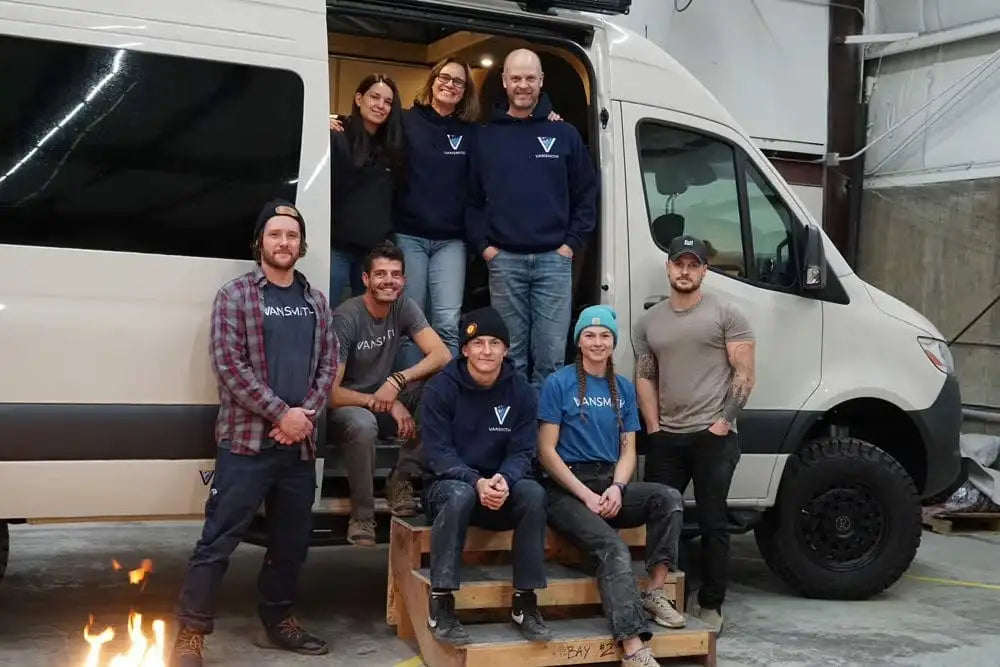
The Vansmith offers a lifetime cabinet warranty to the original owner, subject to warranty terms. The company has a 4.8-star Google rating across more than 150 reviews. Service and upgrade work is available at the Boulder shop. See repairs, installations and services .
Conversion packages range from $46,950 to $68,950, complete vehicles start at $115,950, and Bivy models range from $119,700 to $192,570. Equipment varies by model and configuration. Electrical, water, heating and ventilation components should be confirmed against the itemized specifications for your selected build.
Final pricing depends on layout and wheelbase, chassis and drivetrain, battery capacity, air conditioning, heating system, solar array size, suspension and tire packages. Each selected option is priced individually, so your quote can show what is included and where additional costs apply.
Registration and insurance requirements for a converted camper van can depend on the vehicle, conversion details and Maryland's current classification rules. NOAH certification may be relevant to insurance or financing requirements, but confirm acceptance directly with your insurer and lender. Also account for storage if you cannot keep the van at home, along with routine maintenance and underbody washing after winter road-salt exposure.
Baltimore is about 1,700 miles from Boulder. Delivery can be quoted as part of your purchase, or you can fly to Denver and drive the van home. Use our RV loan calculator and read how to finance a camper van conversion .
Compare current camper vans for sale , tailored models and inspected used vans .
Use the van designer and the Bivy comparison to review the available configurations.
The technical specifications above outline the systems available across our builds. Our Electrical System , solar installation and heater service pages provide more detail.
Call (303) 414-6834, use our contact page or visit us at 7209 Valtec Court Unit B, Boulder, CO 80301.