DUO

Mercedes Sprinter 144
OR
Ford Transit 148

Perfect for solo travelers or couples who want a compact adventure-ready van.
Seat & Sleeps
2Length
19'Shower
Exterior * * Optional Add-OnsClass B RVs, Conversion Vans & Campervans for Sale in Amarillo, TX
Mercedes Sprinter 144
OR
Ford Transit 148
Perfect for solo travelers or couples who want a compact adventure-ready van.
Seat & Sleeps
2Length
19'Shower
Exterior * * Optional Add-Ons
Mercedes Sprinter 144
OR
Ford Transit 148

Includes a shower setup for longer trips without compromising comfort or space.
Seat & Sleeps
2Length
19'Shower
Bench * * Optional Add-Ons
Mercedes Sprinter 170
OR
Ford Transit 148 E

Ideal for those who want extra living space and more storage for extended adventures.
Seat & Sleeps
2Length
22'Shower
Full
Mercedes Sprinter 170
OR
Ford Transit 148 E

Luxury model with full amenities, extended power systems, and interior bathroom.
Seat & Sleeps
2Length
22'Shower
Full
Mercedes Sprinter 144
OR
Ford Transit 148

Perfect for families who want space, comfort, and functionality in a compact build.
Seat & Sleeps
4Length
19'Shower
Exterior * * Optional Add-Ons
Mercedes Sprinter 170
OR
Ford Transit 148 E

A larger build for families who love extended adventures and more storage.
Seat & Sleeps
4Length
22'Shower
Bench * * Optional Add-Ons
Mercedes Sprinter 170
OR
Ford Transit 148 E

The luxury upgrade with interior shower and full power systems for long trips.
Seat & Sleeps
4Length
22'Shower
Full
Amarillo is in Texas, but specifying a camper van here is different from building one for the rest of the state. At 3,600 feet on the High Plains, the Panhandle brings dry heat, cold winters, genuine blizzards and daily temperature swings of 30 to 40 degrees. Nights cool off considerably, but the wind rarely lets up.
That wind matters when you are driving a tall vehicle. A high-roof camper van presents a broad side to crosswinds, and gusts along I-40 and US 287 are a regular driving consideration. During a winter ground blizzard, wind can push loose snow across the highway and reduce visibility rapidly. Check road conditions before departure and get off exposed roads when conditions begin to deteriorate.
Hail is another Panhandle concern. The region experiences severe hailstorms, and a camper van's roof takes much of the exposure. Solar panels, roof vents and sealant deserve particular attention after a severe storm. When hail is forecast, use covered parking whenever possible and inspect the roof and its fittings afterward.
Set against those conditions, Palo Duro Canyon is about 30 minutes south of Amarillo. As the second-largest canyon in the United States, it offers a remarkable destination for hiking, camping and scenic drives.
The Vansmith builds Mercedes-Benz Sprinter and Ford Transit camper vans in Boulder, Colorado, and delivers across Texas. Conversion packages start at $46,950, complete vans with the chassis included start at $115,950, and pre-built Bivy models range from $119,700 to $192,570. For the statewide picture, see
camper vans in Texas
.
The Vansmith offers nine tailored layouts across the two-person DUO Series and four-person FAMILY Series, on Sprinter 144 and 170 wheelbases and Transit 148 and 148 extended platforms, plus three pre-built Bivy trims. Compare floor plans, sleeping arrangements, and equipment to find a setup suited to your travel plans. Browse all tailored models .
A Class B RV is a camper built inside a van body rather than on a truck chassis. That compact design matters at Palo Duro Canyon, where the road descends on a steep grade with switchbacks and campground loops have limited room. It is also useful on the Texas Panhandle's county roads, where a vehicle that is easier to turn around can make travel more practical. Check road conditions, vehicle restrictions, and campground dimensions before your trip. Compare our Class B RVs for sale to review available options.
Our current stock includes available camper vans and inspected used vehicles. Browse the camper vans for sale and used vans pages to review current options. You can also browse our Class B RV inventory to compare available camper van layouts.
DUO models start at $46,950, DUO S at $53,950, DUO XLS at $63,950, and DUO XL pricing is available on request. FAMILY models start at $51,950, FAMILY XL at $61,950, and FAMILY XLS at $68,950. Complete vehicles start at $115,950. Pre-built Bivy models include the Classic at $119,700, Plus at $145,845, Deluxe at $192,570, and Bivy XL from $153,700. Tailored builds typically take 12 to 16 weeks, while pre-built Bivy models have an estimated lead time of 8 to 10 weeks. Contact The Vansmith to confirm current pricing, availability, and delivery arrangements for Amarillo.
| Specification | Why It Matters in Amarillo, TX | The Vansmith's Solution |
|---|---|---|
| Base vehicle | Panhandle winters bring real snow, so drivetrain matters more here than elsewhere in Texas. | Mercedes-Benz Sprinter or Ford Transit, supplied by you or included in a complete vehicle from $115,950. |
| Wheelbase and dimensions | Less side area in constant crosswinds and an easier descent into Palo Duro Canyon. | Approximately 19.5 ft on the short wheelbase or 22.5 ft extended, with high-roof configurations around 9 to 10 ft tall. |
| Sleeping capacity | A fixed bed is warmer on a cold High Plains night and leaves the gear garage free. | Two people on a fixed bed in the DUO Series, or four with convertible seating and sleeping arrangements in the FAMILY Series. |
| Heating system | Amarillo gets hard freezes, snow, and blizzards, which can surprise people who think Texas is always warm. | A fuel-fired air heater using the vehicle's own fuel, or a Rixen hydronic system on the Bivy Deluxe. |
| Insulation | Daily temperature swings of 30 to 40 degrees make insulation important for both cold nights and warm afternoons. | Full insulation across all six sides, including the floor and doors, with Havelock wool in pre-built Bivy models. |
| Air conditioning | Dry heat and cooler nights can make cooling more of an afternoon concern than an overnight one. | Air conditioning options across every build, with air conditioning standard on the Bivy Deluxe. |
| Ventilation | In dry air, a roof fan can help with cooling and air circulation, including when Panhandle dust is a concern. | A powered roof fan with variable speed and reversible airflow, with airflow planned behind cabinetry. |
| House battery | Cold reduces usable battery capacity and can prevent charging below freezing, so winter capacity needs consideration. | A lithium battery bank sized around your expected electrical use, with capacity up to 15 kWh. |
| Solar power | Elevation, dry air, and open skies can support strong solar production, making rooftop capacity worth considering. | A rooftop solar array sized according to your layout, available roof area, and daily electrical demand. |
| Charging system | Short winter days and snow-covered panels can limit solar production, making alternator charging important. | DC-DC alternator charging on every build, along with shore power input. |
| Freshwater capacity | Water access can be limited on the High Plains, with long distances between towns and services. | Freshwater tanks sized to the selected layout, with a pressurized pump and accessible drain points. |
| Wastewater capacity | State park dump stations and other disposal facilities can be spread out, making tank capacity relevant to trip planning. | A gray water tank matched to the selected layout, with accessible drain points. |
| Refrigeration | A compressor refrigerator avoids the need to source propane and can operate without level parking. | A 12V compressor refrigerator operating from the house battery system. |
| Kitchen facilities | Indoor cooking is useful when strong winds make outdoor cooking impractical. | A kitchen setup with a sink, pressurized water, cooktop, and galley storage. |
| Interior storage | Hitch racks can keep bulky gear off the roof, avoiding additional height and wind exposure from roof loads. | Upper cabinets, galley storage, and a gear garage with rear door access and a drain. |
| Vehicle dimensions and payload | Water and batteries add substantial weight, while wind resistance can also affect fuel economy. | Chassis payload capacity reviewed against your expected loaded vehicle weight during the design process. |
| Drivetrain and ground clearance | Drivetrain and clearance affect access to rough ranch roads and unplowed winter routes. | All-wheel drive and 4x4 configurations where available, with suspension and tire upgrades. |
| Tires, brakes and safety | Panhandle winters call for suitable winter tires, and Palo Duro Canyon's descent requires careful brake management. | Three-peak mountain snowflake-rated and all-terrain tire options, selected around your intended routes. |
| Hail and roof protection | The Panhandle experiences severe hail risk, and roof-mounted components are particularly exposed. | Careful sealing around roof penetrations, practical component placement, and regular sealant inspections. |
| Warranty and equipment | Appliances and other components have separate manufacturer warranties, and The Vansmith is NOAH certified. | A lifetime cabinetry warranty for the original owner, with no mileage or year limit. |
Exact figures for payload, ground clearance, tire sizing, and vehicle dimensions depend on the chassis, trim, and drivetrain you choose. We confirm each against your build during the design call.
The specification most people are surprised to need in Texas is a reliable heating system. Amarillo winters bring hard freezes, snow and blizzards. At approximately 3,600 feet, strong winds can make cold conditions feel even more severe. A fuel-fired air heater draws fuel from the vehicle's tank to heat the cabin, although its fan and controls still use some battery power. A Rixen hydronic system is available on the Bivy Deluxe. Our heater service page covers the systems we install.
Air conditioning is available across The Vansmith's build range and is standard on the Bivy Deluxe. Panhandle summer afternoons can reach the 90s, but the air is dry and nights often cool down at this elevation. That makes cooling particularly useful during the afternoon rather than necessarily throughout the night. Actual battery demand depends on the equipment, outside temperature and how long you run the system.
Amarillo's daily temperature swings make insulation important in every season. A van needs to resist heat gain during the afternoon and retain warmth overnight, sometimes within the same day. Full insulation across the roof, walls, floor and doors helps reduce the workload on both heating and cooling systems. Pre-built Bivy models use Havelock wool insulation.
A powered roof fan with variable speed and reversible direction helps move air through the cabin, manage interior moisture and improve comfort in dry Panhandle weather. It can provide useful cooling when outside temperatures allow, reducing the need to run air conditioning continuously. Keeping windows and openings appropriately managed also helps limit dust entering the living space on unpaved roads.
Lithium battery banks are sized around expected electrical use, with capacity reaching 15 kWh in the Bivy range. In Amarillo, battery planning needs to account for cold winter nights as well as summer cooling loads. Lithium batteries can lose usable capacity in low temperatures, and charging may be restricted below the manufacturer's permitted temperature range. A suitable battery management system and cold-weather protection help manage these conditions. See our Electrical System work.
The Texas Panhandle offers favorable conditions for solar charging, with open skies, long sunny periods and relatively little tree cover in many camping areas. Actual output still depends on season, panel angle, shade, temperature and weather. DC-DC alternator charging provides another way to replenish the house battery while driving, which is useful during shorter winter days or when panels are covered by snow. See our solar installation work.
Freshwater and gray water tanks are sized to the selected layout, with a pressurized pump and accessible drain points. Consider generous water capacity if you plan to camp away from developed facilities. Distances between services can be long across the high plains, and dry, hot weather can increase water use. For winter travel, keep tanks and lines within the heated living space where the design allows, or drain the system when temperatures could cause freezing.
Treat wind as a regular part of Panhandle travel planning. Check conditions before a long drive, reduce speed in crosswinds, keep both hands on the wheel when passing trucks and take extra care on exposed stretches and overpasses. When parking overnight in open country, consider the prevailing wind and choose a sheltered location where possible. A shorter wheelbase may present less side area than a longer van, while roof-mounted equipment can increase overall height and wind exposure. During a ground blizzard or severe thunderstorm, leave exposed roads and seek shelter in a town or permanent building.
The Mercedes-Benz Sprinter is available in different wheelbases and configurations, with all-wheel drive and 4x4 availability depending on the model year and chassis. A 4x4 Sprinter is worth considering if you regularly travel on suitable unpaved ranch roads or want additional capability for winter routes. The right configuration depends on your destinations, payload requirements and budget. See our Sprinter van conversions and Sprinter campers for sale.
The Ford Transit generally offers a lower initial vehicle cost and broad dealer service coverage. All-wheel drive is available on applicable model years and configurations. For paved driving and maintained park roads, a Transit can provide the capability many buyers need without the additional cost of a dedicated 4x4 platform. See Ford Transit van conversions and our Sprinter vs. Transit comparison.
We would steer many Amarillo buyers toward the shorter wheelbase, approximately 19.5 feet, depending on the vehicle configuration. A shorter van can be easier to maneuver and may present less side area in crosswinds. It can also be more practical on tighter campground roads and some of the routes around Palo Duro Canyon. The extended van, at approximately 22.5 feet, provides more interior room for longer trips and cold evenings spent inside. See our small camper vans.
All-wheel drive is worth considering for year-round travel in the Texas Panhandle, where winter can bring snow and ice. Pair it with suitable three-peak mountain snowflake-rated tires rather than treating AWD as a substitute for proper tires. Full 4x4 with low range may be useful if you regularly travel on challenging ranch roads or unmaintained routes. Confirm the available drivetrain and equipment for your selected chassis. See our 4x4 RVs for sale.
The DUO Series accommodates two people on a fixed bed, while the FAMILY Series offers sleeping arrangements for four through convertible seating. A fixed bed is convenient on cold nights because it does not need to be converted before sleeping, and it leaves a gear garage beneath it. The right layout depends on passenger needs, sleeping arrangements and how much storage you want.
The DUO Series offers four two-person layouts with a fixed bed and a gear garage designed to make practical use of the available interior length. The fixed sleeping area is convenient for frequent trips, while the storage space beneath it can accommodate outdoor equipment. See our camper vans for couples.
The FAMILY Series offers three four-person layouts with convertible seating and sleeping arrangements. The different configurations provide options for interior space, sleeping arrangements and storage. See our family van conversions.
The pre-built Bivy range is available on the Sprinter 144 AWD platform with a pop-top and Havelock wool insulation. The Bivy Classic is $119,700 with a 5 kWh electrical system. The Bivy Plus is $145,845 with 10 kWh, a diesel cabin heater and an exterior shower. The Bivy Deluxe is $192,570 with 15 kWh, air conditioning and a Rixen hydronic heating system. The Bivy XL starts at $153,700. The stated lead time is 8 to 10 weeks, subject to availability and confirmation when ordering. See the Bivy comparison.
The Bivy pop-top adds sleeping space, but its fabric section provides less insulation than the hard-sided lower cabin. For cold Panhandle nights, the lower sleeping area is generally the better choice. Keep the pop-top closed during high winds and follow the manufacturer's operating guidance.
Compare sleeping arrangements, storage and equipment using our van designer. The right layout depends on how many people travel regularly, whether you want a permanent bed and how much space you need for outdoor equipment.
For many Amarillo buyers, a shorter-wheelbase build with suitable all-wheel drive, a reliable heater, full insulation, a well-sized solar array, practical water capacity and winter-rated tires is a strong starting point. Air conditioning is useful during hot afternoons, but heating, ventilation and insulation deserve equal attention in a climate with such wide temperature swings.
The Panhandle can experience both ends of the temperature range in the same year and sometimes within a single day. A fuel-fired heater handles cold nights, a powered roof fan supports ventilation and everyday cooling, and air conditioning provides additional comfort during the hottest afternoons. The right combination depends on when you travel and how much time you spend off-grid.
Insulation helps reduce heat entering the cabin during hot weather and slows heat loss during cold nights. It can also reduce how long the heater or air conditioner needs to run. Coverage across the roof, walls, floor and doors is important when choosing a build for Amarillo's changing temperatures.
An off-grid electrical system can include a lithium battery bank, rooftop solar, DC-DC alternator charging, shore power input, an inverter and a battery monitor. These components should be sized around the appliances you expect to use. A battery monitor that reports actual state of charge is more useful than estimating available energy from voltage alone. With adequate solar and battery capacity, you can spend more time away from campground hookups. See our camper van electrical systems.
Kitchen facilities can include a 12V compressor refrigerator, a sink with pressurized water, a cooktop and galley storage. The compressor refrigerator runs from the house battery system, so you do not need to source propane for refrigeration. This can simplify planning for longer drives across the Panhandle, where services and stores may be spread far apart.
Freshwater and gray water tanks are sized to the selected layout, with a pressurized pump and accessible drain points. A gray water tank matched to your freshwater capacity helps support longer stays away from developed facilities. Water availability is an important planning consideration on high-plains trips, so choose tank capacity around your expected travel and camping habits.
Upper cabinets, galley storage and a gear garage beneath the bed help organize equipment for daily use and longer trips. Most layouts provide rear-door access to the gear garage, and selected configurations include a drain for managing wet or muddy equipment. For Panhandle driving, a hitch rack may be preferable to a loaded roof rack because roof-mounted equipment increases vehicle height and wind exposure.
Tire selection should reflect the routes you expect to drive. Three-peak mountain snowflake-rated tires can be useful for winter conditions, while suitable all-terrain tires may provide additional sidewall protection on gravel and caliche roads. Suspension should be selected around the vehicle's loaded weight and intended use. Ground clearance depends on chassis, trim, drivetrain and any suspension modifications.
Amarillo is a long way from many major destinations, so highway comfort deserves attention when planning a build. Comfortable seating, effective insulation, a fixed bed that does not need to be made up after a long drive and enough battery capacity for overnight stops can make extended trips easier. Consider your typical driving distance, passenger needs and expected time between campground hookups.
A gear garage beneath the bed provides space for camping and hiking equipment, with rear-door access for loading and unloading. Upper cabinets and galley storage keep smaller items organized. A drain in applicable gear garage configurations can help manage mud and water from wet equipment.
Fishing rods can be stored along the length of the van, while waders, boots and tackle can go in the gear garage. Lake Meredith is approximately 45 minutes north of Amarillo, and the Canadian River breaks offer additional outdoor recreation opportunities. Dedicated storage helps keep wet equipment separate from the main living area.
Two bikes can fit in the gear garage on many layouts, while hitch racks provide another carrying option. We would generally avoid a loaded roof rack in strong Panhandle winds because roof-mounted equipment increases the vehicle's height and exposed area. Confirm rack compatibility, clearance and loaded vehicle weight before adding equipment.
Upper cabinets and drawers provide space for clothing, food and everyday travel supplies. A 12V compressor refrigerator helps keep food cold during summer travel, while the galley provides a practical place to prepare meals after a long highway day. Plan storage around the length of your trips and the number of people traveling.
The gear garage beneath a fixed bed is one of the most useful storage features in a camper van. Rear-door access makes it easier to load larger equipment, while the available space can be organized around bikes, camping gear and other outdoor essentials. Storage dimensions vary by layout and vehicle configuration.
Every chassis has a published payload rating that should be considered before adding passengers, water, batteries, racks and camping equipment. Water weighs approximately 8.3 pounds per gallon, and a large lithium battery bank can add substantial weight. The expected loaded weight should be checked against the vehicle's ratings during the design process, with attention to axle limits and weight distribution.
About half an hour south of Amarillo, Palo Duro Canyon is a major reason many Panhandle residents enjoy camper van travel. The canyon is approximately 800 feet deep and 120 miles long, with the Lighthouse formation, the Pioneer Amphitheatre and several campgrounds on the canyon floor. Keep three practical points in mind. The park road descends into the canyon on a steep grade with switchbacks, so use an appropriate lower gear and avoid riding the brakes. Low-water crossings can flood quickly during storms, so never drive through moving or standing floodwater. The canyon floor can also be considerably hotter than the rim during summer, making spring and autumn more comfortable seasons for many visitors.
About an hour and a half southeast of Amarillo near Quitaque, Caprock Canyons State Park has red rock canyons, the Caprock Canyons Trailway along a former railbed and the official Texas State Bison Herd. Bison roam freely in the park and are wild animals. Give them plenty of space, do not approach or feed them, and be prepared to wait if they cross the road.
Approximately 45 minutes north of Amarillo, Lake Meredith is a reservoir on the Canadian River with opportunities for camping, boating and fishing. Nearby Alibates Flint Quarries National Monument preserves a site where people have quarried flint for thousands of years. Tours are ranger-led, so check current availability and visitor information before planning a visit.
Historic Route 66 runs through Amarillo, with stretches of the original road alignment and well-known Panhandle landmarks nearby. West along I-40, Tucumcari is approximately two hours away and Santa Fe is around four and a half hours away, depending on traffic and route conditions. See our camper vans in Santa Fe page.
Santa Fe is approximately four and a half hours west, Taos around six hours away, and Colorado's Front Range roughly six and a half hours away, depending on your destination and traffic. These routes put the southern Rockies within reach for an extended weekend. For trips involving mountain roads and changing weather, plan your heater, tires and ground clearance around the conditions you expect to encounter rather than assuming all routes will be paved and clear.
Beyond the state parks, the Panhandle has Buffalo Lake National Wildlife Refuge southwest of Amarillo, dark-sky opportunities outside town and large stretches of open country. Services can be limited in remote areas, so carry enough food, water and fuel for your planned route. Check access rules and current conditions before visiting protected areas.
Spring and autumn are often comfortable seasons for camping around Amarillo. Summer can be hot on the canyon floor, while winter brings the possibility of snow, ice and blizzards. State park campsites can book up for popular spring and autumn weekends, so check availability before setting out.
Severe thunderstorms, large hail and tornadoes are a reality in the Panhandle. A camper van is not a safe shelter during a tornado or severe storm, so keep weather alerts enabled and know where the nearest substantial permanent building is located. Flash flooding in canyons can be sudden and dangerous: never drive through floodwater or camp in a wash or drainage channel. In winter, ground blizzards can close highways with little warning. Carry extra food, water and warm clothing, and reach a town or safe stopping point before conditions deteriorate.
Supply your own Mercedes-Benz Sprinter or Ford Transit, or purchase a complete vehicle with the chassis included from $115,950. Cabinetry, bed platform, galley, seating and finished surfaces are built in our Boulder shop according to the selected layout.
Depending on the build, electrical equipment can include a lithium house battery, rooftop solar, DC-DC alternator charging, shore power input, an inverter and a battery monitor. System capacity and equipment are selected around your expected electrical use and travel requirements.
Kitchen equipment can include a 12V compressor refrigerator, a sink with pressurized water, a cooktop and galley storage. Sleeping and storage features vary by layout and can include a fixed or convertible bed, insulated window covers, upper cabinets and a gear garage with rear-door access on most layouts.
Water systems include freshwater and gray water tanks sized to the selected layout, a pressurized pump and accessible drain points. Heating options include a fuel-fired air heater, with a Rixen hydronic system available on the Bivy Deluxe. A powered roof fan provides ventilation, and air conditioning is available depending on the selected configuration.
Available options include air conditioning, hydronic heating, additional solar, larger battery banks, suspension upgrades, winter and all-terrain tires, exterior showers, awnings and racks. Each option is priced according to the selected configuration. See our repairs, installations and services for more information.
The Vansmith provides a lifetime cabinetry warranty to the original owner, with no mileage or year limit, subject to the applicable warranty terms and conditions. Appliances and other installed components may carry separate manufacturer warranties. The Vansmith is also NOAH certified.
The Vansmith has built more than 300 vans since 2016 across the Mercedes-Benz Sprinter and Ford Transit platforms. Experience across different wheelbases and configurations helps inform layout, storage and equipment decisions for different travel needs.
Nine tailored layouts across the DUO and FAMILY Series, along with three pre-built Bivy trims, provide different approaches to sleeping, storage and interior space. The right configuration depends on how you travel and what you need to carry.
Lithium batteries, solar, DC-DC charging, shore power, an inverter and monitoring work together as one electrical system. Proper sizing matters in a high-sun, cold-winter climate, where summer solar production and winter battery performance can differ considerably.
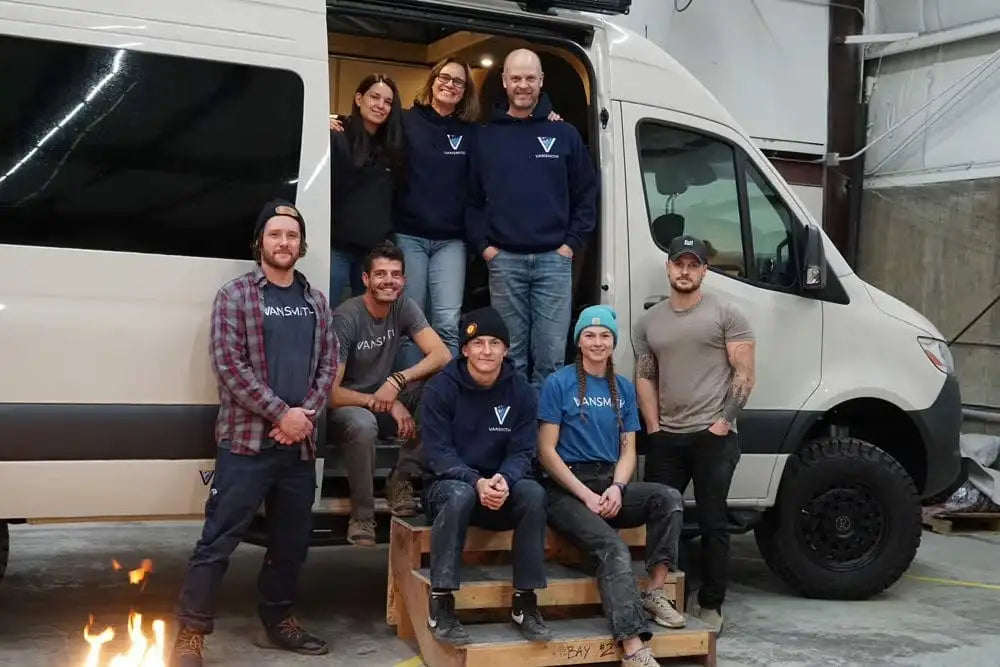
The Vansmith builds camper vans in Boulder, Colorado, on the eastern edge of the Rocky Mountains. Wind, cold, sun, dust and long distances between services are familiar considerations across this region, making them useful factors to discuss when planning a Panhandle build. The Boulder shop is approximately six and a half hours from Amarillo by road, depending on route and conditions.
Buyers can discuss their design through video calls and receive build photos throughout the process. The stated payment schedule includes a $2,500 design deposit, 50% at design approval, 25% at build launch and 25% at handover. Confirm the current terms and timing with The Vansmith. See our process.
The Vansmith provides a lifetime cabinetry warranty to the original owner, subject to the applicable terms and conditions. The Boulder shop also handles service and upgrade work. The Vansmith has a 4.8-star Google rating; check the current listing for the latest review count.
Tailored conversion packages start from $46,950 and range up to $68,950, depending on the selected layout and equipment. Complete vehicles start at $115,950, while Bivy models range from $119,700 to $192,570, with the Bivy XL starting at $153,700. Included equipment varies by model, so confirm the exact electrical, water, heating and ventilation specifications in your quote.
Pricing depends on layout and wheelbase, chassis and drivetrain, battery capacity, air conditioning, heating type, solar array size, suspension and tire packages. Optional equipment is priced according to the selected configuration. Request an itemized quote to compare the cost of each addition.
Texas vehicle purchases are subject to applicable state and local taxes, so confirm current amounts with the relevant county tax office. Registration and insurance requirements can differ depending on the vehicle title, conversion and intended use. Ask your insurer and lender what documentation they require for a converted camper van, including whether NOAH certification is relevant to their requirements. In hail-prone areas, ask specifically how roof-mounted equipment and exterior components are covered.
Amarillo is approximately 450 miles from Boulder, making it one of the closer Texas markets The Vansmith serves. Transport costs are quoted as part of the purchase, and buyers can also arrange to travel to Boulder and collect their van in person.
Start with our current camper vans for sale, tailored models and inspected used vans. Compare the DUO and FAMILY layouts with the pre-built Bivy range to identify options that suit your passenger, sleeping and storage requirements.
Use the van designer to work through available configurations and the Bivy comparison to review the pre-built models. Compare vehicle length, drivetrain, battery capacity, heating system and equipment before choosing a build.
Review the specifications for the systems included in each build. Our Electrical System, solar installation and heater service pages provide more detail. Use our RV loan calculator and read how to finance a camper van conversion.
Amarillo is approximately 450 miles from Boulder. Transport can be quoted as part of the purchase, or you can arrange to travel to Boulder and collect your van in person.
Call (303) 414-6834, use our contact page or visit The Vansmith at 7209 Valtec Court, Unit B, Boulder, CO 80301. For the statewide view, see our camper vans in Texas page.