The Great Loop is a continuous boating circuit through inland rivers, canals, the Great Lakes, and coastal waterways. Most people who do it in one shot plan on about a year. Where you land inside that broad answer depends on your boat's draft and air draft, your budget, and how tightly you want to follow the seasons. That's why first-time planners usually do better when they treat it as a weather-driven route system, not one fixed line on a chart.
The featured photo shows cruising boats at the marina by the Tom Bevill Lock and Dam on the Tennessee-Tombigbee Waterway in Pickensville, Alabama, the route many Loopers take from the Tennessee River to the Gulf. (Photo: Carol M. Highsmith / Library of Congress, public domain)
What the Great Loop actually is
NOAA defines the Great Loop as a continuous waterway that lets boaters circle the eastern part of North America by linking inland rivers, canals, the Great Lakes, and coastal routes. That simple definition helps, because a lot of people picture one exact path at first. In real planning, it works more like a connected network.
The classic spine runs from the Great Lakes south through inland rivers. It often leaves the Mississippi by way of the Tennessee River. From there, many Loopers use the Tennessee-Tombigbee Waterway to reach the Gulf, continue around Florida, head up the East Coast, pass through New York waterways, and return to the Great Lakes.
BoatTEST makes an important point: there is not one single fixed Great Loop route. There are accepted paths, alternates, and side choices based on timing, boat limits, and what kind of trip you want. That's the mindset shift that helps most people early on.
AGLCA breaks the trip into route segments instead of treating it like one giant block. That mirrors how real people plan it. InterMarine also describes the trip as a journey through more than 15 states, two countries, and over 100 locks. That gives you a better feel for the scale before you zoom in on details.
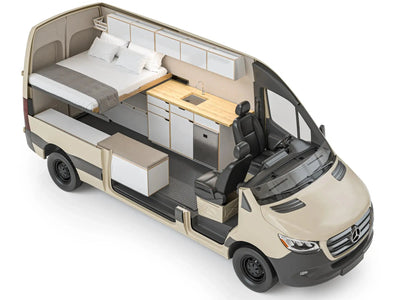
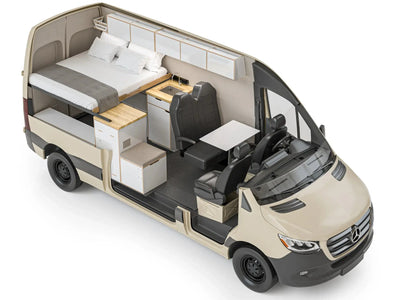
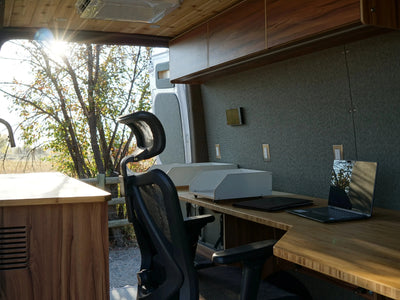
That same staged mindset shows up in van travel too. If you're used to building a trip around seasons, fuel stops, and living comfort, you'll recognize the pattern from planning a long van route with a custom camper van. The platform changes, but the planning logic feels familiar.
The traditional route most people mean by “the Great Loop”

The photo above shows a sailboat on the Atlantic Intracoastal Waterway at Dawhoo Landing near Edisto Island, South Carolina, part of the East Coast leg of the Loop. Note the high fixed bridge behind it: bridge clearance is one of the limits that shapes which boats can make the trip. (Photo: National Archives, public domain)
Most people mean the classic NOAA route spine when they say the Great Loop. That usually means Great Lakes, inland rivers, the Tennessee River, the Tennessee-Tombigbee Waterway, the Gulf, the Atlantic Intracoastal and East Coast, the Hudson River, the Erie Canal, and then back into the Great Lakes. It sounds tidy in one sentence, but each leg has its own timing and limits.
The New York section matters more than many first-time planners expect. AGLCA's route tools are built around sample itineraries, harbor guides, and GPX files for each segment. That shows how region-by-region planning works in practice. The Hudson and Erie Canal system are a key seasonal link between the East Coast and the Great Lakes.
On the inland-river side, many Loopers avoid staying on the lower Mississippi for the full run. Instead, they turn up the Tennessee River and use the Tenn-Tom route, which NOAA highlights as a common planning choice. That's a good example of how the route is really a set of accepted corridors, not one painted stripe.
Two completed Loops can look a little different and still both count. Alternate routes and side trips are normal. If you like this kind of practical trip breakdown, The Vansmith's van build blog has a similar nuts-and-bolts tone for long-range travel planning.
Why most Loopers think in segments instead of one uninterrupted voyage
AGLCA's segment framework exists for a reason. It helps boaters break a huge trip into manageable sections with local notes, timing markers, and sample itineraries. For a first-time planner, that turns a vague dream into a real project.
Segment planning also fits the way the route changes under you. One leg may mean open Great Lakes crossings. The next may mean narrow canals, locks, river current, or coastal runs. Trying to force all of that into one rigid master schedule usually makes the trip feel harder than it needs to.
InterMarine notes that many boaters finish over multiple seasons instead of one continuous year. Weather, repairs, marina access, and simple life stuff can all change the pace, so segment planning gives you room to adapt without feeling like you've failed the trip.
The segment approach makes the Great Loop feel achievable, and it gives you cleaner decision points along the way. That same thinking is why many travelers start with a solid base build like The Vansmith Foundation and add what they need as the trip style gets clearer.
Great Loop route timing: when to go and how long it takes
AGLCA says many boaters doing the Loop continuously plan around a roughly one-year schedule. boats.com frames it much the same way, with movement shaped by weather, service availability, and winter shutdowns in some regions. So the headline answer is simple, but the calendar work is not.
Timing matters almost as much as boat choice. Hurricane season, ice, canal openings, lock schedules, and winter marina closures all affect where you want to be and when. Even a well-suited boat ends up in the wrong region at the wrong part of the year if your timing slips.
AGLCA gives useful timing markers that make the trip feel concrete. Their FAQ guidance points to Florida in early spring, Norfolk in early May, and the Erie Canal in June after it opens. Those markers do a lot more for planning than a vague "follow the seasons" line.
If you've planned long road trips, this will sound familiar. The route only works well when the calendar works too, much like choosing the right season for a Sprinter conversion or Transit conversion that will live on the road for months at a time.
The one-year seasonal pattern many Loopers follow

The photo above shows a schooner sailing on Mobile Bay, Alabama, where the inland-river leg reaches the Gulf. Many Loopers aim to be here around October before turning east toward Florida. (Photo: Carol M. Highsmith / Library of Congress, public domain)
The usual seasonal pattern is pretty clear. That creates a northbound spring rhythm that lines up with openings and better northern conditions.
InterMarine describes a similar flow: spring on the ICW, summer through New York and the Great Lakes, fall down the inland rivers, and winter in Florida or the Bahamas. boats.com adds another practical marker by saying many cruisers aim to head south from Chicago by September and reach Mobile in October. Those are the kinds of dates that help you build a real plan.
The northern part of the route is usually a summer target because canal access and Great Lakes conditions tend to be more favorable then. The southern portion often becomes the winter leg because northern marinas and service options may shrink in colder months. That's why clockwise planning is so common.
That clockwise pattern isn't about tradition for its own sake. It lines up with waterway openings and weather migration. For first-time planners, that makes it the easiest default unless your schedule forces something different.
Why some people stretch the Great Loop over multiple seasons
Plenty of boaters do not finish in one year. InterMarine notes that some split the Great Loop over multiple seasons, and AGLCA's segmented planning structure supports that slower pace well. Each region can be treated as its own project.
This can take a lot of pressure off. If weather delays pile up, repairs pop up, or work and family pull you home, a multi-season plan gives you room to pause without blowing up the whole trip. For many beginners, that's the more realistic version.
Alternate routes help here too. BoatTEST points out that route changes are common, so slower Loopers can shape the trip around favorite cruising grounds or side trips and still keep the full circuit intact. The real question often isn't whether you can do it. It's whether you want one long push or several smaller pushes.
That slower, staged approach has a close cousin in van travel. A lot of couples start with a layout built for longer stays, like the DUO XL, because comfort matters more once a trip stretches beyond a quick season.
Great Loop cost: what the trip really costs
Cost is where a lot of Great Loop dreams get real fast. AGLCA's planning page points readers to its Cost of Looping Calculator, which uses spending reported by completed Loopers. That's one of the most useful budget tools out there because it is based on actual trip experience, not a made-up average.
boats.com stresses that costs vary a lot based on boat age, repairs, outfitting, and cruising style. That's the right way to frame it. There is no magic number that fits everyone, and a cheap entry price can hide a very expensive year.
The biggest budget buckets are usually the boat itself, maintenance and repairs, fuel, dockage or marina nights, insurance, and provisioning. Pre-trip outfitting can also change the math in a big way if the boat is not already ready for the route. In other words, the useful budget model is boat acquisition plus annual cruising costs plus contingency.
That kind of staged budget thinking will sound familiar if you've priced a long-term vehicle build. Many people start by looking at finished layouts for couples or families, then back into the budget from there, whether that's a van for couples or one of The Vansmith's family van conversions.
What drives the budget up or down
Boat age is one of the biggest variables. boats.com calls that out directly because older boats often need more repairs and upgrades before or during the trip. The lowest purchase price is not always the lowest total cost.
Your cruising style changes the budget too. Frequent marina stays usually cost more than anchoring out, and side trips or alternate routes can add both time and fuel. A slower displacement-style boat may burn less fuel than a faster planing boat, but fuel is still only one piece of the total picture.
Outfitting matters more than some buyers expect. A boat may need navigation gear, comfort upgrades, or range-related improvements to make the Loop practical. Insurance is part of the planning picture too, which is why AGLCA includes dedicated resources for both insurance and boat buying.
One thing a lot of planners overlook is contingency. On a trip this long, unplanned maintenance is not some rare edge case. It belongs in the budget from day one, just like setting aside room in a build plan for future upgrades through The Vansmith's process.
How to budget before you commit to the trip
Start with AGLCA's planning page because it pulls together route planning, boat-buying help, insurance guidance, and the calculator in one place. That makes it easier to build a budget in layers. You want one-time costs in one bucket and recurring costs in another.
So split purchase and outfitting from fuel, dockage, maintenance, provisioning, and insurance. Then add a reserve for repairs and delays. If the trip may spill into another season, account for storage, winter dockage, and another insurance cycle too.
This is a go or no-go filter, not a detail to sort out later. boats.com has the right practical framing here: the cheapest boat to buy may not be the cheapest boat to own through the Loop once reliability and repair needs show up. That's true on the water, and it's true on the road as well.
If you're the sort of traveler who likes to map the whole ownership picture before buying, The Vansmith's DIY blog is useful for understanding where systems, upgrades, and long-trip comfort can change the real cost of a platform.
What kind of boat you need for Great Loop boating
For Great Loop boating, the right boat is the one that fits the route's limits, not the one with the flashiest spec sheet. NOAA recommends less than a 5-foot draft for inland waterways on the Loop. That is a hard filter for a lot of buyers.
InterMarine says many Loop-ready boats fall roughly in the 35 to 45 foot range, though that is a planning reference, not a rule. They also use a maximum air draft of 19 feet 6 inches as a practical benchmark because low bridges are one of the route's defining constraints. Those two numbers alone narrow the field fast.
Range matters too. InterMarine recommends enough fuel range for a 250-mile stretch. That's a much more useful metric than top speed for this trip. AGLCA's planning tools reinforce the same idea: fit for route matters more than buying the biggest or fastest boat you can find.
The same logic shows up in long-haul van design. A tall, livable platform usually wins over the one that looks sporty, which is why many van buyers choose a high roof or add a pop-top later.
The core specs that matter most
Draft is the first hard screen. NOAA's sub-5-foot recommendation matters because inland sections can quickly turn a deep-draft boat into a stressful choice. If a candidate boat misses that mark by too much, the route starts choosing for you.
Air draft is the next hard screen. InterMarine's 19 feet 6 inches benchmark exists because bridge clearances are not a minor detail on this trip. A boat that is great everywhere else can still lose route flexibility if it sits too tall.
Reliability also matters more than speed, because downtime can wreck a tightly timed seasonal schedule.
Comfort counts because many Loopers live aboard for about a year if they travel continuously. The best-looking boat on paper is not the best Great Loop boat if its clearance, draft, or fuel range force too many compromises.
Boat types and trade-offs first-time planners should understand
A slower, more efficient cruising boat often makes more sense than a speed-first boat. Over a long route, fuel economy, comfort, and steady range usually matter more than running fast for short bursts. That's especially true when the trip itself tends to reward patience.
A larger boat can give you more living room, but it may also raise dockage cost and make handling harder. That's why InterMarine's 35 to 45 foot range is helpful as a planning guide. It gives you a realistic middle ground without pretending there is one perfect size.
Shallow draft buys you margin on inland stretches, which makes NOAA's less-than-5-foot guidance especially useful when comparing candidates. BoatTEST's route-variation point matters here too. Some owners accept trade-offs in one spec because they are willing to choose alternate routes around the boat's limits.
First-time planners often underestimate how much the route narrows the boat list. AGLCA's boat-buying resources help with that. The real question is simple: do you already own a viable Loop boat, or do you need to buy with these route limits front and center?
How most people break the Great Loop into stages
AGLCA's route-segment structure is the clearest guide to how most people stage the trip. Each segment comes with route overviews, itineraries, and planning tools. That makes the Loop feel less like one giant leap and more like a chain of linked decisions.
A practical stage breakdown mirrors the seasons. Florida and the Southeast often fit spring. The Mid-Atlantic and New York fit late spring to early summer. The Great Lakes fit summer. The inland rivers fit fall. The South and Florida fit winter. InterMarine presents a very similar season-by-season pattern, which is a good sign that this is common practice, not one outlet's spin.
boats.com adds two timing anchors that help a lot: many Loopers head south from Chicago around September and reach Mobile around October. BoatTEST's route-variation framing still matters, though, because stage names stay useful even when exact paths change. That's what makes a staged plan such a good bridge from dreaming to scheduling.
If you're someone who likes to see a trip broken into usable chunks, that same planning style shows up in layout choices too. A family thinking in school-break stages may look at something like the Family XL layout for the same reason boaters look at route segments: it turns a huge idea into a usable plan.
A simple stage-by-stage framework for first-time planners
Stage 1 is often Florida and the Southeast in early spring. That lines up with AGLCA's guidance to start in Florida in early spring. It gives you a clean seasonal launch point.
Stage 2 usually moves up the East Coast to Norfolk by early May. Stage 3 is the New York transition, with arrival at the Erie Canal in June after seasonal opening. Those two markers give first-time planners a clear northbound spine.
Stage 4 is the Great Lakes summer window, when northern cruising and canal access are generally most favorable. Stage 5 is the inland-river run south from Chicago in late summer and fall, with boats.com suggesting a September departure. Stage 6 is the Gulf and South return, with Mobile in October as a useful target before the route bends back toward Florida.
You can fill in details later. Starting with these six stages is often enough to tell you whether the trip fits your time, your boat, and your budget.
Where alternate routes and personal goals change the plan
BoatTEST is clear that alternate routes are normal, not rare exceptions. That means your stage plan should leave room for flexibility from the start. If you lock every mile too early, the route will probably humble you.
Some boaters add side trips for scenery or extra time in favorite cruising grounds. Others choose alternate passages because of boat capability or schedule. InterMarine's note that some Loopers spend multiple seasons on the trip supports this more personal version of the plan.
AGLCA's segment tools help because each region can be judged on its own. A boat with tighter draft or air-draft margins may push you toward more conservative route choices, while a more versatile boat keeps more options open. That is the planning model most readers need: follow the seasonal spine, then customize inside each segment based on your boat and your priorities.
FAQ
How long does the Great Loop usually take?
Many boaters who do the Great Loop continuously plan on about one year. AGLCA and boats.com both describe it as a season-based trip shaped by weather, canal openings, and service availability, not a fixed count of cruising days. If you split it over multiple seasons, the calendar gets easier, but the overall project gets longer.
Is there one official Great Loop route?
No. There is a traditional route spine, but BoatTEST notes that multiple accepted alternate routes exist based on timing, boat capability, and personal goals. NOAA gives the classic overview, while AGLCA breaks planning into segments instead of one exact track line.
What size boat do you need for Great Loop boating?
There is no single required size. Practical limits matter more than length alone. NOAA recommends less than a 5-foot draft, and InterMarine says many Loop-ready boats fall in the 35 to 45 foot range with a maximum air draft of 19 feet 6 inches and enough range for a 250-mile fuel stretch.
How much does the Great Loop cost?
Costs vary widely because boat age, repairs, outfitting, fuel burn, marina use, and cruising style all change the budget. That is why AGLCA's Cost of Looping Calculator is more useful than chasing one generic total. A solid budget should separate purchase and outfitting from recurring trip costs, then add contingency.
How do most people break the Great Loop into stages?
Most planners use a seasonal and regional structure. That usually means Florida and the Southeast in spring, the East Coast and New York in late spring, the Great Lakes in summer, inland rivers in fall, and the South and Florida in winter. AGLCA's timing markers, like Norfolk in early May and the Erie Canal in June, make that framework easier to use.
About the author

Electra Chronis
Head of Marketing
Electra leads marketing at The Vansmith. She writes across van life, camping and travel, from planning a trip to choosing and building the van that gets you there.
Read more about Electra