By Santiago Pere, Chief Design Engineer, January 15, 2026
Why choose swivel, sliding, or sleep-capable van seats?

Van seats that swivel, slide, or turn into sleeping areas add great value to a conversion van. They make the social space useful, let drivers and riders turn for talking, and allow many sleeping setups without always giving up seating space.
For most Vansmith clients, high roof is preferred for headroom and layout options, and most mid roof buyers later add a pop-top when they need more sleeping space. I see this in builds all the time: a simple swivel can turn a cramped front area into a cozy living spot for nights on the road.
Use cases: social space, driver/passenger flexibility, sleeping conversions, and multi-role vans
Swivels let a captain chair face a table or lounge area. Sliding rails allow a table setup that moves between driving and living spots.
Fold-flat benches and flip-and-slide systems turn seating into a bed without a fixed platform. These options make a van flexible for couples, families, or mobile offices.
- Swivel seats enhance social interaction by allowing seats to face the living area.
- Sliding rails offer flexibility between driving and living configurations.
- Fold-flat benches provide a quick conversion to sleeping space without extra platforms.
- High roof options increase headroom and layout adaptability for conversion van seating.
- Consider weight and cost trade-offs when selecting seating mechanisms.
- Ensure all seating modifications maintain crashworthiness and seatbelt integrity.
- Measure space carefully to ensure proper fit and functionality of seating components.
Trade-offs: weight, cost, complexity, and passenger safety
Each part adds weight and cost, and some require structural reinforcement. Swivels and rail systems must maintain safety and seatbelt strength (NHTSA). Expect choices between small, light kits and heavier, tested systems that work with OEM anchors and electronics.
Types of mechanisms and how they work

Before you dive into parts, think about how you use the van day to day. That helps narrow choices between ease and comfort, and it often saves time and money during setup.
Swivel bases: low-profile vs. high-rise, 180 deg vs. 360 deg, manual and assisted models
Short swivel bases keep the seat near original height and preserve sight lines. High-rise swivels add height for a bar-stool feeling. Most common are 180 degree swivels used to face the cabin.
360 degree models exist but are bulkier. Manual swivels are simple and dependable, while help or electric swivels add ease at higher cost and difficulty.
Sliding systems and seat rails: single-track, double-track, aftermarket rails vs. OEM rails
Sliding rails range from single rails that give limited front-back movement to double rails that improve adjustment and steadiness. OEM rails are tested for the car (Ford), while some other rails are universal and may lack crash testing. Use rails rated for seating and confirm bolt patterns before purchase.
Recline, fold-flat, and bed-conversion linkages: two-step recline, flip-and-slide benches
Some seats offer multiple recline options plus a short fold that creates a near-flat surface. Flip-and-slide benches combine a flip seatback with sliding rails to create a larger flat area for sleeping. These connections are often the easiest way to add a sleeping surface without building a custom platform.
Combined mechanisms: slide-swivel combos and swivel-with-rotation-locks
Slide-swivel combos let you move a seat back and forth and then turn it for chatting. Locks keep the seat secure when driving. Mixed systems save space but need exact measuring and stronger mounting points.
Key clearances and measurements before you buy

Measuring for swivel: footwell, door opening, cabinet clearances, and seatback tip radius
Measure the clear space behind the seatback. A usual 180 degree swivel needs about 10 to 14 inches of space behind the seatback and extra room at the door or middle for turning. Mock the turn with tape or cardboard to check fit and avoid surprises before you buy parts.
Measuring for slide: fore-aft travel envelope and seatbelt anchor locations
Measure the full front-back range you want, covering the seat when fully forward and fully back. Confirm seatbelt anchor spots and whether rails will interfere with anchors or frame parts, especially if you’re planning a van conversion outdoor kitchen or a compact campervan with outdoor kitchen where space is tight. Some seats need moving or strengthening anchors.
Measuring for sleep: seat-to-seat and seat-to-wall dimensions for flat configurations
For bed changes, measure the flat area when the seatback is folded down. Account for cabinet fronts and hinge spaces. Ensure the sleeping area meets your wanted length and width without blocking exit paths.
Platform-specific notes: Sprinter van bench vs. captain chairs; Transit and ProMaster quirks
Sprinter benches often have various bolt patterns and may need rail fittings or custom plates. Transit seats are often more flexible.
ProMaster setups may need various methods due to floor shape. Always confirm fit for your platform before buying.
Installation cautions and safety requirements
Mounting points and floor reinforcement: locating factory anchors and when to add cross-rails
Find factory anchor points and follow maker rules. If these points aren't ideal for your custom van seating, think about using cross-bars or steel support plates that are bolted or welded to the original anchors.
Ensure you follow torque specs and consult a builder or engineer for frame welding to maintain safety. This approach is key when looking into campervan seating options or putting in adjustable van seats.
Seat belt, airbag, and electronics considerations: keeping OEM fixtures and SRS integrity
Swivels and rail changes can affect SRS actions. Keep OEM seat bases and preserve sensor and wiring routes when you can.
After setup, scan for SRS codes. If changes alter electronics, have an expert check system strength.
Torque specs, threadlocker, and corrosion protection best practices
Use maker torque specs, threadlocker where suggested, and rust-proof hardware for long life. Check bolts often and apply anti-seize or proper coatings for coastal or wet use.
Legal and inspection considerations: DOT/ADR/NHTSA differences, passenger seat legality
Rules vary by area. Some changes to passenger seats or anchors may trigger checks or need approved parts. Check local car code and check rules before making frame changes.
Best-value picks and selection guide for van captain chairs
Budget options: proven aftermarket swivel bases and used captain chairs
Cost-aware builders often choose proven aftermarket swivel bases paired with used captain chairs. This approach saves money but needs close checks for wear and fit with rails and SRS wiring.
Mid-range: integrated slide-swivel rails and conversion-friendly reclining seats
Mid-range options combine built-in slide-swivel rails with seats made for conversion use. These balance price, ease, and dependability and are a common choice for couples seeking both social space and sleeping options.
Premium: OEM seat conversions, powered swivel/slide systems, and high-end sleep benches
Premium options include OEM seat changes, electric systems, and designed benches with tested anchors and built-in electronics. These provide the best fit and finish and are suggested when safety and long life are top priorities.
Where to buy and what to ask sellers
Ask sellers about fit, bolt pattern match, SRS wiring, shape, warranty, and return rules. For used seats, check mounting points, seat track wear, and fabric shape. Prefer vendors who show fit to Sprinter or Transit platforms.
Step-by-step measurement and install checklist
Tools and preparation: safely supporting the van, harnesses, and electrical precautions
Prepare jack stands, a torque wrench, right sockets, and safety glasses. Unhook the battery when working near SRS wiring. Have a code scanner ready to clear codes after setup.
Pre-install checklist: measure, mock-up, check seatbelt anchorage, plan trim/cabinet changes
Measure the swivel radius, sliding range, and sleeping area. Mock up with cardboard or tape. Confirm seatbelt anchor fit and plan any cabinet cutting or moving ahead of time.
Post-install checklist: bolt torque, seat movement check, SRS scan, road test
Torque bolts to spec, test seat motion and locks, perform an SRS scan for faults, and perform a slow road test to confirm steadiness and function.
Layout examples and space planning tips
Single captain chair swivel for social area
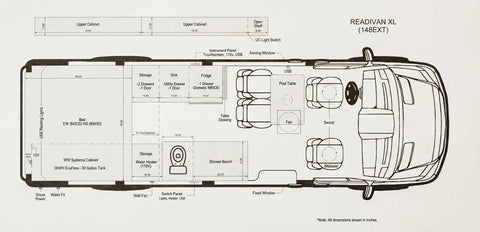
Swivel the front captain chair to face a table or lounge area for a compact social setup that keeps the driver seat free for travel. This is a smart use of space for solo travelers or couples.
Two captain chairs + table layout using sliding rails
Put both captain chairs on rails so they can move closer to a central table when parked and slide back for driving space. This layout is adaptable for work, dining, and unwinding.
Sprinter bench that converts to a flat bed: measurements and cabinetry integration
A Sprinter bench with flip-and-slide linkage can fold flat into a sleeping surface that fits with cabinets. Plan cabinet fronts and hinge spaces so the bench folds without blockage.
To transform your van with versatile seating solutions, explore our services today.
Weight distribution and center-of-gravity tips
Keep heavy items low and in the middle between axles. Place batteries and water near the floor and close to the vehicle center to maintain steady handling.
Maintenance, troubleshooting, and upgrades
Common failure points and preventive maintenance (tracks, bearings, locking detents)
Inspect tracks for wear, clean and oil bearings per maker guidance, and check locking detents for proper grip. Address rust early to avoid binding.
Upgrading swivel/slide: adding locks, damping, and corrosion-resistant hardware
Add extra locks or damping to reduce rattle, and replace exposed hardware with stainless or coated bolts for long life. Improvements can boost function and reduce noise on rough roads.
When to call a professional (SRS work, welding, or structural reinforcement)
Call an expert for any work that affects SRS wiring or anchors, or that needs welding to frame parts. For floor strengthening and anchor moving, consult a builder or engineer to preserve safety.
FAQ
How much clearance do I need to swivel a captain's chair in my van?
A usual 180 degree swivel needs about 10 to 14 inches of clear space behind the seatback and extra room at the door or middle for seatback turning. Measure the seatback tip radius and mock the turn with tape or cardboard.
Can I install a swivel base on an OEM Sprinter van seat or bench?
You can on many Sprinter captain chairs using seat-specific swivel kits; Sprinter bench seats may need special rail fittings or a custom fix. Confirm bolt pattern match and SRS wiring before buying.
Are sliding rails safe for passenger seats?
Properly rated sliding rails made for seating with suitable locking detents can be safe if fitted to the vehicle’s frame anchors and used with approved seatbelts. Avoid light universal rails that lack crash testing.
What’s the easiest way to make a seat convert into a bed?
Bench seats with flip-and-slide connections or seats that fold flat with a set slide-plate are easiest. Look for kits labeled as 'bed change' or choose seats with low backs and recline/fold features.
Do swivels affect airbags or seatbelt operation?
They can. Swivels that change seat position or distance from airbags may affect SRS function. Keep OEM seat bases when you can, preserve sensor and wiring routes, and scan SRS codes after setup.
How do I reinforce the van floor for a new seat?
Use cross-bars or steel support plates welded or bolted to factory anchor points. Always follow torque specs and, for frame welding, consult a metal worker or engineer to maintain safety.
Can I DIY install a swivel or slide system?
Skilled DIYers can install many swivel and slide systems, using maker guides and safety checks, but projects with seatbelt anchors, airbags, or welding are best handled by pros.
Schedule a free layout consult with The Vansmith to confirm sizes and fit for your van seats: Contact The Vansmith
About the author

Santiago Pere
Chief Design Engineer
Santiago is Chief Design Engineer at The Vansmith. He writes on topics spanning van design, builds, and life on the road.
Read more about Santiago