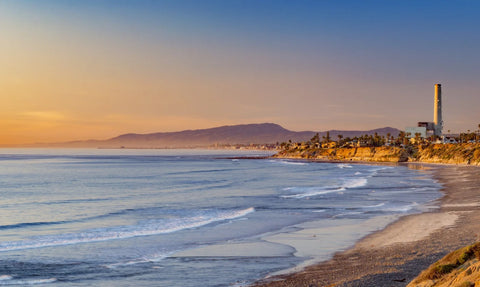
The photo at the top shows sunset over the tidepools at Cabrillo National Monument on Point Loma in San Diego, one of the easy-access coastal spots in this roundup (Photo: NPS).
The best sunset spot in the U.S. is usually Grand Canyon, because it gives you several proven viewpoints instead of just one famous perch. Which end of that answer you land on comes down to access style, crowd tolerance, and whether you need an easy overnight plan nearby. A summit sunset can feel huge, but it may ask for more driving after dark. A coastal stop may be simpler, especially if you want dinner-town access or a quick overnight before moving on.
How to choose the right sunset spot

The photo above shows Jordan Pond and the Bubbles in Acadia in late-day light. It is a good example of the advice Acadia itself gives: when Cadillac Mountain is packed, a quieter spot in the same park can make the better evening. (Photo: NPS / Victoria Stauffenberg)
If you're choosing between famous names, the smartest move is to think past the photo. Official park pages tend to focus on access, traffic, and viewing logistics, and that tells you a lot about what the evening will really feel like. A sunset stop that looks easy online can turn into a rushed parking hunt if you only plan around the posted sunset time.
You can see that clearly in official guidance from the National Park Service at Grand Canyon and Acadia. Grand Canyon notes that Hopi Point is especially popular and crowded in summer, while Acadia warns people to avoid Cadillac Mountain crowds at sunrise and sunset. That tells you the best sunset spots are often the ones with the best plan, not just the biggest name.
Zion gives one of the most useful timing notes out there. The park says on its sunrise and sunset page that the best light is often about an hour before sunset. So if you roll in at the exact sunset minute, you're already late for part of the show.
We like to sort sunset picks by style: canyon overlooks, summit sunsets, ocean cliffs, and coastal mountain viewpoints. That keeps the trade-offs clear. For van travel, the real split is simple: can you stay nearby in a legal overnight spot, or do you need to drive out after dark and keep going?
Shoulder season helps here. Parking tends to be easier, hiking weather is cooler, and sleeping in a van is usually more comfortable than peak summer at an exposed overlook. If you're still dialing in your rig for that kind of travel, our custom camper van page and build process overview show how we think about real road use, not just parked photos.
What matters more than fame
Grand Canyon is a good example of why fame can mislead you. The park doesn't point to just one sunset overlook. It recommends Hopi, Mohave, and Pima Points on Hermit Road, plus Yaki, Navajo, and Desert View, which means you have options if one area feels packed or doesn't fit your route.
Acadia makes the other side of the case. Its parking and traffic guidance shows that popularity can work against the evening, especially around marquee spots at peak times. A famous viewpoint can still be worth it, but only if you go in knowing the crowd is part of the experience.
Point Reyes works the same way in a different setting. The park's parking lot guidance makes it clear that you need to use designated lots and can't count on easy roadside access everywhere. That changes the feel of the stop, especially if you're trying to keep the evening relaxed.
Horseshoe Bend is one of the most recognizable overlooks in the Southwest. Still, its fame means timing and crowd management matter as much as the view itself. You'll often have a better night by picking a slightly less hyped viewpoint with easier parking instead of forcing the busiest stop at the busiest minute.
Roundups from travel magazines can help you spot the big names, and Travel + Leisure's national list does that well. But for real planning, the official park pages are the better tool because they tell you what access, parking, and traffic actually look like on the ground.
Best months and arrival timing
Official sources usually don't name universal best months, and that's useful in itself. It means you shouldn't force a one-size-fits-all answer. Spring and fall are the safest practical bet at high-demand western parks because crowd pressure often matters more than the exact date on the calendar.
You get a calmer evening, and your overnight setup often feels better too.
Add parking stress, and 60 to 90 minutes early is a very real planning rule at busy spots.
San Diego follows the same logic from a city-coast angle. Visit California's sunset guide says to arrive early because the popular oceanfront spots fill up before sunset. Acadia also points toward congestion at peak times, which is why another viewpoint or another style of sunset can be the smarter call.
Best sunset spots in canyon country

The photo above shows Horseshoe Bend at sunset, the single dramatic overlook near Page that works very differently from a multi-viewpoint park rim like the Grand Canyon.
If you want the classic Southwest evening, Grand Canyon and Horseshoe Bend are the headliners. They look similar in a broad sense, but they work very differently in real life. One is a national park rim with several overlooks and shuttle planning, while the other is a single dramatic bend near Page.
Grand Canyon gives you range. The park highlights Hopi, Mohave, and Pima Points on Hermit Road, plus Yaki, Navajo, and Desert View as strong sunset choices, so you can shape the stop around your route and crowd tolerance. Horseshoe Bend is more concentrated, which can be great if you want one clear mission and then you're done.
There's also an access detail that matters. Horseshoe Bend is part of Glen Canyon National Recreation Area, but the parking area sits in the City of Page, as the NPS Horseshoe Bend page explains. That can surprise travelers who expect a more typical national park arrival setup.
For van travel, both stops fit well into a wider Southwest loop. You can link them with other public-land camping regions, but the overlook itself may not be your overnight solution. If you're planning a longer desert route, our van build blog has useful reads on setting up a rig that works well for repeated park stops and shoulder-season nights.
We'd take Grand Canyon over Horseshoe Bend if you only have one sunset to pick. The backup viewpoints make the evening much easier to save if crowds or weather shift.
Grand Canyon: best viewpoints and crowd strategy

The photo above is the view from Hopi Point as the sun drops and storm clouds catch the last light, the same overlook the park warns gets crowded in summer. (Photo: NPS)
Grand Canyon has one of the clearest official crowd warnings you'll find anywhere. The Park Service says Hopi Point is especially popular and crowded in the summer. That's a strong hint to avoid building your whole evening around one famous perch in peak season.
The good part is that you have real alternatives. Mohave, Pima, Yaki, Navajo, and Desert View are also recommended for sunset, so you aren't boxed into one plan. That matters if you're arriving after a long drive and don't want the night to hinge on one parking lot.
The shuttle system also shapes the visit. Some viewpoints work best when you stop thinking in terms of close-in parking and start thinking in terms of getting into position early. That's why Grand Canyon often rewards a slower evening and a nearby overnight more than a same-night dash out.
Grand Canyon is one of the easiest places to justify staying nearby and letting the evening breathe.
Horseshoe Bend: quick stop or full evening
Horseshoe Bend is famous for a reason. It's dramatic, direct, and easy to understand at a glance. The National Park Service describes it as part of Glen Canyon National Recreation Area, and that gives it a different feel from a broad park rim with multiple sunset zones.
The parking context matters here more than many people expect. Since the lot is in the City of Page, you're not arriving into the same kind of viewpoint network you get at Grand Canyon. You're showing up for one main overlook, and that puts more weight on timing.
Because it is a single-viewpoint destination, there are fewer on-site backup moves if the lot and trail are busy. That's why this stop works best for travelers who want a concise sunset mission, not a long scenic rim drive with several fallback options. If your mood is simple and focused, it's a great fit.
For van travelers, Page often works better as the resupply and overnight base before or after the visit. Treat the overlook as the evening event, then let town handle the practical side. On longer desert routes, that extra flexibility can save the trip if weather or crowds push your timing around.
Mountain and desert sunset spots worth the drive

The photo above shows a stormy sunset over the Watchman near Zion's south entrance. That glow on the canyon walls is the light the park means when it says the best color often comes before the sun is fully down. (Photo: NPS / Sarah Stio)
Haleakala and Zion both bring huge evening drama, but they ask for different kinds of planning. Haleakala is a summit-area sunset. Zion is more about choosing among overlooks and catching changing light on canyon walls.
The official pages make that difference clear. Haleakala's sunset page centers the summit area, while Zion's guide names Lava Point Overlook and Timber Creek Overlook Parking Lot as top sunset choices. One feels like a destination event. The other gives you more route-based freedom.
If you're choosing between them, think about how fixed you want the evening to be. Haleakala is more singular. Zion gives you more room to adapt based on energy, weather, and crowds.
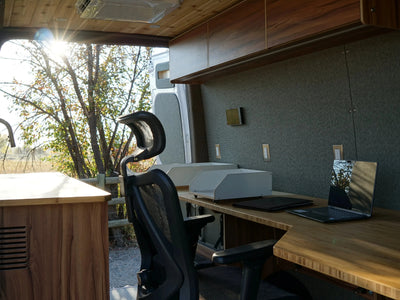
These are also the kinds of trips where van setup starts to matter fast. Shoulder-season mountain and high-desert travel is often easier on van systems because you usually need less cooling after sunset. A well-insulated van with good ventilation and reliable heat opens up far more of the year, and our Foundation builds are built around that kind of practical use.
Haleakala: summit sunset with camping rules

The photo above shows sunset fading into moonrise from Holua, inside Haleakala's crater, with the cloud layer sitting below. Holua is one of the park's designated wilderness camping areas, which is exactly the kind of place you need lined up if you want to stay up high overnight. (Photo: NPS)
Haleakala is one of those places where the sunset is the event. The Park Service has a dedicated sunset page for it, and that alone tells you this isn't just a casual roadside stop. You plan around the summit experience, then build the rest of the night from there.
The overnight rule is the key detail for van travelers. NPS says overnight stays in the park are only allowed in designated camping areas. So you can't assume you can watch the sun go down and simply stay near the summit afterward.
Because the setting is high and exposed, weather, temperature, and visibility shape the evening almost as much as the sky color does. Some nights the feeling of being up there is the whole memory. Other nights, clouds or wind become the main factor, and that's just part of the deal.
Post-sunset descent needs to be part of your plan. If your legal overnight spot is already settled, the whole evening feels better. Rolling into a known campsite after dark beats trying to solve sleep logistics while tired on a mountain road.
Zion: where to watch the sunset
Zion is one of the clearest answers to where to watch the sunset if you want options. The park specifically recommends Lava Point Overlook and Timber Creek Overlook Parking Lot. That gives you more than one strong play before the evening even starts.
Its timing advice is also unusually direct. Zion says the best light often happens about an hour before sunset, so showing up only for the final minute means missing part of the color. Photographers know that, but casual visitors benefit from it just as much.
This makes Zion easy to plan in a sensible way. If one overlook is crowded or weather-exposed, another may still fit your route. You're not locked into one famous perch, which lowers the pressure on the whole day.
Zion works well for longer stays. You can pair scenic evenings with several days of hiking instead of making sunset the only goal. If that's your style, our Sprinter conversions and Transit conversions show the two platforms we build around most for this kind of travel.
Best sunset spots on the coast

The photo above shows Kehoe Beach at sunset during low tide, the kind of wild Pacific shoreline that sets Point Reyes apart from an easier-access coastal stop.
Coastal sunsets come in very different flavors. Point Reyes gives you wild Pacific shoreline. Acadia brings rugged Atlantic park scenery. San Diego is the easy-access version, with public-facing ocean viewpoints that fit a lighter evening plan.
Point Reyes stands out in a van-travel guide because the official pages cover both parking lots and campground realities. Acadia stands out because its own guidance warns about Cadillac Mountain congestion at sunrise and sunset. San Diego stands out because the tourism advice is direct and practical: arrive early if you want a good spot.
Travel roundups help show why all three belong in one national list. They represent very different sunset styles, and that matters more than ranking one as universally best. For many couples and families, coast-based sunsets pair better with dinner-town access and an easier next morning than remote desert or summit viewpoints do.
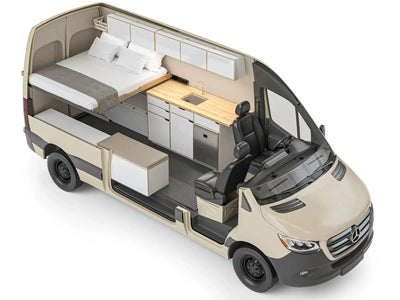
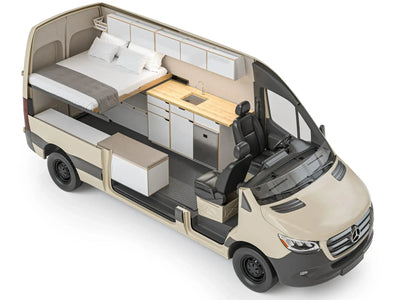
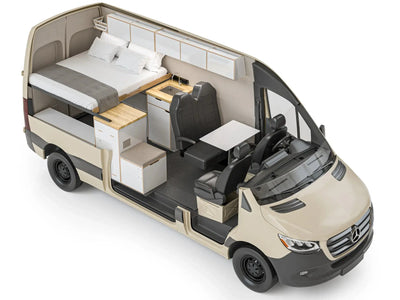
That makes the coast a smart choice if you want shorter walks and more flexible evenings. If your van setup leans toward quick overnight moves, a couples layout like the DUO XL can make these shorter scenic stops feel easy and calm.
Point Reyes: beautiful, but know the camping limits
Point Reyes is beautiful, but it asks you to respect the structure of the place. The park provides parking-lot guidance because sunset visitors need to use designated access points, not improvised roadside pullouts. That can make the evening smoother if you plan for it, or frustrating if you don't.
The campground piece matters just as much. Point Reyes is not a simple drive-up campground situation near the viewpoint, and that changes how a van traveler should think about the stop. It's a strong sunset destination, but not always the easiest same-place sleep spot.
So who is it best for? People who want the wild coastal feel and don't mind separating the sunset stop from the overnight plan. Arriving early is the smart move here, even when the official page doesn't give an exact minute-by-minute parking cutoff.
This is a classic case where a van helps only if you research legal overnight options first. Flexibility is great, but only when it's grounded in real access rules.
Acadia and San Diego: opposite ends of the sunset spectrum
Acadia and San Diego almost feel like opposites. Acadia's official traffic and parking guidance says to avoid Cadillac Mountain crowds at sunrise and sunset by choosing another place or another way to experience them. That is a rare bit of honesty, and it's useful.
The park's parking guidance reinforces that legal, designated parking matters and that congestion is part of the plan. By contrast, San Diego is framed around easy public-facing sunset spots, and Visit California directly tells people to arrive early for a good place to watch. One asks for more park logistics. The other is much more grab-and-go.
For a national roundup, they belong together because they show the trade-off so well. Acadia gives you iconic park scenery if you're willing to work around seasonal congestion. San Diego gives you a lower-friction ocean sunset if you want the view without a full wilderness-park commitment.
When people ask where to watch the sunset with the least friction, city-adjacent coastlines usually win. If your travel group needs more sleeping room for these stop-and-go scenic nights, our family van conversions and Family XL layout are worth a look.
Parking, camping, and trip cost realities
Official sources are best at telling you access rules, crowd warnings, and camping limits. They are not always great at saying exactly when a lot will fill. So the honest approach is to use the direct guidance where it exists, then infer a reasonable buffer where crowding is clearly part of the story.
Grand Canyon and Zion both reward showing up well before sunset. Zion says the best light often starts about an hour early, and Grand Canyon warns about summer crowding at Hopi Point. Point Reyes and Haleakala both need extra overnight planning because camping is structured, not free-form near the view.
Acadia and San Diego sit at opposite ends of the parking spectrum. One is a heavily managed national park setting. The other is a very popular urban-coastal scene where arriving early is direct tourism-board advice. Either way, fuel, park entry where it applies, and campground or nearby overnight costs belong in your budget, not just the sunset stop itself.
Building these evenings into longer loops beats one-off dashes. That spreads fuel and campground costs across several days and makes iconic viewpoints feel less rushed. As of 2026, that same thinking is why some travelers move into a camper van instead of piecing together hotels around every stop. Our ready-built Bivy takes about 8 to 10 weeks and tailored builds about 12 to 16, so if you want a van ready for a spring or fall trip, start the conversation early. If you want to talk through what fits your travel plans, you can contact us.
How early to arrive for parking
Zion gives the clearest timing cue in this whole roundup. Since the best light often starts about an hour before sunset, that should be your minimum arrival buffer. If parking is limited, that hour can disappear fast.
Grand Canyon pushes the window earlier, especially in summer. A warning that Hopi Point is especially crowded supports arriving earlier still if you want parking or shuttle flexibility. San Diego follows the same pattern in a different setting, because Visit California tells visitors to arrive early to secure a spot.
Acadia adds one more useful lesson. Sometimes the smartest parking strategy is to skip the most famous viewpoint altogether. For this roundup, 60 minutes early is a solid baseline where official pages discuss light, and 60 to 90 minutes early makes more sense where they also warn of heavy crowding. Haleakala is the exception: the park says to arrive at least 2 to 3 hours before sunset, because cars are turned around at the entrance when the summit fills.
Don't forget the exit. Lots and roads can bottleneck after dark just as badly as they do before sunset, and that can shape your overnight plan more than people expect.
Nearby camping and who this style of travel suits
Haleakala is the clearest case for advance planning because overnight stays are allowed only in designated camping areas. Point Reyes also needs care, since it is not ideal for travelers expecting easy drive-up campground access near the sunset viewpoint. Those are great places to watch the sky change, but they ask more of your plan.
Grand Canyon and Zion usually fit better if you want a fuller park stay built around the sunset. Horseshoe Bend often works better with an overnight base in Page than as an overnight-at-the-view stop. That difference matters if you're traveling with kids, a dog, or just a low appetite for late-night scrambling.
| Layout | Platform | Starting price |
|---|---|---|
| Duo | Ford Transit | $114,950 |
| Duo | Mercedes Sprinter | $115,950 |
| Family | Ford Transit | $119,950 |
| Family | Mercedes Sprinter | $120,950 |
For couples, a compact but fully equipped layout can make one-night scenic stops much easier. For families, more sleeping flexibility matters when the trip is built around park evenings and early starts. If you want to compare layouts in more detail, the vans for couples collection and family vans collection are the best places to start.
FAQ
What is the best sunset spot in the U.S. if I only want to pick one?
Grand Canyon is the safest single pick. The National Park Service recommends several sunset viewpoints there, including Hopi, Mohave, and Pima Points on Hermit Road, plus Yaki, Navajo, and Desert View. That variety gives you backup options if one area is crowded, and that is a big edge over single-viewpoint destinations.
How early should I arrive to get parking at the best sunset spots?
A good rule is at least 60 minutes early, and closer to 90 minutes early at famous spots with crowd warnings. At Haleakala, plan on 2 to 3 hours. Zion says the best light often starts about an hour before sunset, Grand Canyon warns that Hopi Point is especially crowded in summer, and San Diego guidance says to arrive early for popular viewing spots. If parking is limited, that extra buffer does a lot for your stress level.
Where should I watch the sunset if I want nearby camping too?
Grand Canyon and Zion are easier fits for a fuller park-based trip. Haleakala and Point Reyes need more careful overnight planning because camping is structured and not simply available near the viewpoint. Horseshoe Bend also tends to work better with an overnight base in Page than at the overlook itself.
What months are best for visiting sunset spots?
Official sources usually do not name exact best months, so spring and fall are the most defensible picks at busy western parks. Grand Canyon specifically warns that Hopi Point is especially popular and crowded in summer. That makes shoulder seasons the more practical choice for many van travelers.
Are famous sunset spots always the best choice for van travelers?
No. Acadia's official guidance even suggests avoiding Cadillac Mountain crowds at sunrise and sunset by choosing another place or another way to experience them. For van travelers, easier parking and a legal overnight base often matter just as much as the view itself.
About the author

Carin Smit
President
Carin is President of The Vansmith. She writes on a range of topics tied to the business, from vans and builds to the broader vanlife world.
Read more about Carin