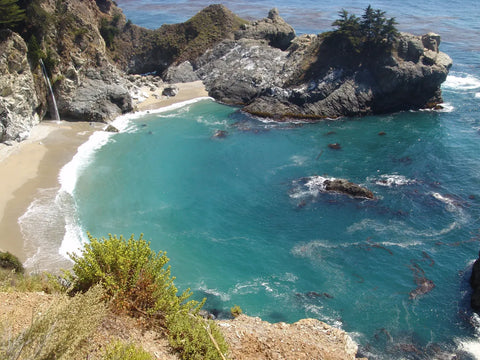
Hiking in Acadia National Park, Maine means choosing between about 150 miles of hiking trails and 45 miles of vehicle-free carriage roads, with the right pick hinging less on fitness than on comfort with exposure. Which trail fits you comes down to one main variable: whether your group is okay with narrow ledges, iron rungs, and steep drop-offs, or would rather trade drama for a calmer walk. That choice shapes everything else, from whether Beehive or Precipice even belong on your list to whether Cadillac is better hiked or driven. For van travelers, it also decides how much parking stress you sign up for on a given day. The photo above shows waves breaking below Otter Cliff on Acadia's granite coast, the kind of view that explains why both the cliff hikes and the easier carriage roads draw people back.
How to choose the right Acadia hike for your trip

The photo above shows Sand Beach Cove and Great Head from Gorham Mountain, a good example of the kind of payoff view a shorter, easier Acadia hike can still deliver.
Acadia packs a lot into one park. According to the National Park Service hiking guide, the park has about 150 miles of hiking trails. Those routes range from easy walks to steep granite climbs with iron rungs and ladders.
That range is why trail choice in Acadia feels more personal than a simple mileage check. Two hikes can both be short, but one may feel like a regular summit walk while the other asks you to pull yourself up exposed rock.
If your group wants a lower-stress day, Acadia also has 45 miles of historic carriage roads where motor vehicles are not allowed. The carriage-road system gives you a very different park experience, one built around broad routes, easier footing, and less pressure. That's why mixed groups often enjoy these roads more than they expect.
One thing a lot of first-timers miss is that many famous trailheads sit on or near the Park Loop Road. So your hike is tied to traffic, parking, and timing before you ever lace up your boots. Van travelers usually have a better day when they decide early if they want one short, high-demand stop or a half-day outing with less parking churn.
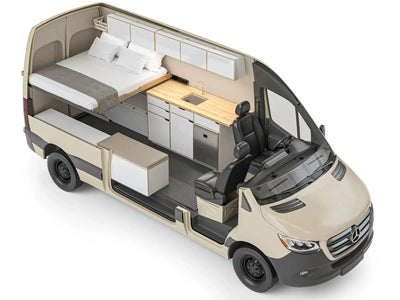
If you want a summit feel without technical exposure, start with Cadillac-area hikes or a carriage-road outing. That's often the better fit for travelers who want views but don't want to commit to ledges and ladders. If you're still shaping your road-trip setup, our custom camper van page shows the kind of layouts people use for trips that mix trail time with slower scenic days.
What makes Acadia hikes feel different
Acadia's granite terrain changes how trails work. Instead of long switchbacks, some routes go straight up ridges and cliff faces, which is why the park uses iron rungs, ladders, and hand-over-hand scrambling on certain hikes. You feel that fast.
The Beehive and Precipice are both flagged by the park as strenuous options, and they are not the same as a normal summit walk in many other national parks. That's the key distinction. If you picture a standard uphill trail with a few steep spots, you're likely underestimating what these routes feel like in person.
By contrast, the carriage roads are set apart from regular vehicle traffic and are one of the park's most approachable assets for walking and biking. Friends of Acadia treats the combined trail and carriage-road network as one of the park's defining features, and that tracks with how most visitors experience the place. You can pick rugged mountain travel or accessible exploring without leaving the same general area.
Because many headline hikes sit close together on Mount Desert Island, you can pair a hard morning with an easier afternoon. Start early for the high-demand trail, then shift to carriage roads or scenic stops once traffic builds.
Best hike type by traveler profile
Exposure-tolerant hikers who want a signature Acadia challenge are the clearest match for Beehive or Precipice. The park makes it plain that these are exposed, strenuous routes, so the choice should start with route style, not just ambition. If heights get in your head, these are probably not your best memories in the making.
Travelers who want classic summit views with fewer technical moves should look at Cadillac Mountain hiking options first. That tends to be the sweet spot for people who want the feeling of earning a summit without climbing aids. It's still a real hike, just a different kind.
Families, recovery-day hikers, and anyone bringing a less experienced partner usually get more value from carriage roads. The surface is broad, the setting is scenic, and there are no cars on the route. For people building a family-focused van setup, our family van conversions page lines up well with this kind of trip style.
Parking also changes by zone. Jordan Pond, Sand Beach, and Cadillac all sit in the same wider park system, but they don't feel the same once you factor in traffic and trailhead demand. For couples road-tripping New England, one iconic climb plus one easy scenic walk usually beats stacking multiple hard hikes and spending the afternoon hunting for a place to pull over. You can see that same slower-trip logic in our vans for couples collection.
Camping matters too. Overnight parking elsewhere in the park is not allowed, so van travelers need to build around legal campground stays. That sounds annoying. It is.
Precipice vs Beehive: which ladder trail should you pick?

The photo above shows the Precipice trailhead with a seasonal closure in place. Acadia regularly closes Precipice and other cliff trails for peregrine falcon nesting, so always check current trail status before you plan around one.
The Beehive Trail and Precipice Trail are Acadia's best-known exposed cliff hikes, but they are not interchangeable. Both involve steep exposed sections and iron rungs, which makes them poor fits for anyone uneasy with heights. The right call here matters for both enjoyment and stress level.
The park broadly treats Precipice as one of Acadia's most strenuous hikes. Beehive is often the more approachable way to get the ladder-trail feel in a shorter format. That's why many first-timers land on Beehive if they want one dramatic route and still hope to do something else later in the day.
Parking pressure can shape this choice almost as much as fitness. These hikes sit near major Park Loop Road destinations, so congestion and roadside space can add friction before the fun even starts. If your group is split on heights, we usually think it's smarter to send only the exposure-comfortable hikers onto one of these routes and let the rest enjoy a nearby easier walk, then meet back up later.
A lot of regret comes from picking one of these trails for the photo appeal without being honest about exposure. Once you're committed on the route, turning around may be stressful. Sometimes it isn't realistic.
When Beehive makes more sense
The NPS includes Beehive among Acadia's notable hikes and presents it as a steep, exposed route that still works for visitors seeking a shorter marquee experience. That's a useful way to think about it. You still get the cliff-hike feel, but without jumping straight to the park's most demanding rung route.
Its spot near Sand Beach is a real advantage for first-time visitors with limited time. You can combine it with other Park Loop Road stops and keep the day pretty compact. That makes Beehive a strong anchor activity if your trip has one big hike and one easier outing.
Still, Beehive can fool people. Because it's shorter and all over social media, some hikers underestimate how exposed it feels once they're on it. Larger vans should treat this as an early stop because the handy roadside spaces near marquee trailheads disappear fast.
If you're building a van around quick morning trail hits and easy transitions, our Foundation builds and build process pages give a good sense of how people plan for simple, efficient travel days.
When Precipice is the better choice
Precipice is the more serious commitment. The park describes it as a signature strenuous hike with steep climbing on exposed terrain using iron rungs and ladders. Even if the mileage does not look huge on paper, the mental and physical ask is much bigger than a standard summit trail.
That makes Precipice the wrong pick for anyone unsure about heights, carrying a child, or trying to rush through a crowded sightseeing day. This is not the hike to squeeze between brunch and a scenic drive. If your goal is challenge and route character, though, it is often the more memorable choice.
Traffic and parking still matter here because access is tied to the Park Loop Road corridor. The best use of Precipice is to make it your one big effort of the day, then keep everything else simple. Less friction.
Cadillac Mountain: hike it or drive it?

The photo above shows the trail sign at the junction with the Cadillac North Ridge Trail, one of the hiking routes to the summit. Hiking up is the way to reach Cadillac without a vehicle reservation for the summit road. (Photo: NPS)
Cadillac Mountain is one of Acadia's headline destinations, and the hike-or-drive choice should happen early in your planning. Driving the summit road requires its own vehicle reservation from late May through late October (May 20 to Oct 25 in 2026), and that reservation is separate from the regular park entrance pass. A lot of first-timers miss that split.
The park manages those reservations through Recreation.gov and the Cadillac reservation system, with some inventory released ahead of time and more released on a rolling basis. If you want the summit by vehicle, this is one of the few Acadia logistics that can block the whole experience if you wait too long. For a van trip, check your length first: vehicles over 21 feet (including bike racks and hitch attachments), RVs, and trailers are prohibited on Cadillac Summit Road, even with a reservation. If your van fits, reserve as soon as your dates are firm.
Hiking Cadillac can be a smart workaround if you want the summit but don't want to depend on a road reservation. It can also be the less stressful option for van travelers who don't love summit traffic or tight maneuvering. This suits people who spend long stretches on the road and don't want another drive-heavy attraction in the middle of the trip.
If you miss the road reservation, don't waste half the day circling for alternatives. A Cadillac hike plus a carriage-road walk usually saves the day better. Not always, but often.
Cadillac Summit Road reservation basics
The NPS requires a vehicle reservation to drive Cadillac Summit Road from late May through late October (May 20 to Oct 25 in 2026). Reservations cost $6 and are not sold at the park. The park also states clearly that this reservation is separate from your entrance pass, so you need both if you are entering the park and driving the summit road. That detail trips people up every year.
Reservations are booked through Recreation.gov, not at the summit gate. The park says inventory is released in stages, which matters if you miss the first booking window. You may still have another shot if your dates are flexible.
This system exists because Cadillac is one of the park's most in-demand spots. Without managed access, the summit road corridor would get overwhelmed. For a New England van trip, this is one reservation worth treating like a campground booking, not an afterthought.
When hiking Cadillac is the smarter plan
Visitors who prefer active sightseeing, or who miss the vehicle reservation window, can still reach Cadillac on foot through the park's hiking network. Hiking avoids the summit-road reservation requirement, though normal park access still applies. For some travelers, that alone makes the choice easy.
A trail approach also tends to feel quieter and more immersive than a summit parking lot experience. If your group is physically mixed and the whole point is to share the summit together, driving may still be the better call. But couples and solo travelers often enjoy Cadillac most when they treat it as a hike first and a scenic-drive backup second.
If your road trip already has a lot of driving days, hiking Cadillac can make Acadia feel different from the rest of the route. That's a nice reset. For layout ideas that suit longer active trips, our Sprinter conversions and Transit conversions pages show the two platforms we see most often for this kind of travel.
Best easier Acadia hikes and carriage-road walks

The photo above shows one of the historic stone bridges on Acadia's carriage-road system, built without a car in sight, which is exactly the point of these roads.
Acadia's 45-mile carriage-road system is one of the best ways to enjoy the park without exposure or scrambling. The roads are vehicle-free, scenic, and spread across multiple areas, so they work well for families, casual walkers, and anyone who just wants a calmer day. They also make a great recovery-day plan after Beehive or Precipice.
Friends of Acadia highlights the carriage roads as a signature part of the park, not just a backup plan for non-hikers. That's exactly right. A lot of first-time visitors end up surprised by how much they enjoy these walks once the pressure of ladders, reservations, and crowded pullouts is gone.
For van travelers, carriage roads are often the easiest way to enjoy Acadia without moving the vehicle between congested trailheads all day. If your group includes kids, older relatives, or anyone uneasy on cliffs, this is usually the safest way to keep everyone in the day. That's a big win.
If you like building trips around easy afternoon resets, our van build blog and DIY blog both speak to the kind of road use where simple, low-stress stops matter as much as big bucket-list hikes.
Why carriage roads are the best low-stress option
The carriage-road network totals 45 miles and was designed for non-motorized travel. That creates a broad scenic system that feels very different from Acadia's rugged foot trails. You can walk or bike without the same traffic stress you get near road-adjacent viewpoints and busy trailhead pullouts.
These roads are also a major historic landscape feature, not just utility paths. Friends of Acadia presents them as one of the most approachable ways to explore the park's interior scenery, and that framing helps people stop treating them like a fallback. They are a destination in their own right.
Carriage roads work especially well for half-day outings when weather, energy, or crowds make summit plans less appealing. For many first-timers, this ends up being the most relaxed part of the trip. No ladders. No rush.
How to mix easy and strenuous Acadia hikes in one trip
The Park Loop Road links many of Acadia's popular destinations, which makes it possible to combine a marquee hike with a gentler walk on the same day. Sand Beach, Jordan Pond, and Cadillac-area access points all sit within that wider pattern, but each has its own parking rhythm. Planning around that rhythm usually matters more than trying to maximize the number of stops.
A common first-timer mistake is filling every day with only high-demand places. That often means more time in traffic and less time on trail. One strong Acadia day starts with an early ladder or summit hike, then shifts to carriage roads once parking turnover slows and the day warms up.
This split-day approach works well for couples and families because it gives you one challenge-focused activity and one inclusive activity. It also fits the reality that overnight parking is not allowed in the park outside permitted camping, so an easier afternoon walk can be a practical way to use time before heading back to a reserved campsite. That's often the smoother play.
Parking, reservations, and camping rules that shape your hike

The photo above shows the boathouse area at Jordan Pond, one of the popular stops where parking and timing take as much planning as the hike itself.
Acadia hiking days are shaped by logistics as much as trail miles. Park Loop Road traffic, limited trailhead parking, Cadillac road reservations, and campground availability all affect what kind of day you can really pull off. If you travel by van, legal overnight planning matters just as much as your trail list.
Many of the park's major hiking access points sit on or near the Park Loop Road, a 27-mile scenic route whose main section is largely one-way. That changes how easy it is to backtrack if you miss a stop or find a full lot. It also means bouncing between every famous place on the loop is usually harder than it sounds.
All campsite reservations in Acadia's campgrounds must be made in advance through Recreation.gov, and the park says no backcountry camping or overnight parking is allowed. For camper-van travelers, that means Acadia is not a place to improvise a sleep spot after dark. The smoothest days usually come from pairing one reserved element, either a campground or a Cadillac drive, with flexible hiking around it.
If you're still sorting out what kind of camper setup makes these trips easier, our contact page is the best place to start a practical conversation about how you travel and what you need from a van.
What to know about Park Loop Road parking
Park Loop Road is the main access corridor for many of Acadia's best-known hikes and viewpoints. Popular areas such as Sand Beach and Jordan Pond are closely tied to that access pattern, so your morning can go well or poorly based on timing alone. Early starts usually pay off.
Because the road is largely one-way in its main section, you can't assume it will be easy to swing back to a missed trailhead. Where roadside parking is allowed or restricted also varies by area, so stopping anywhere that looks open is not a safe assumption. Larger camper vans need even more margin because some spaces that work for cars feel awkward or simply unusable.
The simplest plan is to pick a zone for the morning and commit to it. That beats trying to bounce between every famous stop on the loop. Less driving. More trail.
Camping in Acadia for hikers and van travelers
The NPS lists Blackwoods, Seawall, Schoodic Woods, and Duck Harbor among Acadia's main campground options on its campgrounds page. The park states that all campsite reservations must be made in advance through Recreation.gov. If you are building a Northeast road-trip route, this is a place to plan early.
The park also states on its rules and regulations page that no backcountry camping is allowed and overnight parking is not permitted in the park. Camping is only allowed in designated sites or areas. For van-based trips, reserving a legal campsite before arrival is the difference between a calm hiking plan and a stressful evening exit.
That matters even more if you're traveling in a larger camper van and don't want to spend the end of the day hunting for a legal place to sleep. Acadia rewards people who lock in the basics first, then stay flexible with the hikes. That's the pattern that tends to work.
FAQ
What are the best hikes for first-time visitors hiking in Acadia National Park, Maine?
For first-timers, the best pick depends on comfort with exposure. Beehive and Precipice are famous, but they are steep exposed routes with iron rungs. If you want views without ladder-style scrambling, Cadillac-area hikes and the 45-mile carriage-road system are usually the better fit.
Do you need a reservation for Cadillac Mountain?
Yes. You need a vehicle reservation to drive Cadillac Summit Road from late May through late October (May 20 to Oct 25 in 2026), and that reservation is separate from the regular Acadia entrance pass. Reservations are handled through Recreation.gov, and the park releases inventory in stages, so missing the first window does not always mean you're out of luck.
Is the Precipice Trail harder than the Beehive Trail?
Yes, in general Precipice is the more serious route. The National Park Service identifies it as one of Acadia's most strenuous hikes, while Beehive is often the shorter option for hikers who want the exposed cliff-trail feel in a more approachable format. If you are torn between the two, comfort with heights should decide first.
Are there easy Acadia hikes for families or casual walkers?
Yes. Acadia's carriage roads offer 45 miles of vehicle-free routes, and they are among the park's best options for families, casual walkers, and visitors who do not want steep scrambling. Friends of Acadia also highlights them as one of the easiest ways to enjoy the park's interior scenery.
Can you sleep in a camper van anywhere in Acadia National Park?
No. The park states that overnight parking is not allowed and no backcountry camping is permitted, so van travelers need to reserve a legal campsite in advance through Recreation.gov. Official campground options listed by the NPS include Blackwoods, Seawall, Schoodic Woods, and Duck Harbor.
About the author

Carin Smit
President
Carin is President of The Vansmith. She writes on a range of topics tied to the business, from vans and builds to the broader vanlife world.
Read more about Carin