By Santiago Pere, Chief Design Engineer, February 14, 2026
Introduction - why roof height matters in camper vans

Roof height is one of the single biggest choices you will make when planning a camper van. (RVIA) A high roof camper van changes what you can fit, how you move, and how the van performs on the road. For most buyers who plan to use their van for steady travel and living, a high roof is the sensible choice when they shop for camper vans for sale or commission a custom build.
At The Vansmith we see roughly 90 percent of buyers choose high roof setups because full standing height unlocks layouts and comfort that mid and low roofs cannot match. When a buyer steps inside one of our high-roof builds and stands up for the first time, that real change is clear.
Measured differences, what standing height vans mean
When we say high roof we mean stock or add-on roofs that provide full standing clearance for most adults. Inside peak heights change by model and roof type (Mercedes-Benz), but in simple terms high roofs usually provide enough height for someone over 6 feet to stand upright. Pop-tops can provide similar standing height when raised, but they are a tradeoff for people who need standing room only once in a while.
Typical interior heights: low, medium, high, and pop-top ranges
Low roof spaces usually keep you crouched while moving around. Mid roof options let you do some tasks standing with a slight bend. High roofs provide full standing height.
Pop-tops give a short-term standing zone but do not replace the steady ease of use and insulation of a fixed high roof. When planning a build, treat these ranges as working groups rather than exact numbers.
Examples: Ford Transit, Mercedes Sprinter comparisons
Different platforms line up with these groups in steady ways. The Mercedes Sprinter and Ford Transit are our main platforms because they make high roof options simple to work with. (Ford) According to Ford Transit specifications, the high roof cargo van offers up to 81.5 inches of interior height, which is a useful benchmark when planning layouts for any adventure van conversion.
Keep platform clearances and door openings in mind when you compare layouts across models.
Layout possibilities unlocked by standing height

Standing height changes which spaces are useful and easy to live in. It can be the gap between a cramped camper and a real living space.
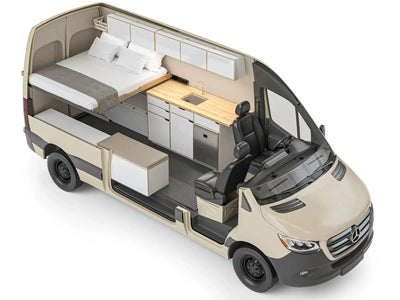
Full standing zones: kitchen, shower, wardrobe
With full standing height you can include a true standing kitchen workspace, a full wet-bath with a standing shower, and upright closets. These parts are often the reasons buyers choose a high roof because they clearly affect daily life in the van. If you use the van for cooking, changing clothes, or taking a shower often, high roof is worth the tradeoffs.
Vertical storage and cabinetry, capacity and ergonomics
Taller cupboards let you store tall items without awkward stacking. Tall, shallow upper cupboards and full-height closets improve body comfort because items are stored at easy-to-reach heights. We favor tall but shallow storage in high-roof vans to keep weight close to the van walls and to maintain easy reach zones.
Multi-level layouts (bunks, loft beds, platform variations)
High roofs make more complex up-and-down layouts work. Bunks and lofted beds feel less tight when the van has more headroom. Multi-level storage is easier to design and reach, and it helps split social zones from sleeping areas.
Comfort and human factors
Roof height clearly affects body comfort and the mental sense of space. People who spend long time in their van notice these changes every day.
Ergonomics: standing vs crouch work, appliance placement, sightlines
Standing work areas let you cook, prepare gear, and sort clothing without stooping. That cuts fatigue and makes routine tasks faster. Appliance placement gains from standing height because taller water heaters, stacked washers, and upright storage are easier to service and use.
Social comfort: feeling of space, light, and air circulation
A high roof adds felt space, which boosts the feeling of light and airflow. That makes the van feel more social and easy to live in for couples and families, whether you’re in a Mercedes Sprinter camper van or a Ford Transit camper van.
Good airflow planning fits with the extra volume and keeps the living space easy in a wider range of weather. Small changes in window placement and venting can make a surprisingly big change in daily comfort.
Build implications, materials, insulation, and systems
More roof area changes how you choose insulation and inside systems because surface area clearly affects heat gain and loss.
Insulation area, R-values, and thermal bridges in higher roofs
A higher roof adds bare surface area to insulate. To maintain comfort we use better insulation, block thermal bridges at cabinet ends, and choose sealed roof panel systems. Those steps keep heating and cooling loads easy to handle while preserving usable interior volume.
Ventilation and airflow: vent fans, roof vents, and skylights
Airflow grows more key as inside volume grows. Well placed vent fans, roof vents, and well sized skylights help move air through the van and prevent condensation. These systems are extra important if you plan a wet-bath or frequent cooking inside.
Weight, center of gravity, and mounting options for cabinets and fixtures
Taller vans can raise center of gravity. That is an expected tradeoff.
We cut it by using light cabinet materials, placing heavy items low and in the middle, and holding back roof-mounted mass. Well built attachment points and strong bracing ensure cabinets and fixtures stay secure on-road.
On-road impacts and practical tradeoffs
Picking a high roof is not free. There are clear tradeoffs to weigh when choosing a taller build.
Fuel economy and wind drag considerations
A taller profile adds frontal area which can slightly cut fuel use at highway speeds. The real impact depends on driving patterns. According to EPA fuel economy guidance, higher speeds and added aerodynamic drag can noticeably reduce highway MPG, so roof height and roof-mounted gear should be part of your planning.
For people who put comfort and steady standing use first, the comfort gains often beat the fuel cost. For those set on best mileage, a lower roof or smart aero choices may be better.
Clearance limits: garages, campsites, ferry and parking constraints
High roofs change where you can park. Be sure to verify clearance limits for parking garages, campsite entries, and ferry height rules. NHTSA vehicle safety checks also stress knowing your vehicle’s dimensions so you can avoid low-clearance impacts and other hazards.
Structural reinforcements and roof-mounted equipment (A/C, solar)
High roofs can support more roof gear but you must plan mounts with care. Air conditioners and solar panels add weight and wind profile. We suggest strengthening mount points and keeping heavy items low where possible.
Design strategies to get the most from a high roof
Good design reduces penalties and magnifies the benefits of a high roof.
Layout recipes for different uses: weekend campers, full-time living, remote work
Layout needs change by use case. Weekend campers may favor open social space and lightweight systems.
Full-time vans need more storage, better insulation, and set work zones. Remote workers often want a cozy standing and seated workspace with good views and power on hand.
Material choices: lightweight cabinetry, tall but shallow storage, folding fixtures
Use lightweight materials and tall but shallow cabinet depths to get the most usable storage while keeping weight in check. Folding pieces and multi-use furniture let you keep tall storage without losing flexible floor space.
Ready to design a high-roof layout that really fits how you live? Contact us to talk through your build options for your next camper van for sale or custom adventure rig.
Examples: compact wet-bath vs cassette toilet plus privacy curtain
High roofs let you choose fixed wet-baths that work like those in small homes. If you need a lighter, simpler option think about a cassette toilet and a privacy curtain. Both are valid choices, but a standing wet-bath is only useful with enough headroom.
Buyer checklist, deciding if a high roof is right for you
Answer these questions to determine whether to prioritize roof height.
Questions to determine real need: height vs frequency of standing use, parking profile, intended climate
- How often will you stand to cook, shower, or change clothes?
- Will you need to park in low-clearance garages or campsites?
- Do you plan to live in the van full-time or use it for weekend trips?
- Are you traveling in extreme climates that demand better insulation?
Quick tradeoff table: comfort gains vs cost efficiency and clearance
High roof: major comfort gains, more design freedom, modest fuel and clearance tradeoffs. Mid roof: lower profile with some standing ease of use.
Pop-top: on-and-off standing, lighter profile, lower insulation and steady ease of use. Choose based on how often you need full standing height and how you balance comfort against clearance and fuel use.
Conclusion, making a balanced choice and next design steps
For most Vansmith buyers who plan to live, work, or spend long periods in their van, a high roof is the smart choice. It allows full standing room, tall storage, and more flexible layouts. If your travel profile puts the smallest possible footprint first, or you often face tight clearance limits, think about mid roof or a pop-top. When you are ready to move from planning to build, use platform-specific measurements and a clear list of daily activities to guide the final decision, whether you are browsing used camper vans for sale or speccing a brand-new conversion.
FAQ
What exactly counts as a "high roof" for camper vans?
High roof usually refers to stock roof options that provide full standing height for an adult or add-on raised roofs. Thresholds change by model and common high roofs add big inside height compared with low-roof setups. For example, Mercedes-Benz Sprinter cargo van dimensions show how high-roof variants significantly increase interior standing room.
Does a high roof let you add a full shower and standing sink?
Yes. In most cases a high roof makes a compact wet-bath or standing shower doable without complex fixtures, though footprint, plumbing, and drainage still need close planning.
How does a higher roof affect fuel economy and handling?
Higher roofs increase frontal area and can raise center of gravity, often causing small drops in fuel use and slightly different handling feel. The real-world impact depends on driving speed, roof add-ons, and van model. Resources like Edmunds fuel economy testing show how added weight and drag can change MPG, which is useful context when you add roof equipment to a high-roof van.
Are there insulation or comfort downsides to a taller roof?
A taller roof adds bare surface area which can raise heating and cooling loads. Designers cut this with better insulation, thermal breaks, shiny barriers, and planned airflow.
Should I buy a high-roof van or add a pop-top?
If you need steady full standing height and plan inside fixed parts a fixed high roof is often better. A pop-top can be lighter and lower for now-and-then standing room but adds extra parts and may provide less insulation and headspace when closed.
Ready to compare layouts? Book a free design consult with The Vansmith to review van-specific sizes and layout options for different camper vans for sale and custom rigs.
About the author

Santiago Pere
Chief Design Engineer
Santiago is Chief Design Engineer at The Vansmith. He writes on topics spanning van design, builds, and life on the road.
Read more about Santiago