By Santiago Pere, Chief Design Engineer, February 13, 2026
Introduction: Why wheelbase matters for camper vans

Your van’s wheelbase shapes nearly every aspect of life on the road: inside layout, parking and handling, driving habits, and what systems you can really carry. Choosing between a short wheelbase (like a 144" Sprinter) and a long wheelbase (like a 170" Sprinter) is the single biggest choice for most builds.
This guide walks through the pros and cons so you can match camper van size to your travel style and main needs. I often tell clients to start with the parking question - it quickly narrows the useful options.
| Feature | Short Wheelbase 4x4 Camper Vans (e.g., 144") | Long Wheelbase 4x4 Camper Vans (e.g., 170") |
|---|---|---|
| Parking & Maneuverability | Easier to park in cities, trailheads, and tight campsites; smaller turning radius for rough 4x4 access roads. | More challenging in tight urban spots and short campsite pads; wider turning radius on forest roads. |
| Interior Layout Options | Best for transverse beds, compact galleys, and multi-use furniture; limited room for a full wet bath. | Allows lengthwise beds, larger kitchens, gear garages, and enclosed bathrooms without feeling cramped. |
| Weight & Off-Road Feel | Lighter overall weight; feels more nimble on technical 4x4 terrain and washboard roads. | Heavier and longer; more stable at highway speeds but can feel less agile off-road. |
| Storage & Systems Capacity | Enough for weekend trips and minimalist full-time use; smaller water tanks and battery banks. | More room for large water tanks, batteries, gear drawers, and long-term travel storage. |
| Best For | Daily drivers, weekend warriors, solo travelers, and couples who prioritize access and agility. | Full-time travelers, families, and gear-heavy trips where interior space matters more than tight maneuvering. |
What does 'wheelbase' mean and how it affects van wheelbase and overall size

Wheelbase is the distance between the front and rear axle centers. (Wikipedia) A longer wheelbase usually adds to the outside length and usable inside length.
That extra inside length is where you gain real living space for things like lengthwise beds, full kitchens, and closed wet baths. But the same length adds to turning radius and can make parking trickier in tight urban spots or short campsite pads.
Wheelbase vs overall length vs usable interior length
Don’t confuse wheelbase with total vehicle length. Total length covers bumpers and is what matters for garage and campsite fit. Usable inside length is what your cabinets, bed, and systems compete for. Small changes in wheelbase can mean a few inches or feet of usable space once you factor in wheel wells, insulation, and inside wall build-up.
Common wheelbase examples (Sprinter 144" vs 170") and how they map to model names
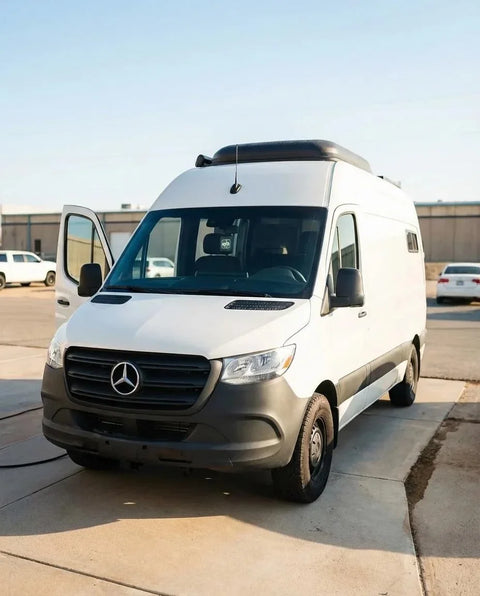
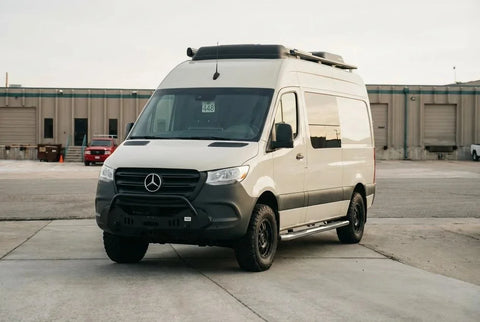
In simple terms, a 144" Sprinter is the classic short-wheelbase platform and the basis for nearly every one of our small camper vans for sale, while Sprinter 170 long wheelbase vans offer a longer platform with additional space for living and travel.The numbers are helpful shorthand, but always check the maker’s posted total length and inside cargo sizes (Mercedes-Benz) when planning a layout.
Short wheelbase camper vans (pros, cons, and ideal use cases)

Short wheelbase vans shine for city-focused travelers and weekend warriors who put handling first, lighter curb weight, and easier parking. They’re ideal if you often park in a garage, travel narrow mountain roads, or want the lightest, most nimble build you can get.
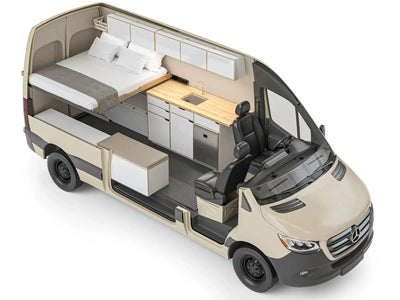
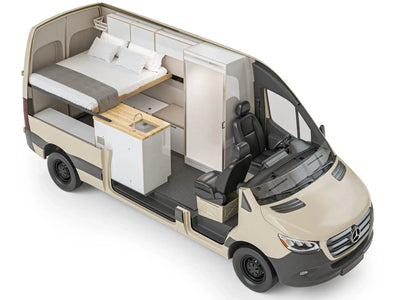
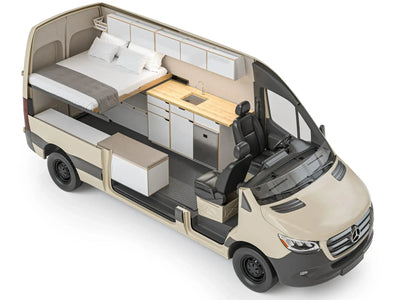
Typical layouts that fit a 144" Sprinter (transverse bed, compact galley, cassette toilet)
Common short-van layouts include a transverse or fold-flat bed, compact galley units, and cassette or carry toilets instead of full wet baths. Multi-use pieces - like swivel seats, folding tables, and wall-hung storage - stretch how much you can do without needing more length. These tactics are covered in related Vansmith posts such as "Why short wheelbase vans are ideal for city adventurers." "Beds in Vans: Murphy, Slide-Out, or Lift?" also shows compact layout strategies.
Parking, maneuverability, and urban use
A short wheelbase cuts turning radius and makes side-street parking and narrow campground entries easier to handle. If you plan a lot of city time or park inside a home garage, a short wheelbase often saves stress. It also lowers the chance that you’ll later regret a van that won’t fit your routine parking spots. One client told us they chose a 144" just so they could park in a tight city garage they use weekly - it made daily life much easier.
Payload and upgrade considerations for short vans
Short vans carry the same types of gear as long vans, but you’ll often need to choose: smaller water tanks, lighter batteries, and compact appliances. Add-ons like suspension tuning, heavier tires, or a tow hitch remain possible, but watch GVWR and payload margins closely when adding insulation, water, and battery capacity. (Ford)
Long wheelbase camper vans (pros, cons, and ideal use cases)
Long wheelbase vans give you clearly more usable inside length - enough room for comfy lengthwise beds, true wet baths, larger kitchens, and dedicated dinettes. They’re the obvious choice for full-time travelers, small families, or anyone who values inside standing and storage space above maximum maneuverability.
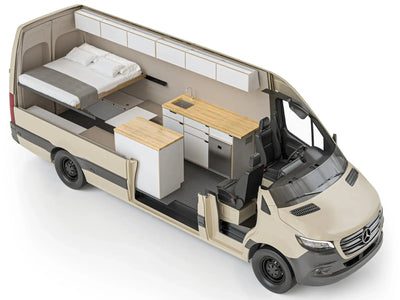
Typical layouts that fit a 170" Sprinter (longitudinal bed, wet bath, full kitchen, dinette)
On a 170" platform you can plan layouts with a rear lengthwise bed, a closed wet bath, and a longer galley with usable counter and storage. Vans with these sizes are the ones most often shown in Vansmith’s "Long Wheelbase Vans: More Room for Big Adventures." They also appear in model pages for our Family and Family XL builds.
Driving considerations and campsite access for long vans
Expect a larger turning radius and new tracking at speed. Long vans, whether you’re in a Mercedes Sprinter 4x4 or a Ford Transit 4x4 conversion, tend to track straighter on highways but require more planning for tight turns and tight campsite pads. Tow mirrors, parking sensors, and cameras can cut stress. The Vansmith blog has useful posts about backing cameras and mirror strategies if you want to prepare a long-van or Sprinter 4x4 camper setup for tight spaces.
Payload, GVWR, and suspension/towing considerations
Long vans often have higher GVWR options and so greater payload room, but heavy conversions still need careful weight spread and possible suspension upgrades. If you plan heavy battery banks, large water tanks, or towing, factor those systems in during the first vehicle choice. Also look at available suspension or spring upgrades offered by The Vansmith.
Layout trade-offs: what you gain and what you give up
Choosing wheelbase is a balance between inside comfort and outside ease. More length gives living features and storage but cuts urban access and adds curb weight and possible fuel use. Short vans give up fixed features but reward you with agility and lower running complexity.
Sleeping configurations and privacy
Short vans often use transverse or fold-out beds that free up daytime floor space. Long vans allow fixed lengthwise beds and split sleeping zones, which can be key for couples who want a fixed bed and clear living area.
Bathroom choices (cassette vs wet bath vs portable) by wheelbase
In short wheelbase vans, cassette toilets and compact shower setups are the practical choice. Long wheelbase layouts make true wet baths easy and cozy. The Vansmith post "The Ultimate Guide to Camper Vans with Showers" explains the working differences and comfort pros and cons in more detail.
Kitchen sizes, storage strategies, and systems placement
Long vans can fit longer galley counters and larger appliances; short vans need modular or slide-out kitchens and very careful tall storage. Both ways work well when paired with careful systems placement - battery banks and water tanks under benches or in modular storage - to keep usable living length.
Practical checks before you buy: parking, garages, and legal constraints
Measure the spaces you use most. Check garage door heights and drive lengths, local street parking rules, and campground pad sizes.
A van that won’t fit your garage is a daily friction point many buyers regret later. Use posted outside-length specs, not inside inches, when comparing to your real-world spaces.
Measure your garage/parking spots and local overnight rules
Take a tape measure or use a phone app to record length, width, and door height. Compare those numbers to the van’s posted outside sizes. If you expect to stay the night on public streets or in short campground pads, read local rules in advance - some places restrict staying overnight or have length limits.
Tow mirrors, parking sensors, and reversing cameras to help with length
Gear like tow mirrors and cameras cuts the real-world cost of extra length. They don’t change turning radius, but they make parking and tight backing much easier and boost confidence when driving a long wheelbase van in urban or tight areas.
Modifications and design strategies to get more from a shorter or longer van
Both wheelbase options gain from clever design. In short vans, choose pull-out kitchens, lift or Murphy beds, and swivel cab seats to expand daytime function.
In long vans, focus on smart storage and weight spread so the extra space doesn’t invite needless weight that harms payload or handling. The Vansmith collection pages for "Short Wheelbase Vans" and "Long Wheelbase Vans" show real examples of these plans in action.
Space-saving furniture, slide-outs, and multi-use components
Multi-use pieces boost usefulness without growing the footprint. Lift beds, fold-out dinettes, and modular galley units make compact vans feel larger while preserving the advantages of a shorter exterior.
Suspension, tires, and weight distribution upgrades
When adding heavier systems—bigger batteries, water tanks, or solar—you may need better springs, shocks, or tires. Proper weight spread keeps handling safe and steady whether the platform is short or long. The Vansmith service offerings list common suspension and tire upgrades suited to heavier conversions.
Quick matching guide: choose wheelbase by travel style
Weekend/urban explorers (recommended wheelbase + layout checklist)
Recommendation: Short wheelbase. Priorities: easy parking, nimble driving, compact galley, cassette toilet, fold-out bed. Helpful Vansmith links: "Why short wheelbase vans are ideal for city adventurers" and the DUO S model page.
Ready to size your build to your travel style? Explore our services or contact us to talk through short vs long wheelbase options for your 4x4 camper van.
Full-time/long-distance travellers (recommended wheelbase + layout checklist)
Recommendation: Long wheelbase. Priorities: closed wet bath, full galley, lengthwise bed, large storage, comfy seating/dinette. See The Vansmith’s Family and Family XL layouts for similar long-van setups and features.
Families and groups (recommended wheelbase + layout checklist)
Recommendation: Long wheelbase or long-wheelbase-based builds with modular sleeping setups. Priorities include many sleeping areas, strong storage, and tough finishes that handle family life.
Cost and resale considerations tied to wheelbase choice
Longer vans often cost more at first and can carry more gear that raises build cost. They may also have wider resale appeal for full-timers and families, while short vans often appeal to city-focused buyers and those seeking lower total cost to own. Think about how you’ll use and resell the van when choosing a wheelbase.
Conclusion and simple decision flowchart (short vs long wheelbase)
Decision summary: If you mainly park in city garages, put handling first, or need a lighter, simpler conversion, choose a short wheelbase. If you need a wet bath, a full kitchen, or more living space for full-time travel or family use, choose a long wheelbase.
In every case, measure your usual parking spaces, plan payload with care, and think about simple changes - swivel seats, pull-out kitchens, or suspension upgrades - to get the most from your chosen platform. A quick test is to measure your usual parking spot. Then take a test drive of both lengths if possible. That firsthand feel usually settles the question.
Resources and next steps (how to test-drive and measure a van)
Before you buy: measure your garage and common parking spots, compare them to the van’s posted outside sizes, and take a test drive that has tight turns and backing into a short space. Consider hiring or talking with a builder to model layouts against real inside cargo sizes. Sprinter 144 short wheelbase builds can also be a practical starting point when comparing compact layouts and maneuverability. The Vansmith’s "How the Vansmith helps you choose between a Sprinter or Transit" and "What to Expect When Ordering a Vansmith Build" are practical starting points.
FAQ
What's the difference between a 144" and a 170" Sprinter for camper conversions?
A 144" Sprinter (short wheelbase) offers better handling and fits tighter parking spaces, but has less usable inside length—best for compact layouts with transverse beds or fold-out seating. A 170" Sprinter (long wheelbase) adds a few feet of inside space, allowing lengthwise beds, true wet baths, and larger kitchens, but it increases turning radius and may limit city parking.
Can I fit a wet bath in a short wheelbase van?
You can, but it often needs giving up other pieces (storage or kitchen length) and creative layout choices. Many builders prefer cassette toilets or compact closed showers in 144" vans to keep usable living space.
How do I know if a long wheelbase will fit in my garage or campsite?
Measure the inside size of your garage/parking spot (length, width, and door height) and compare to the van's outside length and height. Also check campground pad lengths and local street parking rules. Add mirrors and space for opening doors and any roof-mounted gear.
Does a longer wheelbase affect fuel economy and handling?
Yes. Longer vans often have slightly higher air drag and curb weight, which can cut fuel economy. Handling differs too—longer wheelbases track straighter at speed but need wider turns. Proper suspension tuning and weight spread can ease some handling downsides.
What upgrades help a short wheelbase feel larger?
Swivel passenger seats, slide-out kitchen modules, folding tables, wall-mounted storage, and clever bed designs (lift beds or slide-out beds) increase usable living area without changing exterior footprint. Putting tall storage and multi-use furniture first stretches functionality.
Ready to choose your van? Book a consult with The Vansmith to review measurements and layout options and make a sure choice about camper van size. Book a consultation.
About the author

Santiago Pere
Chief Design Engineer
Santiago is Chief Design Engineer at The Vansmith. He writes on topics spanning van design, builds, and life on the road.
Read more about Santiago