By Santiago Pere, Chief Design Engineer, February 10, 2026
Introduction: The standing-height advantage - what "high roof" really means for campers

Choosing a high roof cargo van is one of those simple choices that pays back every day in comfort. Standing headroom turns normal van tasks into useful, human-size jobs. From cooking to dressing and from putting in a wet-bath to building lofted storage, the extra tall space opens up layouts and daily comfort low-roof vans simply cannot give.
I still recall the first time a client stood up straight inside their completed build. They looked around and said, "This changes it all." That moment is why we push for standing height when it makes sense.
- More usable interior height than most fifth wheels: A high-roof Sprinter conversion gives you true standing room plus overhead storage, without the wasted vertical space you often see above the living area in a fifth wheel.
- Easier to drive and park: A Sprinter fifth wheel alternative drives like a large SUV, fits in more trailhead and city parking spots, and is far less stressful on mountain passes than towing a long trailer. This kind of Sprinter camper setup is a popular replacement for a traditional fifth wheel RV. According to NHTSA guidance on vehicle control and stability, shorter overall length and a single vehicle platform generally improve maneuverability compared with towing combinations.
- Better for mixed trips: With a single high-roof van, you can run errands, commute, or head into tight forest roads—situations where a fifth wheel would stay parked at a campground.
- Less setup and teardown: You don’t have to unhitch, level, and stabilize a trailer. A high-roof cargo van is “camp-ready” as soon as you put it in park and pull the parking brake.
- More stealth and flexibility: A Sprinter-based build can blend into city streets and overnight parking where a fifth wheel would stand out or be restricted. For many travelers, a Sprinter fifth wheel replacement rig offers the comfort of a towable RV in a more discreet package.
- Lower overall maintenance complexity: One engine, one chassis, and one set of tires to maintain instead of a truck plus a separate fifth wheel frame, axles, and running gear.
- Better winter and shoulder-season use: High-roof cargo vans are easier to insulate and heat efficiently than many fifth wheel shells, especially for smaller, off-grid trips.
What defines a high-roof cargo van?
A high-roof van is set apart by inside space that usually allows most adults to stand upright. In simple terms, inside standing heights often fall between about 6'2" and 6'8" depending on the platform (Mercedes-Benz Sprinter specifications) and roof option. That range makes a big difference in how you use the space day to day.
Manufacturer roof-height categories and interior clearances
Makers list total roof labels, but the spec that matters for builds is inside clearance. When matching models, measure inside the cargo area at the highest point and note any wheel-well bumps. For real-world planning, write down your own height and the tallest task you want to perform standing up.
Common high-roof platforms - quick comparison
Common high-roof build platforms include the Mercedes Sprinter, Ford Transit high roof, and Ram ProMaster (Car and Driver). Each has trade-offs in inside width, length options, and service network. Many Vansmith builds favor Sprinter and Transit platforms because of their inside shape and aftermarket support.
Daily comfort and usability gains from standing headroom

Standing height transforms daily living in a van. The change shows up in small, repeated moments that add up to a better trip, like cooking without stooping or grabbing gear from a high shelf without twisting.
Cooking and galley ergonomics
Cooking at counter height without stooping makes meal prep faster and safer. A full standing galley supports larger sinks, more easy-to-reach storage, and stove layouts that work for two people. For couples or families, the ergonomics of a standing galley feel closer to a small kitchen than a cramped truck stop counter.
Dressing, mobility, and accessibility
Standing headroom helps people of all ages. Older users and those with movement aids find dressing, changing, and moving through the van far easier. If easy access is a priority, a high roof cuts down the number of trade-offs needed in a layout.
Work-from-van setups and vertical storage
For mobile work, a high roof gives room for easy standing desks, taller shelving, and set cable runs for power and data. Tall storage keeps gear neat and easy to reach, and it helps the van feel less messy when working on the road.
Layout possibilities unlocked by high roofs
High roofs expand the list of realistic layout parts and systems you can include without creative twisting.
Full standing wet-bath and shower solutions
Standing showers and wet-baths are useful in most high-roof conversions. A full wet-bath boosts comfort on long trips and cuts out the need to hunt public bathrooms. Proper venting and water control remain key for long-term comfort.
Lofted beds, overhead storage, and mezzanine beds
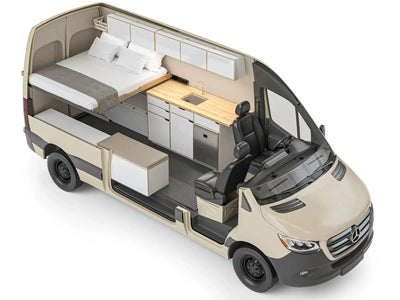
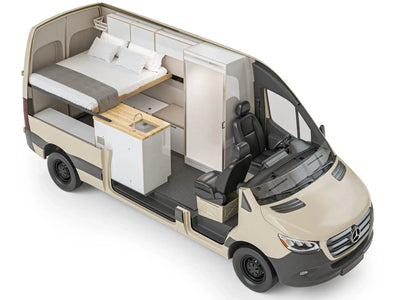
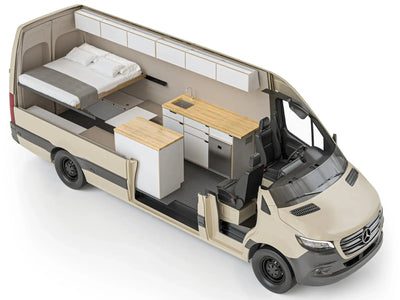
High roofs allow for lofted or upper beds that free up floor space for living and gear. That matters whether you’re fully living inside the van or pairing it with a fifth wheel trailer for extra room. High storage stays usable rather than forcing you to crawl into it. Planning around Mercedes Sprinter towing capacity plus inside layout gives families and couples more daytime options without feeling cramped.
Vertical utility stacks
Systems like fresh water and gray water stacks, HVAC ducting, and power conduits are easier to route up and down in a taller interior. That simple setup cuts down trade-offs and keeps systems easy to service.
Trade-offs and real-world constraints
High roofs are not without trade-offs. The right choice weighs daily ease of use against running limits.
Fuel economy and aerodynamics - what to expect
Expect a small hit in fuel use due to more front area and changed airflow. For most owners who value comfort and ease of use, the trade-off is fine, especially when set up for long-distance travel. According to EPA fuel economy data for vans, high-roof configurations often see slightly lower MPG than comparable low-roof models because of increased frontal area and weight.
Height limits, parking, and garage access
Taller vans limit access to some parking buildings, low-roof campsites, and some home garages. Planning routes and night stops helps avoid surprises. Many owners adapt by noting height limits for places they use often.
Handling, payload, and center-of-gravity considerations
A higher roof raises the center of gravity and can affect handling. Proper suspension tuning and careful weight spread cut these effects. For most conversions, the changes are easy to handle and do not hurt safe driving when the van is set up correctly.
Conversion and build considerations specific to high roofs
High roofs change how you approach insulation, ventilation, and attachment points during a build.
Insulation and condensation management for tall interiors
Taller interiors can trap heat, so insulation and heat-bridge control are important. Use good insulation and pay attention to sealing and vapor control to prevent moisture at the peak of the roof.
Ventilation, fan placement, and passive airflow
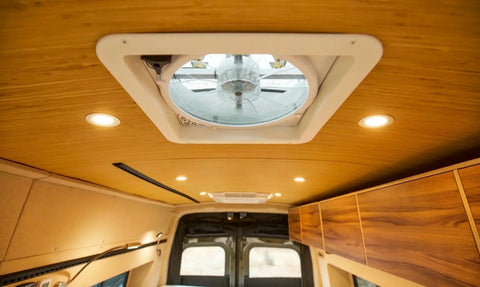
Place roof fans and passive vents to promote up-and-down airflow. Taller spaces gain from vents set to pull warm, moist air upward and out. Proper airflow planning boosts comfort in summer and cuts moisture in winter.
Cabinet and fixture attachment points - reinforcement tips
Higher cabinets and lofts bring in new load paths. Reinforce mount points where tall stacks and high storage attach to the van body to avoid bending and to improve long-term strength.
Model spotlight: high roof Sprinter vs Ford Transit high roof
Both platforms support great builds. Sprinter often offers a more narrow but taller inside shape and a wide parts market.
Transit offers solid payload and strong dealer support. According to Ford Transit high roof cargo van specifications, certain configurations provide over 6'8" of interior standing height and competitive payload ratings, which makes them attractive for heavier camper conversions. Choose based on the exact inside size you need, dealer access, and budget.
Practical buyer checklist: Is a high roof right for you?
Measure and answer these questions before you commit.
Ready to design a high-roof build that really fits how you live and travel? Contact us to talk through layouts, roof heights, and what will work best for your next trip.
Measure your daily activities and worst-case scenarios
Write down the tallest task you will perform standing in the van and compare it to checked inside clearances. If you need to cook, dress, or shower standing, a high roof will repay its cost in comfort.
Travel profile: city vs long-distance, parking needs
If you spend most of your time downtown or in tight parks, note where height will be limiting. For long trips and spread-out camping, a high roof often adds real value.
Conversion budget implications and resale considerations
High-roof vans often command higher resale value for conversions because they appeal to a broader set of buyers. Industry groups like the RV Industry Association (RVIA) note that consumer demand has been growing for RVs and camper vans that maximize interior comfort and usability, which can support long-term value for well-designed high-roof builds.
Conclusion: When standing height changes everything - final recommendations and next steps
If daily comfort, useful layouts, and usable storage matter to your van life, put a high roof first. For most Vansmith customers who value long-term ease of use, the high roof is the smart starting point.
For layout examples that use standing height, check our DUO layout and Family layout pages and our Sprinter Camper Vans For Sale listings for ideas and inspiration. If a wet-bath is a must, see tools like our Ford Transit Shower Installation guide for layout ideas and service options, and browse our camper van build gallery for real-world examples.
FAQ
How much interior height does a high-roof van typically provide?
High-roof cargo vans often offer inside standing heights between about 6'2" and 6'8" depending on the model and roof option. Always check maker inside clearances for exact numbers before buying. For example, current Mercedes-Benz Sprinter cargo van specs list multiple high-roof configurations with interior heights over 79 inches.
Can I still fit a wet-bath or shower in a high-roof van?
Yes. Tall vans make full wet-baths practical without crawling into compact spaces. Layout design and water and air-flow planning are still needed to make the system comfortable and easy to service.
Are there downsides to choosing a high roof?
Common trade-offs are slightly higher fuel use, taller van profile changing parking and clearance, and possible handling changes due to a higher center of gravity. These are easy to handle with smart design, suspension choices, and route planning.
Is a high-roof Sprinter better than a Ford Transit high roof for conversions?
Both are strong choices. Sprinter often has premium options and well-known inside heights, while Transit offers solid payload and dealer access. Pick based on the exact inside size, service network, and budget that match your needs.
How should I plan ventilation and insulation for a tall interior?
Use good insulation with care for thermal bridging. Pair it with roof fans and passive vents set to promote up-and-down airflow, and include moisture-control layers where needed. Taller interiors can trap heat, so vent placement is key.
See layout examples and book a free consult to discuss a high-roof build.
About the author

Santiago Pere
Chief Design Engineer
Santiago is Chief Design Engineer at The Vansmith. He writes on topics spanning van design, builds, and life on the road.
Read more about Santiago