Travelers often ask how does a chemical toilet work when camping and why these systems are used in vans, caravans, and tents. A chemical toilet is simple, clean, and easy to manage. It uses special chemicals to break down waste and control odors (Wikipedia), making it a popular option for many road trips. Our team at The Vansmith has spent years helping van lifers travel with comfort and confidence.

What Is a Chemical Toilet?

A chemical toilet is a portable toilet with two tanks. It holds waste in a sealed tank and uses chemicals to reduce smell and help break down solids. When people ask what is a chemical toilet or what are chemical toilets, they refer to these compact two-tank systems found in many small rigs.
Some travelers also choose a caravan chemical toilet for long trips since it is stable and simple to use.
How Chemical Toilet Camping Works
Chemical toilet camping setups rely on a two-tank system.
Two-Tank System
These toilets use:
Top Tank (Flush Tank)
Holds clean water mixed with pink chemical fluid.
Bottom Tank (Waste Tank)
Collects waste and uses blue or green chemicals to control odor.
Separation Valve
Opens during use and closes after flushing to trap smells.
Flushing Process
Here is how does a chemical toilet work step by step:
-
Open the valve
-
Use the toilet
-
Flush with a pump or button
-
Waste drops into the chemical tank
-
Valve closes to seal it
Sealed Storage
The waste tank is sealed so smells stay contained. You remove the tank, carry it to a dump point, and empty it when full.
Key Components and Process
Top Tank (Flush Water)
Holds fresh water and pink chemical fluid.
Bowl and Seat
Looks similar to a home toilet seat.
Flush Mechanism
Manual or electric flush that rinses the bowl.
Bottom Tank (Waste Holding)
Stores solids and liquids safely.
Valve or Hatch
Opens for use, closes for odor control.
How Portable Camping Chemical Toilets Work
To understand chemical toilet camping even better, here is how toilets portable camping chemical systems work:
Waste Tank
Collects everything after flushing.
Flush Tank
Adds clean water during flush.
Waste Solidification
Some chemicals help thicken liquids and break down solids.
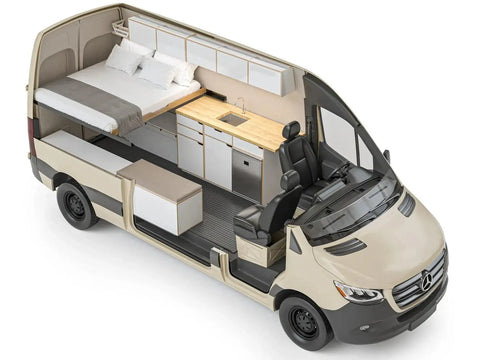
These portable units work well for small vans. You can explore layouts with bathroom features on our Van conversion with showervan conversions with showersor browse complete rigs on our Camper van for sale list.
When planning a chemical toilet camping setup, it helps to think through how often you'll be on the road and how many people will be using the toilet. A solo traveler in a small van might only need to empty the waste tank every three to four days, while a couple or family may need to dump every day or two. Most portable units list their tank capacity in liters or gallons, and that number matters in real life. A 5-gallon waste tank is easier to carry to a dump point but fills faster. A 10–15 gallon tank lasts longer between dumps but is heavier and more awkward to move when full. Many van lifers find a middle ground and pair a medium-size tank with habits that reduce liquid waste in the toilet, like using public restrooms when convenient or pouring gray water into separate containers.
Choosing chemicals for your chemical toilet camping system also makes a big difference in comfort and impact. Traditional blue fluids often use formaldehyde or similar compounds (Wikipedia) to break down waste and kill odor-causing bacteria. They work well but can be harder on the environment and are not accepted at every dump station. Green chemicals use biodegradable ingredients and enzymes to digest solids (Wikipedia) and reduce smell without harsh additives. They may take a bit longer to work but are usually safer for septic systems and campground facilities. Whichever you choose, follow the manufacturer's dose instructions. Using more chemical than recommended does not improve performance and just means you'll spend more money and carry more weight in your rig.
Daily care is what keeps a chemical toilet camping setup clean and low-stress. Adding a small amount of water and chemical to the waste tank before the first use helps prevent solids from sticking and makes emptying easier. After each trip, many travelers rinse the waste tank with clean water, give it a light shake, and dump again until the water runs mostly clear. A quick wipe of the bowl and seat with mild, non-abrasive cleaner keeps plastic parts from wearing out. It also helps to crack a window or run a roof fan when using the toilet, even though the tank is sealed, to keep moisture and any stray odors from building up in a small van. Over time, these simple habits turn a chemical toilet from a worry into just another reliable tool that supports life on the road.
Key Chemicals Used in Chemical Toilets
Different chemical toilets for camping use blue, green, and pink fluids. Here is how they work.
Blue Chemicals
Liquid Color: Blue
Tank Location: Waste tank
Function: Breaks down solids and controls odor
Green Chemicals
Liquid Color: Green
Tank Location: Waste tank
Function: Eco-friendly breakdown of waste
Pink Chemicals
Liquid Color: Pink
Tank Location: Flush tank
Function: Helps the bowl rinse clean and reduces buildup
If you plan to adjust your setup later, explore upgrade ideas on Customize camper van.
Key Features and Types of Chemical Toilets for Camping
Porta Potties
Simple and portable. Good for tents and small vans.
Cassette Toilets
Built into the van with a removable waste cassette.
Capacity
Smaller tanks need frequent emptying.
Usage and Maintenance
Follow the steps below for best performance.
Before Use
Fill the flush tank with water and pink fluid. Add blue or green chemicals to the waste tank.
During Use
Open the valve, flush when finished, and close the valve again.
Emptying
Remove the bottom tank, take it to a dump station, pour out the waste, rinse, and reinstall.
This simple process keeps things safe and comfortable on the road.
Pros and Cons of Chemical Toilet Camping
Pros
-
Portable
-
Easy to use
-
No plumbing needed
Cons
-
Smaller capacity
-
Requires chemicals
-
Must empty more often
Important Safety and Etiquette
Never Dump in Nature
Always use proper dump stations.
Avoid Storm Drains
Storm drains lead to natural water sources.
Winter Care
Keep tanks warm to avoid freezing.
FAQs
What are the disadvantages of a chemical toilet?
Small capacity, frequent dumping, and chemical use.
Where do you empty a chemical toilet?
Use campground dump stations or approved waste sites.
How does an incinerating toilet handle urine?
It evaporates liquids and burns solids into ash.
Do you put toilet paper in a chemical toilet?
Yes, but use rapid-dissolving RV toilet paper.
About the author

Eugene Smit
CEO
Eugene is the CEO of The Vansmith, based in Boulder, Colorado. He writes across topics related to van builds, ownership, and the camper van industry.
Read more about Eugene