By Eugene Smit, CEO of The Vansmith
Choosing the perfect van for a build is one of the most important choices you'll make in your van life journey. It's like choosing the base for your dream home. Get it right and every part falls into place. Get it wrong, and you'll be dealing with the results for years to come.
After nearly a decade of building out vans in Colorado and watching how various platforms perform in real-world use, we've learned that there's no single "best van" for all. Whether you're weighing Mercedes Sprinter vs Ford Transit vs Ram ProMaster or trying to figure out which wheelbase suits your adventure style, this guide will help you make an informed decision. Our goal is to help you choose a van that fits your specific needs, budget, and dreams.
The Big Three: Understanding Your Options
The van conversion world is led by three main platforms, each with clear traits and strengths. Think of them like choosing various types of trip partners each brings unique strengths to your journey.
Mercedes Sprinter is the polished, well-traveled partner, pricey but clearly strong and smooth.
Ford Transit is the steady friend who's ready for it all and won't let you down when things get tough.
Ram ProMaster is the budget-minded option that can surprise you with what it can do, though it comes with some give-and-take.
Mercedes Sprinter: The Premium Adventure Platform
When most people picture van life, they're seeing a Mercedes Sprinter. This name is well-earned Sprinters have set the bar for both work and travel builds for years.
Mercedes Sprinter Advantages
Exceptional Build Strength and Reliability German design turns into real-world toughness. These vans are built to work standards, made to handle hundreds of thousands of miles of daily use. (Mercedes-Benz official Sprinter overview) The strong build is clear in everything from the solid door feel to tight manufacturing tolerances.
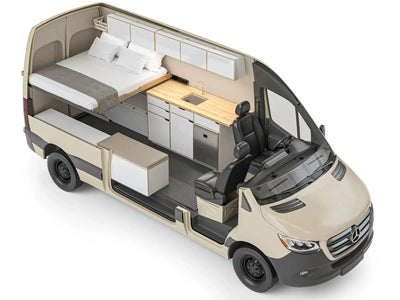
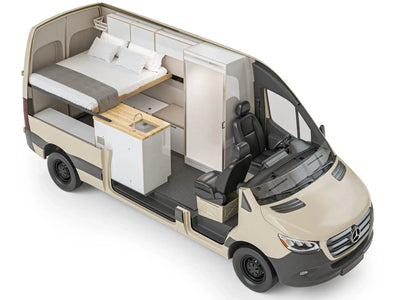
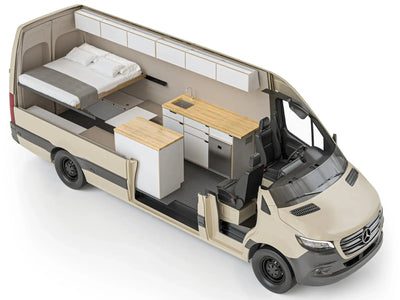
Superior Inside Space Sprinters offer some of the best inside room in the van world. High roof options provide real standing room for most adults, while inside width allows more easy layouts than many rivals. For those planning long stretches inside their van, this space edge becomes priceless. If you already know you want a Sprinter platform, you can explore our Mercedes Sprinter van conversion packages to see what’s possible with different layouts and features.
Outstanding Fuel Use Modern Sprinter diesel motors give strong mileage, often getting 18-25 MPG based on conversion weight and driving conditions. According to EPA fuel economy data for comparable diesel cargo vans (fueleconomy.gov), this is competitive for the class. When covering serious miles, this mileage edge turns into big cost savings and fewer fuel stops.
Strong Resale Value Sprinters keep their value better than most work vans. Industry pricing guides note that commercial Sprinter models typically retain a higher percentage of their original MSRP than many rivals (Kelley Blue Book Sprinter values). Well-kept Sprinter builds often hold 60-70% of their value after a few years, making them a safer money choice.
Factory 4x4 Option Mercedes offers true 4x4 Sprinters, giving real off-road skill without add-on changes. While expensive and rare, these are the top platform for serious backcountry trips.
Mercedes Sprinter Disadvantages
Premium Pricing Sprinters command premium prices both new and used expect to pay $10,000-$20,000 more than similar options. This premium extends to parts, service, and coverage costs throughout your time with the van.
Complex Systems Modern Sprinters feature advanced exhaust systems, electric controls, and computer-run parts. While these work well when well cared for, repairs can be costly and need special knowledge.
Limited Service Network Even though Mercedes is growing their work van service network, trained techs are still less common than for Ford or Ram products, especially in remote areas where van lifers travel.
DEF System Needs Diesel Exhaust Fluid systems are needed for exhaust rules but add extra parts and ongoing costs. DEF needs steady top-offs, and system breakdowns can be costly to fix.
Best Sprinter Models for Conversion
- 144" High Roof: Perfect for couples or solo travelers wanting maximum maneuverability with excellent interior space
- 170" High Roof: Ideal for families or those requiring maximum interior space and storage capacity
- 4x4 Models: Ultimate adventure platforms, though expect premium pricing and limited availability
Ford Transit: The Versatile Workhorse
Ford's Transit has quickly gained fans in van build circles by striking a strong balance between what it can do, cost, and real-world use that appeals to many travelers.
Ford Transit Advantages
Excellent Value Deal Transits usually cost $5,000-$15,000 less than similar Sprinters while giving close to the same use. This price edge extends to parts, service, and insurance costs throughout ownership, and it’s a big reason many of our Ford Transit camper van builds start with this platform.
Extensive Service Network Ford's wide dealer and service network means Transit service is easy to find almost everywhere in North America. This easy access gives real peace of mind when traveling remote areas.
Multiple Drive Options Ford offers rear-wheel drive, all-wheel drive, and (in select years) 4x4 options. The smart all-wheel drive system gives strong traction without the extra parts and cost of full 4x4. Ford highlights this as a key feature for the Transit cargo van lineup (Ford Transit cargo van specifications).
Generous Inside Space While not quite as spacious as Sprinters, Transits offer very good inside room, mainly in high-roof setups. Inside width is enough for comfortable layouts, and height allows standing room for most adults.
Proven Reliability Ford's long work van experience turns into solid platforms. While not quite matching Sprinter life span, well-kept Transits provide years of steady service.
EcoBoost Engine Option The EcoBoost turbo gas engine gives good power while cutting out diesel issues, though with some fuel economy trade-off.
Ford Transit Disadvantages
Fuel Use Limits Transit fuel use trails diesel Sprinters, mainly with gas motors. Expect 14-20 MPG based on engine choice and conversion weight. EPA estimates for gasoline Transit cargo vans generally fall in this range (EPA van fuel economy class comparison).
Narrower Inside Width While enough, Transit inside width is less than Sprinters, which can limit layout options for wider beds or complex floor plans.
Road Noise Transits can be noisier than Sprinters, mainly on highways. Extra sound blocking is often needed for easy long-distance travel.
Limited 4x4 Options Ford's 4x4 Transit supply has been uneven. All-wheel drive is offered but doesn't give the same off-road skill as true 4x4 systems.
Best Transit Models for Conversion
- 148" High Roof: Great balance of interior space and maneuverability, perfect for couples or small families
- Extended High Roof: Maximum interior space for families or those wanting extensive storage and amenities
- AWD Models: Excellent traction for winter conditions and light off-road use without 4x4 complexity
Ram ProMaster: Understanding the Trade-offs
The Ram ProMaster often gets passed over in van build talks, but it offers unique traits worth knowing. There are also key reasons why some build shops choose not to work with them.
Ram ProMaster Advantages
Budget-Friendly Pricing ProMasters usually cost less than Transits or Sprinters, both new and used. This price edge can extend to parts, service, and insurance costs.
Front-Wheel Drive Benefits The ProMaster's front-wheel drive layout puts weight over the drive wheels, giving good traction in snow and slick conditions without needing AWD or 4x4 systems.
Lower Floor Height Front-wheel drive allows for lower floor height, making entry and exit easier while giving more inside headroom for a given outside height.
Wide Interior ProMasters offer wide inside space that can fit easy layouts and wider beds.
Simpler Mechanics ProMasters use fairly simple systems that are easier to follow and service, which can lead to lower long-term upkeep costs.
Why We Don't Work with ProMasters at The Vansmith
The Price Edge Has Mostly Disappeared The biggest past edge of ProMasters much lower cost has mostly faded. ProMaster pricing has gone up a lot while Ford has become much more competitive with Transit pricing and incentives. The price gap that once made ProMasters the clear budget choice is now small, often just $3,000-$8,000 difference that's easily offset by Transit's superior features and better resale value.
No 4x4 or AWD Option For Colorado trips and the type of deep-woods exploring our customers want, this is a key limit. ProMaster only offers front-wheel drive no AWD or 4x4 options available. While FWD works surprisingly well in snow, it cannot match AWD/4x4 for off-road access to remote campsites, forest service roads, and wild spots that define the Colorado adventure lifestyle.
Limited Adventure Ability Our customers want vans that can reach the places that make Colorado special remote hot springs, wild campsites, high-mountain trailheads. The ProMaster's drive limits simply don't match the adventure-focused builds we specialize in.
Why We Choose Ford Transit and Mercedes Sprinter Instead
Ford Transit Benefits:
- Excellent value proposition with competitive pricing
- Intelligent AWD available across all models
- Widespread service network throughout North America
- Strong towing capability and reliability
- Better highway driving experience for long Colorado road trips
Mercedes Sprinter Benefits:
- Maximum interior space and premium build quality
- Available 4x4 for serious off-road capability
- Excellent fuel economy for high-mileage adventures
- Superior resale value
- Most refined driving and living experience
At The Vansmith, we believe in building adventure vans that our Colorado customers will love for years to come. By staying with platforms that offer the best mix of value, what they can do, and long-term happiness, we can deliver conversions that truly boost your adventure lifestyle. If you’re ready to move from research into planning, you can explore our full range of turnkey camper van conversion packages to see which build style matches your travel goals.
Wheelbase Considerations: Short vs. Long
Choosing between short and long wheelbase greatly affects your van's strengths and limits.
Short Wheelbase Advantages
- Superior Maneuverability: Easier to drive, park, and navigate tight spaces crucial for urban exploration and mountain roads
- Better Fuel Economy: Shorter, lighter vans typically achieve better efficiency
- Lower Costs: Less expensive to purchase and often cheaper to convert
- Stealth Factor: Less conspicuous in urban environments
Long Wheelbase Advantages
- Maximum Interior Space: Significantly more room for sleeping, storage, and living areas
- Layout Flexibility: Accommodates complex layouts with separate sleeping/living areas
- Highway Stability: Better stability and smoother rides for high-mileage travel
- Storage Capacity: Can carry more gear and supplies for extended adventures
Height Considerations: Standard vs. High Roof
Van height dramatically impacts both interior comfort and external practicality.
High Roof Benefits
- Standing Room: Most adults can stand comfortably inside
- Storage Options: Enables overhead storage throughout the van
- Open Feel: Creates less claustrophobic interior environment
High Roof Limitations
- Height Restrictions: Can't access parking garages, drive-throughs, or low-clearance areas
- Wind Resistance: Reduces fuel economy and increases road noise
- Stability Concerns: Higher center of gravity affects handling in crosswinds
Drive System Options Explained
4x4 Systems
- Maximum Capability: True 4x4 with low-range gearing for serious off-road exploration
- Complexity and Cost: Expensive to purchase and maintain, requires specialized service
- Limited Availability: Factory 4x4 vans are rare and expensive
All-Wheel Drive Systems
- Balanced Capability: Excellent traction for winter and light off-road use
- Automatic Operation: Works without driver intervention
- Moderate Cost: More expensive than 2WD but less than 4x4
Two-Wheel Drive Systems
- Simplicity: Least expensive to purchase and maintain
- Best Fuel Economy: Reduced drivetrain losses improve efficiency
- Adequate for Many: Sufficient for most van life adventures with proper tires
Making the Right Choice for Your Adventure Style
Select your van based on your specific priorities:
Choose Mercedes Sprinter if:
- Budget allows for premium pricing
- Maximum interior space is essential
- Long-term reliability is crucial
- Strong resale value matters
- Factory 4x4 capability is needed
Choose Ford Transit if:
- You want excellent value-to-capability balance
- Widespread service network availability is important
- AWD capability meets your off-road needs
- You prefer gasoline engines over diesel
Consider Ram ProMaster if:
- Budget is the absolute top priority
- You primarily travel urban/suburban areas
- Winter traction is important but off-road access isn't
- Simple mechanics appeal to you
- Towing capability isn't required
Beyond the Big Three: Alternative Options
While Sprinters, Transits, and ProMasters dominate conversions, other options exist:
- Chevrolet Express/GMC Savana: Traditional body-on-frame design offers simplicity and towing capability but lags in fuel economy and interior space efficiency
- Nissan NV200: Smaller cargo vans work for minimalist conversions but lack space for full amenities
- Commercial Chassis: International/Freightliner options provide maximum capability but require specialized knowledge and service
The Bottom Line: Choosing Your Perfect Platform
The best van for your build is the one that fits your exact needs, budget, and adventure dreams. Rather than chasing the mythical "perfect" van, focus on finding the right match for your setup.
Think about your main needs: Do you need the most inside space or better handling? Is fuel use more key than towing power? Will you be reaching remote off-road spots or staying closer to set campgrounds? Safety organizations also recommend considering payload, braking performance, and stability control when choosing a vehicle for heavy conversions (NHTSA vehicle safety guidance). If you want to see how different choices come together in real builds, browse our camper van conversion gallery for layout ideas and inspiration.
Your perfect adventure platform is out there - the key is knowing which features matter most for the trips you’re planning, from drivetrain and payload to interior space and build flexibility. If you’re still comparing options, our guide to the best vans for camper conversion breaks down the top platforms and what each one is best suited for. When you’re ready to talk through your specific needs, you can contact The Vansmith team to discuss timelines, budgets, and which build path makes the most sense.
2026 Van Life Conversion Comparison
The Mercedes-Benz Sprinter, Ford Transit, and Ram ProMaster are all common options in the full-size cargo van market, but each has its own strengths. The Sprinter offers a more high-end feel with modern tech and 4x4 options, while the Transit provides a more basic and affordable option with a focus on reliability. The ProMaster stands out for its spacious interior and low price, making it a common choice for van life conversions. Independent automotive reviews echo many of these differences when comparing full-size cargo vans (Edmunds commercial van reviews). If you’d rather skip the DIY route entirely, you can also look at our ready-to-drive camper vans for sale that are already built and road-tested.
| Feature | Mercedes-Benz Sprinter | Ford Transit | Ram ProMaster* |
|---|---|---|---|
| Logo |  |
||
| Price Range (USD) | $50,830 – $84,328 | $47,400 – $67,700 | $44,960 – $64,680 |
| Space & Payload | Various wheelbases and high-roof options | Multiple wheelbases with ample space | Wide interior, decent space |
| Drive | RWD, AWD, and 4x4 available | RWD and AWD available | FWD only |
| Reliability & Maintenance | Durable but higher maintenance cost | Highly reliable and affordable | Lower cost, less reliable |
| Technology & Features | MBUX, voice control, safety tech | SYNC, smartphone integration | Basic tech, optional upgrades |
| Fuel Economy (est.) | 18–22 MPG (diesel) | 14–17 MPG (gas) | 13–15 MPG (gas) |
| Towing Capacity | Up to 7,500 lbs | Up to 7,500 lbs | Up to 6,910 lbs |
| Interior Height | Up to 79.1" | Up to 81.5" | Up to 86.0" |
| Resale Value | High | Moderate | Lower |
| Best For | Premium builds & full-time travel | All-rounder with good service access | Budget builds & wide layouts |
Frequently Asked Questions
What are the best vans for conversion into a camper in 2026?
The “big three” platforms we see most often in successful camper builds are the Mercedes Sprinter, Ford Transit, and Ram ProMaster. Each has different strengths, so the best van for conversion depends on your budget, how you travel, and where you plan to take the rig. If you’d like to skip sourcing a base vehicle and design from scratch, you can also start with one of our pre-built camper vans that are already converted and ready for adventure.
How do I choose between a Mercedes Sprinter, Ford Transit, and Ram ProMaster for a camper build?
Start with your priorities: budget, desired interior space, and where you’ll be driving. Sprinters lean premium with strong build quality and diesel efficiency, Transits are a solid all-around choice, and ProMasters are typically more budget-friendly but come with some trade-offs. If you want help matching the right base van for conversion to your lifestyle and long-term goals, our guide Your Van, Your Home walks through the mindset and planning steps that make van life feel like a true home - not just a vehicle.
Is the Mercedes Sprinter worth the higher price for a camper van conversion?
For many people, yes, because Sprinters offer strong build quality, excellent interior space, good fuel economy (especially with diesel), and strong resale value. If you plan to put on a lot of miles or eventually resell your van, those advantages can offset the higher upfront cost.
What makes the Mercedes Sprinter a good platform for long-term van life?
Sprinters are built to work hard, with components designed for hundreds of thousands of miles, and they offer generous interior height and width that make daily living more comfortable. Their fuel efficiency and resale value also make them a smart choice for long-term use.
Do I need a 4x4 van for my camper conversion?
You don’t need 4x4 for most road trips or light dirt roads, but if you’re planning serious backcountry or winter travel, a factory 4x4 Sprinter can be a big advantage. It adds cost, so it’s worth being honest about how often you’ll actually use that capability.