Quick answer: Choose a small RV — a teardrop, lightweight travel trailer, or truck camper — if you want removable living space, bigger tanks, or want to keep a separate vehicle free for daily errands. Choose a camper van if you want one vehicle, easier city driving, and stealth parking. Vans simplify day-to-day logistics into a single car; small RVs often add interior space and off-grid capacity for a similar or lower purchase price. The right pick depends on how you actually camp and park, not headline specs.
Table of contents
Quick answer — When small rvs (compact RVs) beat a van (and vice versa)

This guide breaks down the trade-offs in more detail — cost, off-grid capability, towing, and real buyer scenarios — so you can compare a camper van vs. travel trailer or other compact RV on your own terms.
Think of this as a useful guide rather than a universal answer — your daily habits and usual camping spots matter more than headline specs when choosing between a small motorhome-style rig and a towable trailer.
What counts as a "small RV" — types and key specs

Small RVs span a few distinct types. Each has predictable size, weight, and capability trade-offs, which is why the camper van vs travel trailer debate really comes down to how you use your tiny RV.
Teardrop trailers
Compact, lightweight (often 1,500–2,000 lbs), these trailers often offer a sleeping platform and a rear kitchen. They are great for simple living and owners of small SUVs. According to industry data from the RV Industry Association (RVIA), many teardrops are designed to stay under common 3,500 lb towing thresholds to match popular mid-size SUVs.
For instance, a modern teardrop with solar and a 20–30 Ah fridge can often stay off-grid for a weekend with careful use. Even a modest setup — around 100 Ah of battery storage and basic solar — can support a multi-night off-grid stay for two, and many owners find the space surprisingly roomy for the footprint.
Small travel trailers (lightweight, sub-3,500 lbs)
These offer more inside features — small baths, tables that convert to beds, and bigger tanks. They can be towed by mid-size SUVs or trucks with the right towing kits. (Car and Driver) Because they detach, you get a separate tow car for errands and exploring.
Truck campers and slide-ins
Mounted in a pickup bed, truck campers combine a small footprint with a surprisingly large inside space. They depend on your truck’s payload and balance limits, so check specs before buying. For example, Ram’s payload and towing charts outline how much weight different trims can safely carry in the bed.
Pop-up campers and micro-campers
Pop-ups keep towing drag low and can be very light, but they trade headroom and insulation for compactness.
Decision factors: a use-case checklist (mobility, amenities, budget, towing/parking)

Daily driving and urban parking
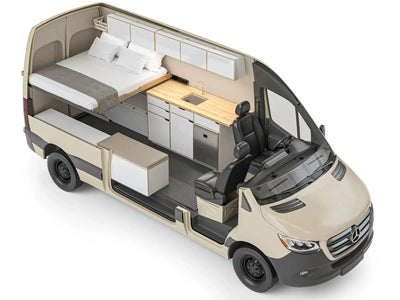
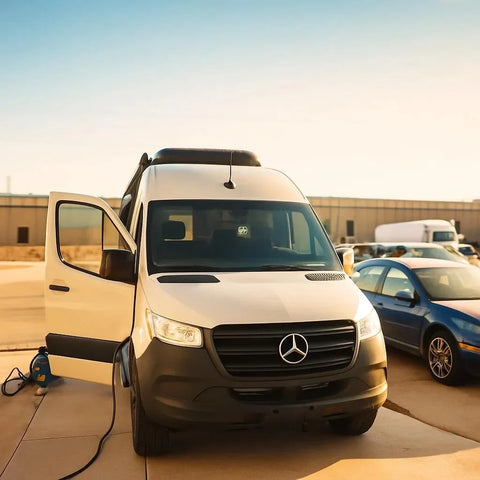
Vans excel in daily driving and stealth parking, providing the ease of one-car errands and better curbside parking in towns. For those living the van life or thinking about a camper conversion, choosing a van is ideal if you plan to often park in city areas or camp quietly. Modern platforms like the Ford Transit and Mercedes-Benz Sprinter are engineered with car-like driving dynamics and advanced safety systems (Ford Transit safety and driver-assist features, Mercedes-Benz Sprinter safety overview).
Off-grid capability and systems (water, power, tanks)
Small RVs often let you fit larger fresh/gray water tanks and more power/solar storage at the same price point. This works because they can use the trailer frame for tanks and power packs. That said, a well-built van with better power packs, an extra alternator, and efficient systems can meet short-to-medium off-grid needs while keeping a smaller footprint. If you’re planning a more advanced electrical setup, it’s worth reviewing our van electrical design and install services so your power system is sized correctly for your travel style.
Sleeping capacity and living-area tradeoffs
Trailers usually give more flexible living space for families or groups; vans focus on space-saving furniture for two people. If you need steady living space for more than two adults or want a full bathroom, many lightweight travel trailers will be more comfortable.
Towing, hitching, and vehicle requirements
Towing adds difficulty: proper hitch, brake control, and focus on tongue weight. Always compare trailer GVWR, tongue weight, and your tow car’s rated limit — a mismatch is risky and costly. If you're new to towing, plan a few practice runs in a quiet area or rent a similar setup first to get used to it. The National Highway Traffic Safety Administration (NHTSA) towing safety guidelines are a good starting point for understanding weight limits and brake requirements.
Cost comparison and total cost of ownership (purchase, maintenance, insurance, fuel/towing)
Headline: purchase price isn’t the whole story. A sub-3,500 lb travel trailer may cost less up front than a fully outfitted Sprinter. But, you must include the tow car, hitching gear, more fuel when towing, and separate upkeep for both cars. Vans combine cost into a single car and sometimes higher conversion costs, with easier logistics on trips and parking.
Real-world takeaway: lightweight trailers often cost less upfront than a similarly equipped van conversion, but towing typically brings noticeably higher fuel use, plus the added maintenance and insurance of running two vehicles instead of one, over a 5–10 year ownership period. According to EPA fuel economy estimates on fueleconomy.gov, many vans and SUVs can lose several MPG when towing, and the effect compounds quickly over long trips. It helps to run a simple 5-year cost spreadsheet (purchase, fuel, insurance, upkeep) using your own numbers rather than a rule-of-thumb percentage, so you can see which option really wins for your mileage and travel style when comparing a camper van vs towable RV.
Practical pros and cons: small RV vs van — side-by-side breakdown
Pros of small RVs
- Detachable living space: use the tow vehicle separately.
- Often larger tanks and room for more solar/batteries.
- Some models provide more interior amenities for the dollar.
Cons of small RVs
- Towing complexity, hitching time, and reduced maneuverability.
- Less stealth and harder urban parking.
- Wind and drag can make highway driving more stressful.
Pros of vans
- All-in-one vehicle with easier maneuvering in cities and campgrounds.
- Better stealth for dispersed camping and street parking.
- Simpler logistics: one vehicle to insure and maintain.
Cons of vans
- Limited interior footprint vs. a trailer of similar length.
- Fewer modular options — harder to expand living area.
- Height limits can constrain vertical storage and systems.
Real-world scenarios: which to pick — 4 short buyer profiles
Weekend campers who tow a secondary vehicle
Small travel trailers or teardrops let you camp in comfort and still use your car for town errands. The removable benefit is key here.
Full-time travelers prioritizing self-contained systems
Think about a trailer with bigger tanks or a well-fitted van with better power/solar systems and energy-saving devices. Either can work; base the choice on how much time you spend in towns vs remote spots. If you’re leaning toward a van build with robust systems, explore our full-service camper van conversion packages to see what’s possible in a compact footprint.
Budget-first buyers
Lightweight trailers often win on starting price, but run the numbers on fuel, coverage, and the cost of a tow car. If you decide a van still fits you better, you can control costs by starting with a simpler layout and adding upgrades over time through our van upgrade and retrofit services.
Off-roading and remote-access seekers
Truck campers or very lightweight trailers that can be pulled by strong 4x4 trucks are better for rough roads. Vans built on tough frames (like a Sprinter 4x4) also work well off-road, provided the suspension, tires, and ground clearance are upgraded to match the terrain.
Practical checklist before you buy or rent (weight, towing capacity, campsite size, legal/regulatory checks)
- Confirm GVWR, tongue weight, and vehicle payload with full cargo/passengers included.
- Measure campsite dimensions where you plan to stay—urban street parking vs. RV sites make a big difference.
- Check insurance and licensing for trailers in your state/province.
- Test drive towing if possible, or rent a similar setup to see how it handles.
Recommendations and next steps (models to consider, where to test/rent, how to compare specs)
If you’re leaning van-first, start by browsing our Sprinter camper vans for sale to see common layouts and system options (Sprinter Camper Vans For Sale). If a trailer looks appealing, rent a similar teardrop or lightweight trailer for a long weekend to test daily towing and campsite setup and get a feel for the travel trailer side of the camper van vs travel trailer decision.
For help checking specs like GVWR and tongue weight, read our van conversion cost breakdown (van conversion cost breakdown). Also, check our guide on choosing the right van for your conversion (choosing the right van for your conversion) to balance budget and ability when picking your compact RV build.
When you’re ready to talk through layouts and systems, use our Customize Your Van page for next steps. Browse our small camper vans to see how a compact van can provide everyday drivability without giving up essential living features.
When in doubt, try before you buy — a weekend rental often reveals the small useful likes that specs alone won’t show.
Ready to scope your build?
Book a consultFAQs
What is the difference between a small RV and a camper van?
A small RV is often a trailer (teardrop, travel trailer, truck camper) apart from the tow car; a camper van is a self-contained vehicle setup. Vans win on ease of driving and stealth; small RVs win on removable living space and sometimes larger inside features for the same budget. This is the core trade-off when comparing a compact motorhome-style van vs towable trailer.
Can I tow a small travel trailer with a small SUV or minivan?
Maybe — check the car's towing limit, tongue weight, and load limits. Many lightweight trailers (<3,500 lbs) can be towed by mid-size SUVs, but confirm exact trailer weight and needed hitch/brake setup before buying or renting. Manufacturer towing guides, like the Ford towing capacity guide, are a helpful reference for matching trailers to specific vehicles.
Which is cheaper to buy and maintain: a small RV or a conversion van?
Entry price can be similar based on the model, but total cost varies. Trailers often have a lower purchase price but need a tow car. They may raise fuel and upkeep costs for towing. Vans are one-car purchases with possibly higher conversion costs but simpler planning. If you want a clearer picture of what a professional build includes, browse our camper van build gallery to see real-world examples and layouts.
Are small RVs better for off-grid camping than vans?
It depends. Trailer-type small RVs can carry larger tanks and solar setups, letting longer off-grid stays. Vans with smart layouts and better systems can meet short-to-medium off-grid needs. They also excel on rough roads if built on a strong frame.
Do small RVs require special licenses or different insurance than vans?
Most small RVs and vans fall under standard car or RV coverage; permits rarely change unless the trailer exceeds local weight/length limits. Always check state or provincial rules and adjust coverage as needed.
About the author

Eugene Smit
CEO
Eugene is the CEO of The Vansmith, based in Boulder, Colorado. He writes across topics related to van builds, ownership, and the camper van industry.
Read more about Eugene