By Santiago Pere, Chief Design Engineer, December 11, 2025
Table of contents
- Why choose a Class‑B with a pop‑top for families?
- Key layout concepts: combining belted seats and a pop‑top bunk
- Design considerations for families
- Safety, legality, and seatbelt requirements (NHTSA)
- Day/night conversion: step‑by‑step
- Comparisons and example builds
- Buying checklist and decision guide
- FAQs
- Conclusion
Why choose a Class‑B with a pop‑top for families?

If you’re searching for a small camper that sleeps 4 without jumping to a trailer, a Class‑B with a pop‑top is often the best compromise: it keeps the van narrow for mountain passes and town parking while adding a dedicated upper bunk for two. The phrase "small camper sleeps 4" is at the heart of these designs — combining two belted seats that convert into a bed on the main floor with a pop‑top bunk above gives most families a reliable four‑person sleeping solution without a large footprint. From our experience building family vans, this layout often makes weekend camping with kids feel noticeably less chaotic.
Compared with larger RVs and many pop‑up trailers that sleep 6, a Class‑B with a pop‑top trades a bit of per‑person living space for driveability, insulation, and year‑round usability (Havelock Wool). If you want to explore tight campgrounds, remote trailheads, or urban stops, these layouts deserve a serious look. For more family‑focused layouts and available vans, see our Vans for Families collection.
Advantages vs full‑size RVs and pop‑up trailers
Class‑B pop‑tops mean less to maintain, lower fuel costs (Car and Driver), easier parking, and better handling. Compared to a pop up camper that sleeps 6, a Class‑B setup is more maneuverable and integrates driving and living space — ideal for shorter trips or families who value mobility over a lot of interior square footage. If your trips include tight campgrounds, remote trailheads, or urban stops, a conversion van often outperforms trailers in convenience. As a quick transition: think of the Class‑B as a nimble household on wheels versus the more spacious, campsite‑centric approach of larger trailers.
Key layout concepts: combining belted seats and a pop‑top bunk

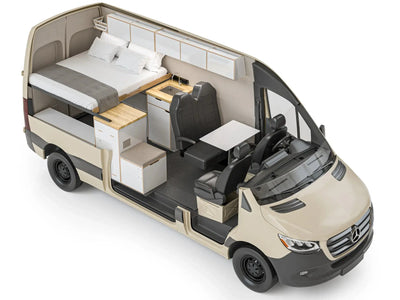
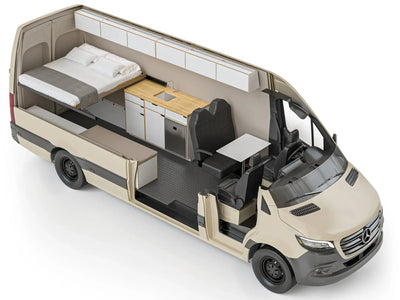
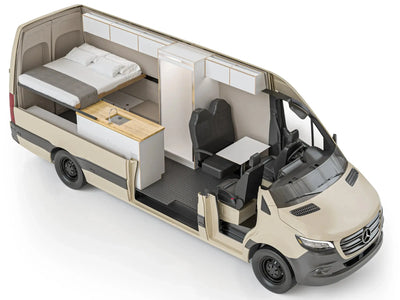
There are two core pieces to make a small camper sleep four reliably: properly configured belted seating that converts into a bed, and a pop‑top bunk sized for two sleepers. Many Vansmith Family layouts pair a rear convertible dinette/bench with a pop‑top above that houses either a fixed mattress or a high‑density foam pad.
Typical real‑world example: a Family‑class layout with a 72" convertible bench on the main floor and a pop‑top bunk that measures roughly 72" x 48" keeps two adults comfortable in the lower berth and two children or one adult and one child in the top bunk. We recommend measuring intended sleepers — 72–75" length is a practical minimum for most adults.
Day vs night: how belted seating converts to sleeping areas
Belted seats that convert to beds can be forward‑facing seats that slide and fold, rear benches that flatten into platforms, or modular units that click together. During the day these seats provide safe, belted passenger seats for travel; at night they convert quickly into a sleeping surface with a few simple steps: swivel or fold the seatbacks, extend the platform, and add a mattress topper or removable cushion. A small habit we recommend: keep the bedding in a labeled bin so the conversion stays fast when everyone is tired.
Pop‑top bunk types and typical dimensions
Pop‑tops generally come in two flavors: an insulated shell with a fixed mattress (more comfortable, slightly heavier) or a lightweight canvas pop‑top with a foam pad (lighter, simpler). Typical interior dimensions range from 68–75" long and 40–54" wide. If you plan adults in the pop‑top, target 72"+ length and the widest bed the vehicle will allow.
Belted seat configurations
Forward‑facing belted seats are easiest for compliance during travel. Swivel bases add daytime flexibility but need to lock for safety while driving. Removable seats provide extra cargo space for long trips. On our Family layouts we favor belted rear benches that become a stable sleeping platform while keeping two dedicated travel seats up front.
Storage, circulation, and privacy for families
Space planning is about stacking functions: drawers under the bench, overhead cabinets set back from the pop‑top mechanism, and a narrow center aisle for circulation. Consider lightweight partition curtains for privacy between the lower bed and living area. For storage strategies that don’t eat sleeping room, see our Vans with Poptops collection for examples of integrated cabinets and roof storage. A practical note: test how often you'll need items at night and keep those within arm's reach to avoid cluttering sleeping surfaces.
Design considerations for families

Sleeping geometry: realistic measurements for adults and children
A practical rule: adults want 72–75" length and 48–54" width for a comfortable two‑person sleep; children often need less width and can share narrower bunks. Don’t rely on manufacturer sleeping claims alone — measure the flat surface you’ll actually use once cushions and covers are in place.
Weight limits, center of gravity, and roof load implications
Pop‑tops add weight up high and change the van’s center of gravity. Check the pop‑top’s rated capacity and account for mattress and occupant weight. Keep heavy gear low (under‑seat or under‑bed storage) and consider suspension upgrades if you carry extra payload — we offer suspension upgrades and other installations to keep family vans safe on varied roads.
Ventilation, insulation, and weather considerations
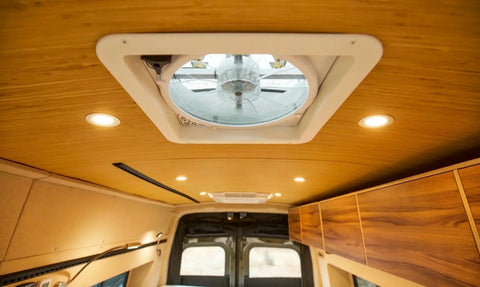
A sealed, insulated pop‑top with a proper mattress is comfortable year‑round; canvas pop‑tops are more vulnerable to cold and condensation. Add roof vents or a small low‑draw fan for air movement, and prioritize insulation in the roof and sidewalls where practical. For more on heater installations and winter readiness, see our heater install guidance in Heater Install.
Storage strategies for family gear
Use cubbies under seating, modular plastic bins, and wall‑mounted pockets to keep toys and clothes tidy. A simple packing system (color‑coded bins for each child) saves time and keeps sleeping surfaces clear during conversion. From experience, a small bin labeled "night" for each child — with a book, small light, and favorite blanket — makes bedtime smoother away from home.
Safety, legality, and seatbelt requirements
What counts as a legal belted sleeping position while traveling
For travel, only properly belted, forward‑facing seats meet legal requirements. Sleeping in unbelted areas while the vehicle is moving is unsafe and often illegal. Convert beds only when parked. During motion, everyone should be in approved seatbelts or appropriate child restraints.
Child seats, tethering, and best practices
Install child seats on manufacturer‑approved anchors and follow local law for tethering and orientation. If your family travels frequently with young children, plan seating locations that keep child seats forward‑facing where required, and confirm the anchor points during a walk‑through.
Certifications and professional installation for pop‑tops
Use professional installers for pop‑tops or choose factory‑built options; certified installations ensure structural integrity and proper seals. We recommend professional installs and offer services for pop‑top integration and seat installation to meet safety expectations.
Day/night conversion: step‑by‑step layouts and routines
Typical evening setup
- Park on level ground and engage parking brake.
- Swivel or fold belted seats and extend the lower bed platform.
- Raise the pop‑top and secure supports; fit mattress or pad and bedding.
- Create privacy with a curtain and stow daytime gear in assigned bins.
Morning teardown
- Remove bedding and stow in designated bins.
- Lower the pop‑top and secure latches.
- Fold the lower bed back into travel configuration and lock all moving parts.
- Quick wipe of sleeping surfaces if needed; secure loose items for travel.
These routines take practice; a checklist taped inside a cabinet helps younger family members pitch in. Time‑saving hacks include fitted travel sheets, mattress toppers with straps, and labeled bins.
Comparisons and example builds
Here are three representative real‑world approaches we commonly build:
1) Compact Family — convertible bench + insulated pop‑top
Main floor: 72" convertible bench (two belted positions). Pop‑top: fixed mattress, 72" x 50". Best for families who want better overnight comfort and simpler setup. This layout balances daytime seating and nighttime comfort.
2) Versatile Pack — swivel passenger seat + slide‑out platform
Main floor: swivel passenger + rear folding bench for cargo flexibility. Pop‑top: canvas with foam pad (lighter). Best for families who alternate cargo (bikes/kayaks) with family trips.
3) Extended‑stay Family — larger pop‑top + optimized under‑bed storage
Trade a bit more payload and roof weight for a larger upper bunk and extra cabinetry below. Good for longer trips where gear storage and bedding comfort matter most.
To see examples of vans built for families and pop‑top configurations, visit our Family collection and the Vans with Poptops listings in the site’s Collections. If you want to compare layouts in person, contact us for a walk‑through or learn about our design process.
If you're exploring different layouts, our collection of small camper vans shows how compact designs can support couples, growing families, and extended travel without sacrificing everyday drivability.
Buying checklist and decision guide
- Measure bunk lengths and widths in person — never rely only on specs.
- Verify seatbelt count and locations for travel with children.
- Confirm pop‑top weight rating and manufacturer warranty.
- Ask about insulation and ventilation options for year‑round use.
- Test day/night conversions during a demo so the family knows the routine.
Packing, sleeping comfort, and family tips
Use thin memory foam toppers, clip‑on reading lights for bunks, and blackout curtains for better sleep. Keep a small first‑aid kit and a travel organizer near the lower bed for nighttime needs. Teach kids a simple pre‑sleep routine to keep conversions fast and predictable.
FAQs
Can a small Class‑B van realistically sleep four people?
Yes — by combining two belted seats that convert to a dinette/bed on the main floor with a pop‑top bunk above, most Class‑B layouts can sleep four (commonly two adults and two children) if you choose appropriate mattress sizes and accept compact sleeping widths.
How does a Class‑B with a pop‑top compare to a pop up camper that sleeps 6?
Pop‑up trailers that sleep 6 offer more dedicated sleeping areas and interior living space, while Class‑B vans are easier to drive and park, integrate driving and living space, and generally have better all‑weather insulation and systems. The tradeoff is space per sleeper and sometimes storage — pop‑up trailers usually provide more room per person.
Are pop‑top bunks safe for kids and adults?
Pop‑top bunks are safe when installed and used according to manufacturer specifications, kept within stated weight limits, and equipped with guardrails or mesh. Use professional installation where required, check weight ratings, and follow guidance for child safety at height.
Do belted seats count as legal sleeping positions?
For travel, passengers must be properly restrained in approved seatbelts or child seats according to local laws. Sleeping while parked is fine in converted belted seats, but during motion everyone must be seated and belted in approved restraints; children should be in age/size‑appropriate child restraints.
What dimensions should I look for to sleep two adults comfortably in a pop‑top bunk?
Aim for at least 72–75 inches in length and 48–54 inches in width for two adults to sleep reasonably comfortably; many pop‑tops are narrower, so verify actual mattress dimensions and consider occupants' heights.
Can I retrofit a pop‑top onto my Class‑B?
Retrofits are possible but should be done by experienced shops. Consider structural reinforcement, warranty implications, changes to weight and center of gravity, and whether the retrofit meets safety and certification standards for your region.
Ready to scope your build?
Book a consultIf you’re considering a family van, we recommend visiting a Family layout in person — see our Vans for Families collection or contact us for a walk‑through. Our process emphasizes safety, measured design, and durable materials that keep families exploring longer.
About the author

Santiago Pere
Chief Design Engineer
Santiago is Chief Design Engineer at The Vansmith. He writes on topics spanning van design, builds, and life on the road.
Read more about Santiago