A 4x4 van conversion kit turns a standard van into a four-wheel-drive rig, giving it better off-road skills. With costs ranging from $10,000 to $30,000, these kits offer various options for models like the Sprinter or ProMaster.
While they boost off-road performance, think about possible warranty issues and ride changes. For many, buying a van with 4x4 from the factory might be a smarter choice. For example, Mercedes-Benz offers factory all-wheel-drive Sprinter models designed specifically for mixed on-road and off-road use.
Understanding 4x4 Van Conversion Kits

4x4 conversion kits are built to turn a standard two-wheel-drive van into a four-wheel-drive van, giving it better off-road capability. Popular kits include brands like Quigley, Sportsmobile, and Advanced 4WD Systems, each offering unique features and pricing options.
These 4x4 upgrade packages are usually built for certain van models such as the Mercedes Sprinter, Ram ProMaster, and Ford Transit. They include key parts like transfer cases, front drive axles, and suspension changes. According to manufacturer specifications from Ford Transit and Ram ProMaster, payload and gross vehicle weight ratings (GVWR) vary significantly by engine, wheelbase, and roof height, which makes matching the kit to your exact van configuration critical.
- Clarify your real-world use case. Before investing in a 4x4 conversion kit, list the types of terrain you actually drive—snowy passes, muddy forest roads, sandy desert tracks—and how often you encounter them. This helps you decide if full 4x4 is necessary or if tires, recovery gear, and mild suspension upgrades are enough.
- Confirm compatibility with your van model. Not every 4x4 conversion kit works with every van. Check that the kit is specifically engineered for your generation of Sprinter, Transit, or ProMaster, including engine type, wheelbase, and roof height, to avoid costly custom fabrication.
- Ask detailed questions about warranty impact. Get written clarification from both the van manufacturer and the conversion company about what parts of your factory warranty remain intact after the conversion, and what coverage the installer provides on the new 4x4 components.
- Plan for total cost of ownership, not just install price. Factor in labor, alignment, potential gearing changes, future maintenance, and higher insurance premiums. A cheaper 4x4 conversion kit can become more expensive over time if parts are hard to source or require frequent service.
- Evaluate ride quality and handling changes. A 4x4 system can raise your center of gravity and stiffen the suspension. Ask for a test drive in a completed van with the same kit so you can feel highway manners, braking, and cornering before committing.
- Check payload and weight limits. Weigh your current build and compare it to the van’s GVWR. A 4x4 conversion kit adds weight, so you may need to adjust interior layouts, water capacity, or gear to stay within safe limits. The National Highway Traffic Safety Administration (NHTSA) notes that overloading a vehicle can negatively affect braking distance, handling, and rollover risk.
- Consider resale and future flexibility. Quality 4x4 conversions can increase resale value and make your van more attractive to future buyers, especially in mountain or snow states. Choose a reputable installer and a kit with a proven track record to protect that value.
The conversion process is quite involved, needing skilled mechanics and several weeks of work. This change allows van enthusiasts to head onto more challenging terrain and enjoy greater freedom in their travels. According to Expedition Portal, these modifications are invaluable for those who often explore rugged landscapes.
Cost of 4x4 Conversion Kits
The cost of a 4x4 conversion kit can vary a lot, ranging from $10,000 to $30,000, based on the van model and features included. Installation labor, usually an extra cost, can add between $5,000 and $10,000.
For instance, Quigley's 4x4 drivetrain conversion for a Ford Transit costs about $13,000 for parts alone. Sportsmobile’s full package for the Mercedes Sprinter starts at $25,000, while Advanced 4WD Systems offers custom options built for specific needs.
Considering these costs, it's vital to decide whether turning a van into a 4x4 is the best option for you. For some, buying a van with 4x4 already installed can be more cost-effective, cutting down the chance of surprise bills. For more on van conversion costs, check out Van Life Finance.
Warranty and Legal Considerations
One of the main concerns with 4x4 conversions is the possible impact on the maker’s warranty. Converting a van with an aftermarket 4WD kit can void the current warranty, making it essential to understand the terms before moving forward. Some conversion companies, however, offer their own warranties on the converted systems, usually ranging from one to three years.
Legal rules for 4x4 conversions vary by state, with things to watch like if the van is safe for the road and meets emissions rules. Also, insurance costs may rise due to the higher value and changed status of the vehicle.
It's wise to tell both your insurance company and DMV about any conversions to avoid coverage issues. For more guidance, visiting a site like Edmunds’ overview of how aftermarket parts can affect warranties can be helpful.
Performance and Ride Quality

4x4 conversions greatly improve a van's off-road performance, letting you travel on rough terrain and in tough weather conditions. However, these upgrades might lead to a stiffer ride due to needed suspension modifications, which could affect comfort on paved roads. Conversions can add up to 400 pounds to the vehicle's weight, potentially impacting fuel efficiency due to the increased weight and altered aerodynamics. According to EPA fuel economy guidance on fueleconomy.gov, added weight and accessories such as roof racks can reduce MPG, especially at highway speeds.
Modifications may also raise the center of gravity, changing the van's behavior and handling. Some systems let you switch between two-wheel and four-wheel drive, giving you more options in different driving situations. For a deeper dive into the benefits and changes in performance, refer to Four Wheel Drive Guide.
When choosing whether a 4x4 conversion kit makes sense, it helps to be honest about how and where you actually drive. If most of your trips are on paved highways with the occasional graded forest road, a good set of all-terrain tires and slightly higher ground clearance might give you 80% of the capability at a fraction of the cost. Add recovery gear, like traction boards and a winch, to push that capability even further.
On the other hand, if you often travel in snow, mud, or remote desert tracks where getting stuck could mean a long walk out, the added traction and low-range gearing of a true 4x4 system can be worth every dollar. Think through your usual routes and seasons. Think about how at ease you are turning around when the road gets rough—those answers will tell you whether a 4x4 conversion kit is a tool you’ll really use or just an expensive badge.
It’s also key to look beyond the first install and think about long-term ownership. A 4x4 conversion kit adds complexity: more moving parts, more wear items, and more possible points of failure. Before you commit, ask the installer about service intervals, parts availability, and who can work on the system if you’re far from their shop.
Some kits use mostly OEM parts from trucks or factory 4x4 vans, which makes finding replacement parts easier at small-town dealers. Others rely on more custom pieces that may need shipping from a single supplier. Getting clear answers on upkeep costs, suggested checkup schedules, and real-world reliability will help you budget for the full life of the van, not just the upfront hit.
Finally, think about how a 4x4 conversion kit works with your whole build plan. The added weight of a 4x4 system, plus bumpers, roof racks, and inside cabinets, can quickly eat into your payload capacity. Before installing a kit, weigh your van in its current state and compare that to the gross vehicle weight rating (GVWR) on the door sticker.
If you’re already close to the limit, you may need to adjust your layout, choose lighter materials, or skip some add-ons to keep the van safe and easy to handle on the road. A well-planned 4x4 build balances strength, weight, and simplicity. That balance lets you drive long distances comfortably, then confidently tackle the rough roads that lead to the best campsites.
When to Opt for a 4x4 Conversion
If you often travel off-road or in snowy and icy conditions, a 4x4 conversion could be a smart investment. However, for light off-road use, all-terrain tires might be enough without needing a full conversion. Buying a van with factory-installed 4x4 or AWD is often more cost-effective if off-road ability is your priority, as it avoids the extra costs and possible warranty issues of aftermarket conversions.
Weighing the total cost of owning the van, including possible resale value, is vital before making a decision. Talking with a van conversion expert can give you more insight into whether a 4x4 conversion is the right choice for your needs. For those interested in exploring both factory and aftermarket options, The Vansmith's Sprinter Van Conversions offer a solid starting point.
Advice from The Vansmith

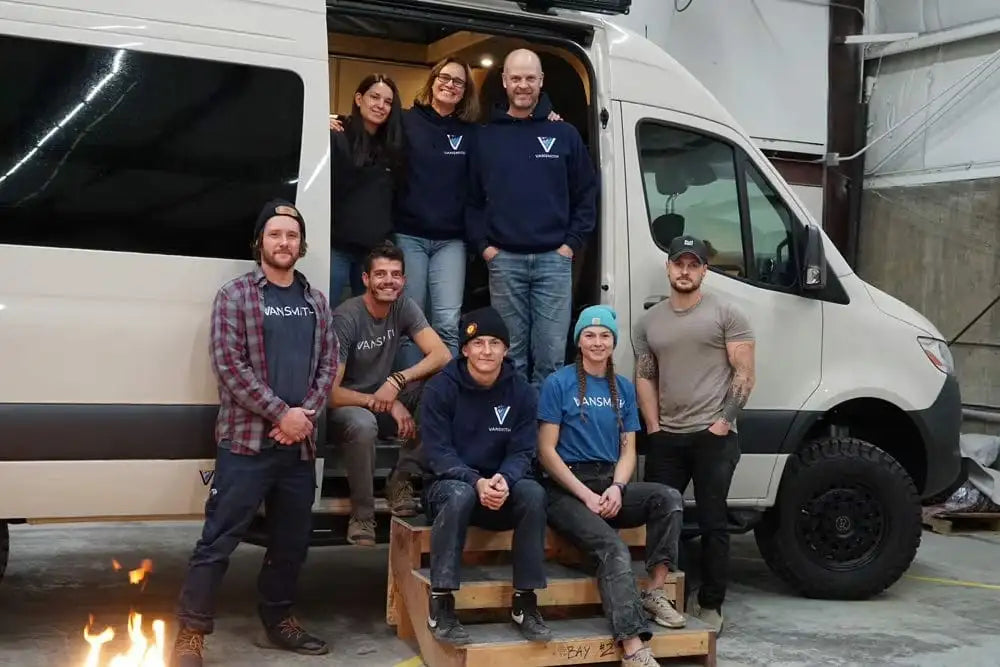
The Vansmith strongly suggests buying a van with 4x4 capability if off-road performance is crucial. They offer a range of custom van conversions already set up with 4x4 capability, providing a streamlined and efficient solution. The Vansmith also provides consultations to help customers decide whether a 4x4 conversion or full 4WD swap fits their needs.
Think about checking out The Vansmith's suspension upgrades to improve on-road comfort after a 4x4 conversion. Visit The Vansmith for more info on available conversion options and services, and browse their camper van conversion packages to see which layout and build style best matches your travel plans.
If you’re still deciding what kind of rig you need, you can also explore The Vansmith’s ready-to-drive camper vans for factory 4x4 and AWD platforms that are already built out, or check their camper van gallery for real-world examples of off-road capable builds.
FAQ
How much does a 4x4 van conversion kit cost?
4x4 van conversion kits usually cost between $10,000 and $30,000, based on the van model and specific features included. Installation labor can add another $5,000 to $10,000.
Does converting my van to 4x4 void the warranty?
Yes, turning a van into a 4x4 can void the maker's warranty. However, some conversion shops offer their own limited warranties on the converted systems.
What are the benefits of a 4x4 van conversion?
A 4x4 conversion boosts a van's off-road capability, letting you get better traction on rough terrain and in bad weather. It also offers more flexibility with selectable 4WD systems.
Can a 4x4 conversion affect my van's fuel efficiency?
Yes, a 4x4 conversion can add up to 400 pounds to your van, which may affect fuel use due to the extra weight and changed aerodynamics.
Is it better to buy a van with factory-installed 4x4?
Buying a van with 4x4 from the factory is often cheaper in the long run if off-road ability is important to you, as it avoids the extra costs and possible warranty issues of aftermarket conversions.